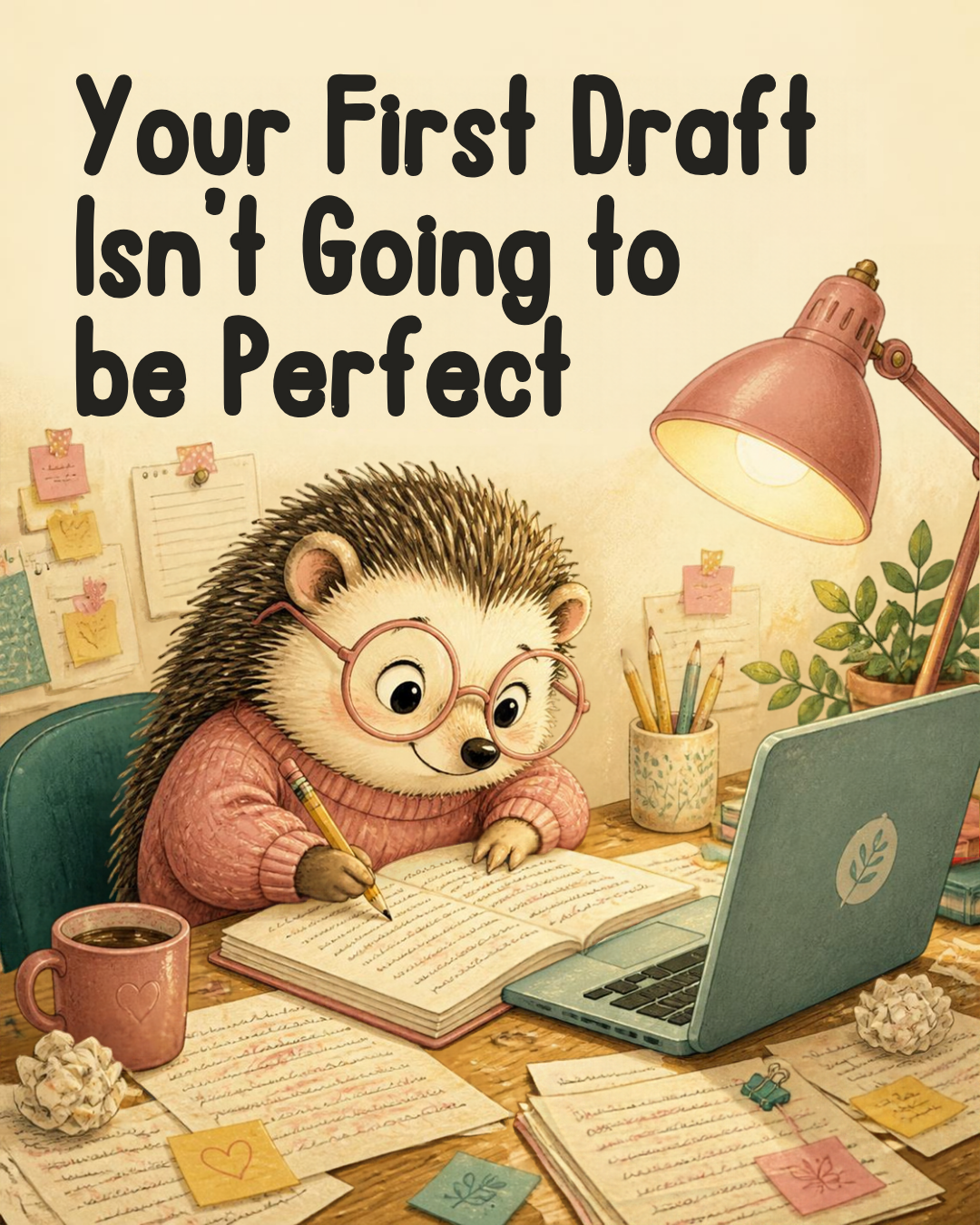
Your First Draft Isn't Going to be Perfect
/
When I talk to new writers, someone always asks for tips to finish a novel. It is so easy to get bogged down trying to make a chapter, paragraph, or sentence perfect. You want to incorporate all you’ve learned to hook the reader and set the tone for the rest of the book that you spend all of your writing time revising a little part of your manuscript.
It took me five years to finish my first book, Secret Lives and Private Eyes, and another two years to get it published. Every time someone in my critique group offered an idea, I went back and edited what I had written. I wanted it to be perfect. The amazing Mary Burton calls your first draft the “sloppy copy,” and she’s right. Get it on paper so there is something to revise and improve later when you are at that part of the writing lifecycle.
After four series later, I have figured out a writing process that works for me and my limited writing time.
I spend about two to three weeks outlining my book before I start writing it. I create a chapter outline that helps me work through the story line, crime, motives, red herrings, and who the killer is to avoid writing myself into a corner full of plotholes. Sometimes, I draw it out on my giant whiteboard to make sure it is plausible.
My writing time is limited. I like to write every day. I try to do 1,000 words on workdays and 3,000 on weekends. But make sure to give yourself some grace. There are days when you don’t feel like writing or life just gets in the way. The wonderful Alan Orloff told me the secret to finishing a first draft a while back. It’s BICFOK (Backside in Chair; Fingers on Keyboard), and he’s right.
If I need to research something during my writing time, I make a note of it. I do my research later. I can’t tell you how much of my early writing time was spent checking on something that turned into a session of watching cute animal videos.
I have to force myself to not revise what I have already written. The goal is to convert my outline to a first draft. I do my polishing and revising in another phase.
I make notes on my outline when I finish a writing session to remind myself where to pick up next time.
I also try not to go back and reread what I have previously written. The goal is to use my time for writing. (My only exception to this is if I haven’t written in a while, or I didn’t leave a note about where I stopped last time.)
I can usually finish a first draft in two to three months if I stick to my schedule Try all or parts of the process to see what you can use for your writing. If it doesn’t work, find what does work for your style, creativity, and productivity.