Selecting Book Appearances - It's Not All ROI

I have a writer friend who chooses all of her appearances, conferences, and events by how many books she thinks she'll sell. She calculates her transportation costs and expenses, and then makes her decision on whether or not to attend. I admire her attention to detail - down to her mileage spreadsheets.

Writing/publishing is a business, and authors need to treat their time, resources, and expenses in those terms, but a strict return on investment (ROI) may overlook some tangential or long-term benefits. I've done some smaller events or events where we didn't sell that many books, but I did gainother benefits and opportunities. Here are some examples:

At a small, independent book store, I met two women who later invited me to be on a panel at their group's writing conference.

At a school-sponsored book fair, I met several folks who had an interest in mysteries and joined our local chapter of Sisters in Crime. Both are active members now in our organization.

At an outdoor festival, we met a local DJ who asked us to do interviews for his radio station.

I also collect email addresses and contacts at every event. This expands my audience for newsletters and announcements.

I love to talk to school groups and colleges. These don't usually lead to direct sales, but every kid gets a bookmark. It's important to encourage others, especially young talent. And as a student, I had authors who took the time to visit my schools.

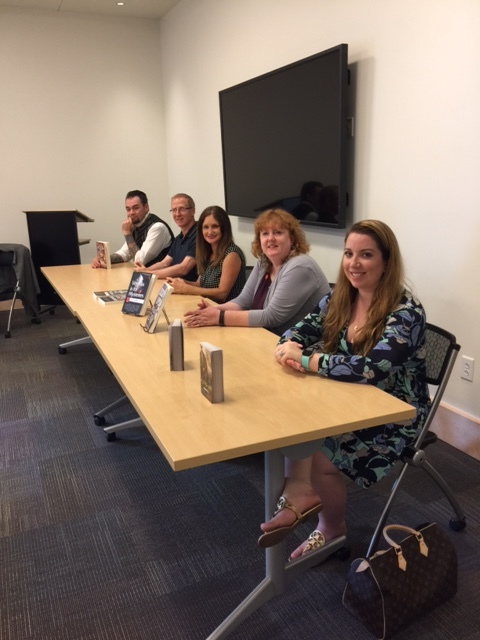
I try a lot of events. I like opportunities to network and talk about my book. I am very fortunate that I'm part of several writing groups and anthology groups. We're often asked to provide panels, workshops, and authors for special events. And we partner at events and book signings. There is nothing worse than sitting in a book store all by yourself.

My guidelines for choosing events are:

  1. I don't have to do every event that comes along.
  2. I should enjoy the events I choose to attend. If I don't, I can skip it next year.
  3. Do I have the availability? I need to make sure that I have time to write the next book. My free time is limited, and I can't be on the road every weekend.

What advice to you have for choosing book marketing events?

100 Writerly Bookish Types You Need to Follow on Twitter

Twitter is an amazing site for research and building relationships. And there are so many great writers, editors, agents, and book bloggers out there. Here is my list of 100 tweeters that you need to check out. Happy tweeting!

  1. Alan Orloff
  2. Ally Shields
  3. Annie Acorn
  4. Art Taylor
  5. Barb Goffman
  6. Bill Crider
  7. Bits About Books
  8. BOLO Books
  9. Book Blogger April
  10. Book Bloggers Intn.
  11. Book Celebration
  12. Book Reviews Geek
  13. Book Swag
  14. Books and Spoons
  15. Carole Colbert
  16. Celebrate with a Book
  17. Colleen
  18. Cozy Chicks
  19. Creatures 'n Crooks
  20. Cynthia Kuhn
  21. Cyrus Webb
  22. Deborah Coonts
  23. Diane Vallere
  24. Dru
  25. Edith Maxwell
  26. Elaine Viets
  27. Eleanor Cawood Jones
  28. Ellen Byron
  29. Ellery Adams
  30. Enrique Gonzales
  31. Fiona Quinn
  32. G. M. Malliet
  33. Gigi Pandian
  34. Halli Ephron
  35. Hank Phillipi Ryan
  36. James River Writers
  37. Jeanne Adams
  38. Jenny Milchman
  39. Jim Jackson
  40. Judging More Than the Cover
  41. Julie Valerie
  42. Jungle Reds
  43. Kait Carson
  44. Kat Stiles
  45. Kris Spisak
  46. Krista Davis
  47. Kristi Tuck Austin
  48. Kristin Kisska
  49. Kristin Wright
  50. Larissa Reinhart
  51. Leah St. James
  52. Lelia G
  53. Linda Hill
  54. Lisa Haselton
  55. Liz Gavin
  56. Lori Caswell
  57. Lori Rader-Day
  58. Lyn Brittan
  59. LynDee Walker
  60. Maggie King
  61. Mary Behre
  62. Mary Burton
  63. Mary Feliz
  64. Mary Miley
  65. Midsummer Reads
  66. Mollie Cox Bryan
  67. Mrs. Blogg's Books
  68. Mysteristas
  69. Nancy Cohen
  70. Nancy Naigle
  71. Pat Concodora
  72. Pizzazz Book Promo
  73. Promocave
  74. Rachel Thompson
  75. Rachelle Gardner
  76. Read Your Writes
  77. Readers Gazette
  78. Reading Sanctuary
  79. Rhys Bowen
  80. Rosemary Shomaker
  81. Rosemary Stevens
  82. Sacha Black
  83. Shawna C
  84. Sherry Harris
  85. Sisters in Crime
  86. Sparkle Abbey
  87. Stacy Juba
  88. Stephen Bentley
  89. Susan M. Boyer
  90. Suze Lavender
  91. Suzie81Blog
  92. Terry Tyler
  93. The Bookshelf Café
  94. The Wicked Cozy
  95. Thrill Writing
  96. Tina Glasneck
  97. Truth about Books
  98. Vivian Lawry
  99. Whispering Stories
  100. And me... (Heather Weidner) I'd love to see what you're tweeting...

Don't Go It Alone - Find a Writer's Group

It can be lonely in your writing cave. Writers need to find their groups. It's important to have others to chat with, brainstorm ideas, and share celebrations (and setbacks). I am very fortunate to be a part of several writing groups.

I've been a member of Sisters in Crime for almost seven years. It's a wonderfully supportive group of mystery and thriller writers. Our local chapter has programs and opportunities for our writers. We've partnered with another chapter to produce two short story anthologies to provide our members publication and book marketing opportunities.

Several of our published authors in our chapter created Lethal Ladies Write. We blog together and promote each other on social media. We also partner for book signings and workshops. My chapter also has a critique group, and their feedback on my works in progress is invaluable.

I am also a member of SinC's online chapter, the Guppies (The Great Unpublished). It's another supportive group, that even when folks are published, they hang around to offer assistance and information. They offer online workshops, training, and listservs for a variety of interests.

I joined James River Writers last year, and I wondered what took me so long. It is based in Richmond, VA. This group celebrates and supports all kinds of writing. It offers programs, workshops, and an annual writing conference that grows and grows every year.

Each of these groups off me support, new ideas, advice, and comradery. And they also help me to understand that I'm not alone on my writing journey. Sometimes, I need to be reminded of that.

There are a variety of writing groups out there, some local and others online. Some are genre-specific, and others are more general. Here are some you should check out:

What I Learned from "Murder Shorts - Short Stories"

I attended "Murder Shorts - Short Stories" at Malice Domestic 2017. Here's what I learned from this fun bunch of short story authors: Leone Ciporin, Teresa Inge, KM Rockwood, Alan Orloff, and Maggie King.

  1. The group liked the short story format. They felt they could experiment more as writers in this compact format.
  2. Short stories are seeing a resurgence. Check out Spine Tingler Magazine, Flashbang.com, Mystery Weekly, and Woman's World. They all pay for mystery submissions.
  3. Visit Sandra Seaman's blog to see calls for publication for short stories.
  4. Readers care about the characters in short stories. The characters are often ordinary people in ordinary settings.
  5. Characters are important in short stories. Description and dialogue help create the picture for the reader.
  6. I loved Alan Orloff's advice for writers - BIFOK! (Butt in Chair; Fingers on Keyboard). You just have to sit down and write.
  7. You have a small space in a short story; every word must count.
  8. Use both sides of your brain when you write. Your creative side writes and plots, while your analytical site proofreads and edits.
  9. Don't edit as you write. Just write. Revise later.
IMG_0800.JPG

My 2017 Wine Tour - Stop #2: Mermaid Winery - Norfolk, VA

Yesterday, we had a book signing for 50 Shades of Cabernet at the Mermaid Winery in Norfolk. It's billed as Virginia's urban winery. This is such a great place. I grew up in Tidewater, and I hardly recognized W 22nd Street. The city is alive with so many neat places, and the Mermaid Winery is definitely a place you need to check out. The food, atmosphere, and staff were wonderful.

Okay, I'm a wine novice, so I'm learning a lot on this wine/book tour. The Mermaid Winery has metal glass holders for those doing tastings. I loved the tree of wine glasses.

The staff set up a wine tasting for our book launch. I spotted a glass with a pretty shade of red at the bar. I asked the wine steward about that particular wine, and she replied, "That's the dump cup." I've still got a lot to learn.

18403221_10211483549197184_7280591740172655206_n.jpg
Back Row l-r: Jayne Ormerod, Kristin Kisska, DJ Lutz, Ken Wingate Front Row l-r: Teresa Inge, me, Rosemary Shomaker, and John Koehler

Back Row l-r: Jayne Ormerod, Kristin Kisska, DJ Lutz, Ken Wingate Front Row l-r: Teresa Inge, me, Rosemary Shomaker, and John Koehler

What I Learned from the Fabulous Charlaine Harris

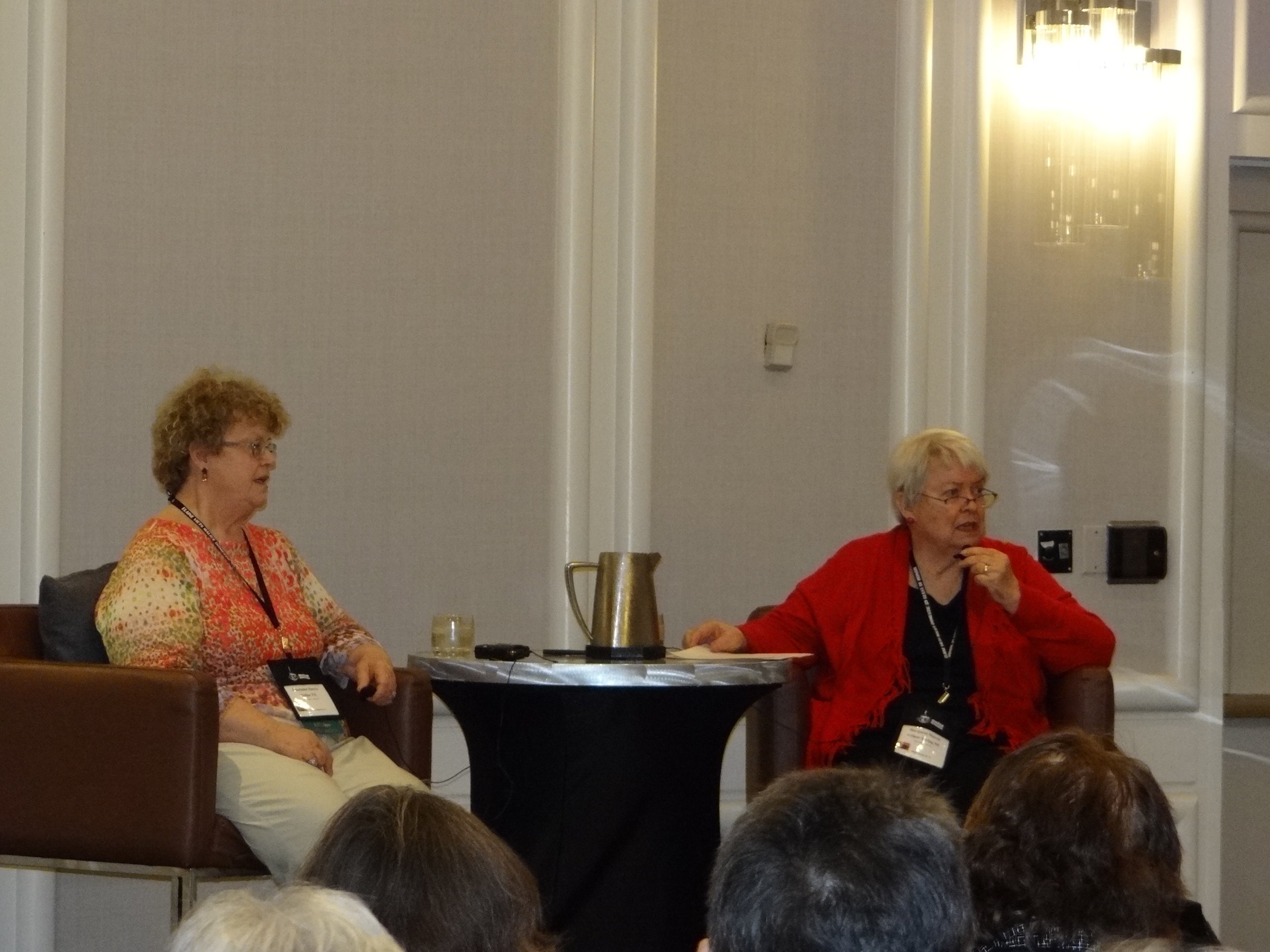
At Malice Domestic 2017, I attended an interview with the very talented and funny Charlaine Harris. Here's what I learned about her and her writing.

  1. The best example you can set for a child is for them to see you reading. She said that she grew up in a house full of avid readers and books in every room.
  2. She said that she writes personal stories with one character or a small group of characters.
  3. We all face struggles that cause us (or our characters) to make decisions. As a writer, you need to think about the choices your characters make.
  4. She said that she's a pantser (one who writes by the seat of her pants) because that's the fun of writing. It's exciting to see what happens. She likened outlining to paint by numbers.
  5. She said she started writing about the paranormal because she wanted to do something different to make money. She said that she's always been interested in things we can't see or hear.
  6. She said that she often writes about the south in many of her books. She talked about southern charm and living in Arkansas and Texas. She was asked what was something about southern culture that she had to explain to folks in other areas. She said that y'all is plural. And she wanted to let people know that there is more than one southern accent. Not all southerners sound the same.

I love listening to other authors talk about their paths to publication. Ms. Harris was charming and gracious and so willing to share her experiences.

How to Survive Writing/Book Conferences

I love writing and book conferences. These are good ways for authors to network with readers, writers, fans, bloggers, and others in the publishing industry. I learn so much at each one. Here are some hints that I've picked up along the way that can help you navigate events and networking.

  1. Wear comfortable shoes. My Fitbit always gets a workout.
  2. Keep emails about events (with the contact information) that you're scheduled to attend. I always keep a folder with emails and receipts. It makes it easier if you have to remember a name or a time.
  3. Plan out your day of panels, workshops, and activities. Know where the rooms are. I went to one conference where the events were in two different hotels.
  4. Wear layered clothes. Conference centers are often too hot or too cold.
  5. You're going to get a lot of books and swag. Make sure you have room to get it all back home. Many conferences have mailing centers to ship items.
  6. Carry bookmarks and business cards with you. You'll network everywhere, and it's a good idea to have items to share.
  7. When you do panels, workshops, or signings, bring a copy of your latest book. It creates a visual for the audience. I bought some portable book stands, and they work great to showcase the latest novel.
  8. Have your supplies handy (e.g. bookmarks, give-aways, business cards, pens, etc.) I have an emergency box with extra pens, scissors, and tape.
  9. Take lots of pictures for social media posts. I learned years ago from a social media guru to post regularly during conferences. Use the event hashtags and tag people that you network with.
  10. Bring a notebook or paper. Even if I'm on a panel, someone says something that I want to jot down. These events are a great exchange of ideas.
  11. If you're doing an event, make sure you have give-aways. Candy is always good (especially chocolate)! Many conferences have hospitality rooms where authors can leave bookmarks or postcards.

These are photos of my adventures at Malice Domestic 2017.

L-R: Rick Ollerman, Robert Downs, Elena Hartwell, Mary Ellis, and Me

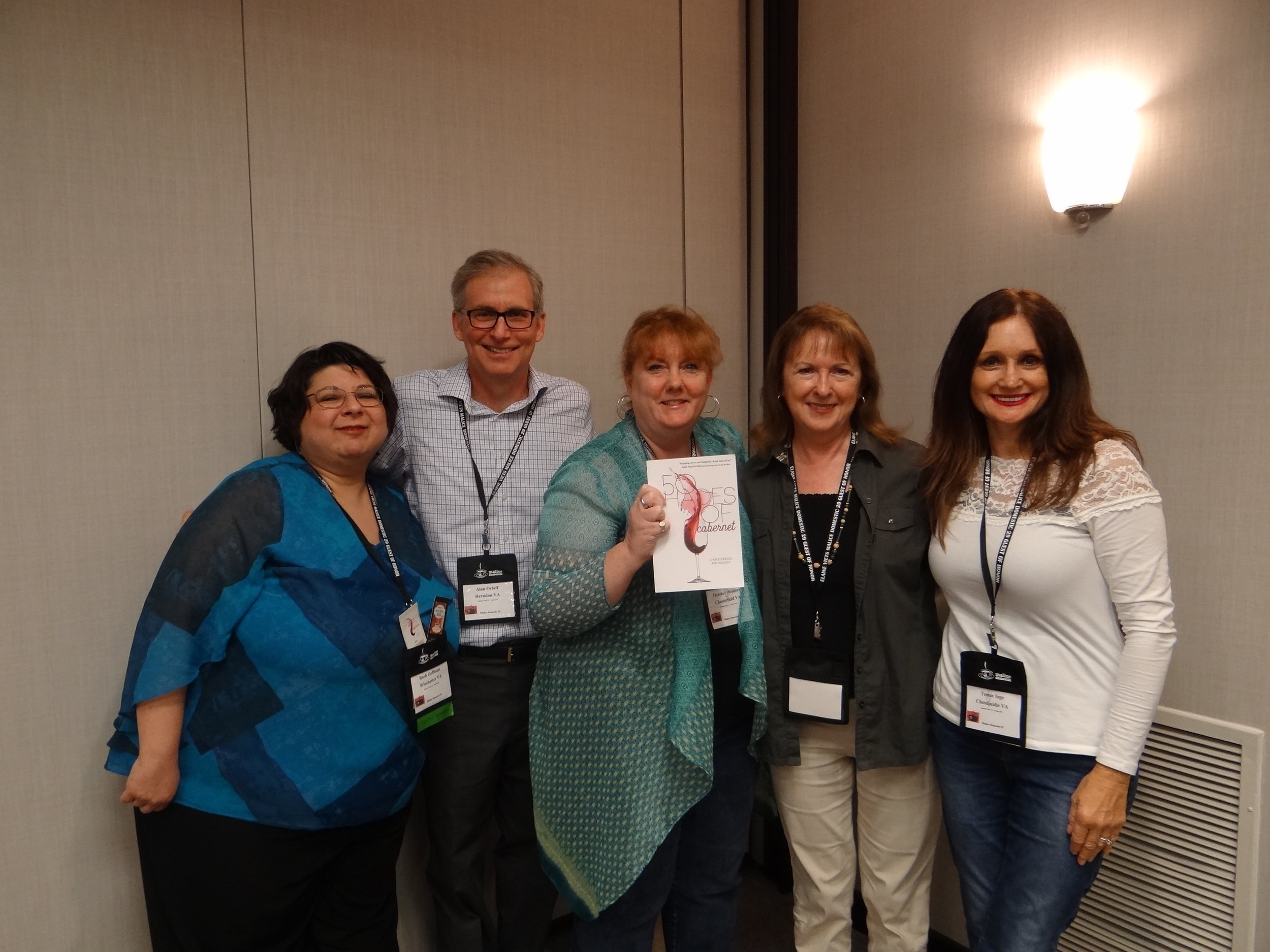
L-R: Barb Goffman, Alan Orloff, Me, Maggie King, and Teresa Inge

L-R: Barb Goffman, Alan Orloff, Me, Maggie King, and Teresa Inge

Me with Edith Maxwell at the Malice Banquet

Me with Edith Maxwell at the Malice Banquet

Me with the Wonderful Charlaine Harris

Me with the Wonderful Charlaine Harris

What I Learned from Author Jenny Milchman

L-R: Heather Weidner, Rosemary Shomaker, Jenny Milchman, Mary Burton, Kelly Justice

L-R: Heather Weidner, Rosemary Shomaker, Jenny Milchman, Mary Burton, Kelly Justice

Suspense author, Jenny Milchman, spoke to our Sisters in Crime chapter at Fountain Bookstore in downtown Richmond, Virginia. She talked about her writing journey and what happens after the contract. Here's what I learned.

  1. Her path to publication was a thirteen year process. Don't give up!
  2. Face-to-face contact is vital in our virtual world. Make sure you attend events and conferences to network with readers. You never know who will be there.
  3. Persistance is key for those who want to be published writers.
  4. Your first published novel may not be the first one you wrote.
  5. There are two kinds of writers: one that thinks everything he/she has written is terrible and the other is the kind that thinks every word he/she has written is golden. Where do you fall?
  6. Signing with an agent doesn't mean that the agent will be able to sell your book.
  7. There are a lot more choices these days for new authors to publish and build a readership.
  8. Don't forget the people who helped you along your publishing journey.
  9. Sometimes, it's all about being with the right book at the right time and place.
  10. Find a writers' group that is supportive. You're not alone in this.
  11. Just becauseyou have a book contract doesn't mean that that publisher will want every book you write.
  12. Make sure that your newsletter has good content. Don't always make the focus your book. Include anecdotes, your pets, recipes, etc. You need to connect with people.
  13. If you're going to use a publicist, ask around to make sure they are known in the business. Your local booksellers are a good resource for this.
  14. Target your book publicity about events to people who live near the event.
  15. Social media posts with pictures do better than those without.