Pet Peeves - What Drives You Nuts?

I started making a list of pet peeves and it grew. Originally, I was brainstorming ideas for why someone would commit a murder or a crime, but it was cathartic to write them all down. Some are humorous, and others make me go, "Grrrr!"

  1. People who leave grocery carts in parking places instead of returning them to the corral 
  2. People who leave two squares of toilet paper for the next person
  3. People who leave an empty box or container on the pantry shelf
  4. People who talk on the phone in a public restroom
  5. People who see that the copier or printer is out of paper and walk away
  6. Telemarketers, especially those who call me at work on my cell phone
  7. Those little ribbons for hanging in women's shirts and sweaters
  8. Tags in clothing
  9. People who don't hold the elevator doors for others
  10. Sales people who don't listen
  11. The fact that there are fewer hot dog buns in a package than the number of hot dogs in a package
  12. People who talk on the phone or text during a movie in the theatre
  13. Blogs that require me to login before I can comment or share
  14. Companies that bombard me with surveys - In most cases, I paid for the service; I don't need homework.
  15. People who dump things they don't want at the grocery store on other aisles or at the check out counter
  16. People who are always preoccupied with their phones and don't talk to the people around them -- especially their children
  17. Companies that use way too much packing material -- Thank goodness, I don't get those Styrofoam peanuts anymore. They used to stick to everything.
  18. People who drip or spill and don't clean up their mess
  19. People who talk during theatre performances or concerts
  20. Dog-eared corners in books

Who knows, some of these may end up in a future book or story. What would you add to the list?

What I Learned on a Recent High School Visit

It's been a long time since I've been in high school. I had the great pleasure of spending time recently with a senior English class that was doing a module on mysteries and thrillers. I had my handouts, overview, and give-aways ready, and I barely got in the door before I got peppered with questions about mysteries and my writing. The class was mixed in their mystery experience. Many liked watching crime-related shows and movies, while others did read mysteries. There were a handful who had never read any kind of mystery.  I love the energy and the interest. And I've never had anyone step through a critical discussion of my short story and the literary techniques I used. What fun!

We had a great discussion, and here are the highlights...

  1. The class really liked red herrings, foreshadowing, and irony in stories. They liked books with a plot twist.
  2. It was fun to talk about mystery and thriller authors. Many on my handout were new to the class, so they had lots of questions about subgenres and who wrote what type of book.
  3. They liked mysteries that combined several subgenres (e.g. romantic suspense, medical thriller, or legal thriller).
  4. Most of the class' interest in mysteries started with TV shows and movies.
  5. They were also very interested in what mystery resources were out there. We talked about websites, blogs, and author websites.
  6. We had a long discussion about how some popular sleuths had had lots of different interpretations and incarnations in movies and TV, such as Sherlock Holmes and Dr. Watson. They all had a favorite, but Benedict Cumberbatch and the BBC won the popular vote.
  7. They were interested in why some sleuths had sidekicks and others didn't. I typically don't have a sidekick in my short stories, but my private investigator has her computer-hacker partner to assist with research that she's unable to get through normal channels.

I enjoyed my visit, and many thanks to Ms. Arnold for inviting me.

50 Things I Learned about The Writing Life...

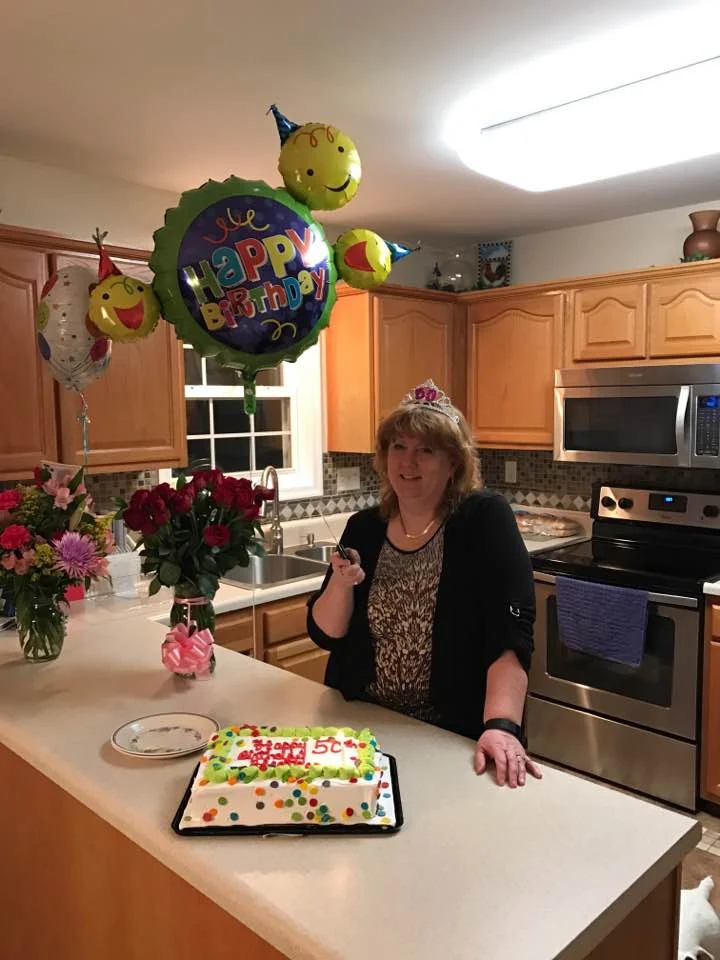
I had a milestone birthday this week. So in celebration of that, here are the 50 things I learned about the writing life...

  1. Publishing is a business. The goal is to sell books.
  2. Make sure that you're writing your next book.
  3. Writing is a lot of work. The first few "sloppy" drafts need a lot of work.
  4. Build relationships through your social media platform. They make a difference!
  5. Set a blogging and social media schedule that works for you. These sites need care and feeding, but they shouldn't be a 24x7 job.
  6. Everyone has an opinion. Comments and reviews can sting, but learn what you can from them and then move on.
  7. Try to write something every day.
  8. Keep a notebook or electronic notes of names and story ideas. You never know when you'll encounter something that'll work in your next book or story.
  9. Look at your social media posts. Make sure that they're not all "buy my book."
  10. Make sure that you share others' celebrations on your social media sites.
  11. Writers have to network, market, and build their platforms. Just make sure you leave enough time for writing.
  12. Collect email addresses at your events for your newsletter's mailing list. Get a clipboard and make sure you take it with you to signings.
  13. Writing is often lonely. Find your tribe. Look for other authors or groups who will assist and support you. (I am so fortunate to have my Sisters in Crime - Central Virginia, Sisters in Crime, Guppies, and James River Writer friends.)
  14. Find beta readers or a critique group to help you revise and edit your work.
  15. Look for volunteer opportunities to give back to your community. It's also a great way to meet new people. The writing life is often solitary.
  16. Build a street team or an advance team to help you with early marketing and reviews.
  17. Volunteer to do guest blogs or interviews. It's a great way to keep your name in front of people.
  18. Remind yourself that you do not have to do everything. There are lots of opportunities, but you can burn out if you're constantly on the go. Take care of yourself.
  19. Keep one master calendar for all of your events and deadlines. It helps me stay organized.
  20. There are going to be setbacks and disappointments. You need to persevere.
  21. Learn from your mistakes. Make note of how you'd do it differently next time.
  22. I try a lot of events and marketing ideas. If it doesn't work for me, I see what I can learn from it and move on.
  23. Order bookmarks and postcards. Make sure you always have them with you.
  24. Check out Canva. It's a great tool for websites and social media banners and post artwork. It's easy to use, and a lot of the backgrounds are free.
  25. Make a list of the words you overuse. Then use your word processor to root them out of your manuscript.
  26. Keep a chart or list of your characters and settings (especially if you write a series) to ensure you keep the details correct.
  27. Take pictures at your events or on your adventures to share on your website or social media platforms.
  28. Review your website from time to time to ensure your content and photos are current.
  29. Check all of your links on your website and social media sites to verify they are correct.
  30. Review your social media biographies or descriptions to ensure that they are current.
  31. Make sure that you backup your computer files. It's devastating when you lose your work.
  32. Make sure you keep your author headshot current. (People will comment if your picture is ten years old and no longer looks like you.)
  33. Don't burn bridges. You never know who you'll encounter later.
  34. Always be professional. Be on time and strive to meet all deadlines.
  35. Most of my correspondence is done via email. I keep lots of folders to ensure I can find the email when I need it. I also add new contacts to my address book immediately, so I don't lose them.
  36. Post a link to your blog to Twitter, Google+, Pinterest, and Facebook to drive traffic to your blog/website.
  37. Read your work aloud to find issues with wording and dialog.
  38. I create a Pinterest board for each of my stories/novels, so I have a visual of the setting, characters, and other story elements.
  39. Print your manuscript and proofread line by line after each round of editing to catch issues.
  40. When you are revising, check the last paragraph of each chapter. Make sure it compels the reader to keep reading and not find a stopping place.
  41. Use your word processor's view feature to make your pages small (e.g. 25%). Look at each chapter to make sure the lengths are relatively similar. You don't want a 30-page chapter and then a 6-page one.
  42. Get readers or writers to read your manuscript. You'll get a better critique than if you ask a friend or family member.
  43. Don't rely on your word processor's spell or grammar checker. It's not always correct.
  44. Keep all of your receipts and be diligent about tracking your mileage. You'll be glad when it's tax time.
  45. Keep a box of books in the trunk of your car. I've encountered times when the bookseller couldn't get books in time for an event. Also, at several events, the bookseller sold out, so it was nice that I had some extras to provide on consignment.
  46. Take time to celebrate your wins and successes.
  47. I use Etsy to find book- and mystery-themed gifts that are easy to mail for give-aways.
  48. Look to see if your neighborhood, work, club, or alumni association has a newsletter. If there's an announcements or celebrations section, submit your next book launch or release.
  49. If you have a chance, participate in a Facebook hop. It's a lot of fun, and I met lots of new readers and fans.
  50. Don't give up. The writing life is a challenge, and it's difficult sometimes, but it is worth it. I still squeal when that box of books arrives.
Beware of mystery author with a knife!

Beware of mystery author with a knife!

Ways to Look for Book Sale Opportunities

I am very fortunate to be a part of several writing groups that are invited to book talks, workshops, and book fairs. Here are some ideas that you can use for networking and promotion.

1. We've had the pleasure of being a part of the local Friends of the Library's "Murder at the Library" event fundraiser. We wrote a short mystery for the library staff to act out, and we were asked to host a panel discussion and book signing. Approach your local library or Friends of the Library group about hosting a fundraiser or a programming event that you and your author friends can volunteer to assist with.

2. My mystery writers group has offered workshops and programs for book festivals. We've received rock star treatment at the events, and it's nice to be a part of the event's publicity and book signings. We keep a pool of workshop proposals, panel questions, materials, and handouts that we can use if a new event is seeking submissions or proposals. Look for book festivals, book fairs, and fundraisers in your area.

3. My company has an annual giving campaign, and I donate a book and sweets basket each year. Fundraisers and silent auctions are always looking for donations. This is a good way to build a themed basket to promote your books. And you can always partner with another author to keep costs down.

4. Look for guest blog opportunities. Interviews or blog posts are a great way to promote your blog and books. And many bloggers are thrilled to have the content.

5. Volunteer. It's a great way to do positive work in your community, and it's an opportunity to meet new people. You'll be surprised at the contacts you'll make.

6. Call your local book stores. Many would love to have a panel, discussion, or workshop in addition to a signing.

7. Check with the museums and cultural centers in your area for opportunities. We've done several panel discussions at local museums.

8. Make connections with the colleges and universities in your area. Also let your alumni association know that you'd be willing to do a presentation or Skype with students. We're going to be part of a city Lit Crawl this year that involves several writing groups and universities. (It's like a pub crawl, but with books. There are multiple book readings across the city over a two-day period, and people hop from event to event to see local writers.)

There are a lot of opportunities in your local communities. Sometimes, it just takes making some connections and asking if you can volunteer. Let me know what else you'd add to the list. Best wishes with your book marketing.

What Are Your Overused Words?

When I'm proofreading and editing my work, I often am blind to the overuse of some words. I can spot them in seconds in others' works, but not always in my own. So as part of my review, I've created a list of words that are my offenders, and I use Word's search feature to help me find them. When you do that first search, you will be amazed at the number of times they appear in your manuscript.

Here are my repeat offenders...

  1. almost
  2. appear
  3. as is
  4. begin
  5. down
  6. even
  7. felt
  8. few
  9. got
  10. just
  11. like
  12. nearly
  13. only
  14. quite
  15. really
  16. seem
  17. so
  18. stuff
  19. that
  20. then
  21. thing
  22. very
  23. was

What would you add to the list?

How to Network When It's Not in Your Nature

Writers tend to be solitary creatures. My last Myers Briggs personality test results listed me as an ESTJ. My "extrovert" score was just over the axis, so I'm really on the fence between introvert and extrovert. I love being around people, but there are times when I have "peopled" enough, and I just want some solitude. 

But, relationships are key in everyone's personal and professional lives. Even if it's not in your nature to be outgoing, networking is a skill that writers need to hone. Here are eleven tips to help you with your online and in-person networking.

1. Look for opportunities to volunteer. Helping others is an incredible way to give back. And it gives you an opportunity to meet new people.

2. Join a book group to meet other readers. What a great forum to talk about books!

3. Stay involved with your alumni groups and organizations. Many of these have newsletters for member celebrations. These are great places to announce book launches.

4. I use Facebook to keep up with friends from my hometown and college days. Most of my book news goes on my author page, but I do post every once in a while on my page - especially if it's a book event in a town where I know I have friends and family. 

5. I use Twitter to network with readers, book bloggers, writers, and librarians. It's a vast source of information, and if I have a research question, I can always find help.

6. I have joined several blogging network groups on Facebook. These have helped me set goals and promote my blog and social media sites. Search for blog network groups. There are lots out there.

7. Find your writing tribe. I'm a member of Sisters in Crime Central Virginia, Guppies (online), and James River Writers. Members of each are so supportive of writers, and they offer great programs on the craft of writing and book marketing. You're not alone. 

8. If public speaking terrifies you, look for a Toastmasters group in your area. I joined years ago, and it helped me FINALLY get comfortable with talking in front of all kinds of groups. The public speaking experience and feedback were invaluable.

9. Talk with your local librarians about co-hosting a program - a writers' panel, a publication discussion, a book reading, or a workshop. My groups partner regularly with local libraries. They get an education event, and we have an opportunity to talk about our books.

10. If your book's main character has a hobby, talk to folks in your area with related shops (e.g. knitting, craft brewing, sewing, crafting, etc.). There might be an opportunity for you to visit and talk with their customers.

11. Create a signup sheet for your newsletter and collect email addresses at all of your events. make sure that guests can sign up on your website too. It's important to have contacts for people who are interested in you and your books.

It does take a lot to muster the courage to cold call or network in a room of strangers. But it is worth it. I've had some really great opportunities because I made a phone call, sent an email, and offered my services. Let me know what other ideas you have to add to the list.