Online Interview Tips for Authors

interview.png

You want to look and sound your best on an interview. No matter if it’s for print, an audio podcast, or a video, here are some tips that can help you look like a pro.

Backgrounds

I can’t tell you how many Zoom meetings, workshops, or interviews I’ve viewed where the subject was sitting in his/her bedroom with a clear shot of the bathroom in the background.

  • Set up your camera and look at your background. If another room (especially the bathroom) is behind you or you think you may be interrupted by others walking by, close the door.

  • Look at what’s behind you. Make sure it conveys the image you want to project. If it’s a bookshelf, people like me will spend some of the time trying to see what books are behind you. Make sure your shelves or the room behind you is neat and professional looking.

  • Many podcasts (which are typically audio only) also post a video of the recorded session. Make sure you ask before you think it’s audio only.

  • If you use a green screen, make sure it stretches across the entire area behind you. There’s nothing more distracting than for viewers to see parts of your desk or room peeking around the green screen.

  • If you choose to use the blurred or preset backgrounds, make sure you don’t fidget. When you move or there’s movement behind you, the background adjusts as if it’s part of you. It’s funny to watch people (and body parts) appear and disappear. Also, doors that open behind you look like a portal into another dimension when your stock background starts to move. This may not be the look that you’re going for.

Lighting

Lighting (as much as you can get in your interview spot) is important. If you do a lot of online presentations, you may want to invest in a good light. The prices vary, but you can get a good one that’s reasonably priced.

  • Natural light is the best, but it’s not always available.

  • If you wear glasses, be careful with ring lights. We can see doughnuts in your lenses.

  • Test your lighting. You want to be well lit, but not washed out.

Sound

The interviewer or panel need to be able to hear you. A practice session or a mic check is always good practice.

  • Test your camera/microphone and know when you are (and aren’t) on mute.

  • Invest in a microphone or headset that minimizes background noise. I can bet money that my neighbor is going to decide to blow leaves or cut grass the minute I log on to do a presentation.

  • Find a quiet place in your home that’s away from distractions. It’s good if you have a door to close.

  • If you’re outside, remember your microphone will pick up traffic noises and wind.

  • At my house, the dogs are pretty well behaved, but if someone rings the doorbell, all bets are off. I’ve put notes on the doorbell when important recording sessions were in progress.

  • If you’re having internet or sound issues, find out if you can call in to the session. (Old school landlines are the best if you still have one.) Make sure you have the call-in information before you get started.

  • If you’re having connectivity issues, make sure no one else in your house is streaming (movies, TV, music, or video conferencing) or gaming. Turn off video to improve the connection.

Your Look

Zoom has made it necessary to look ready for anything at a moment’s notice.

  • Wear solid colors.

  • Choose dark colors. They show up better. Busy patterns look squiggly, especially if your audience is using low resolution for viewing.

  • Take time to do your makeup and hair. Make up does help with your look on video.

  • Make sure that you’re looking into the camera. It looks odd when you’re looking off screen, down, or side-eyed.

  • If you’re going to read something, make sure that you’re still facing the camera.

  • Smile. You want them to see the real you.

  • Take a deep breath and calm the jitters. You’ll do great! You know your material.

Always be prepared. Have any props or books within reach (so you don’t have to get up). And do a practice run if possible to make sure all links and equipment are working. And it’s always a good idea to have an emergency contact for the host in case you can’t get the link to work.

Best wishes for your next interview and book promotion!

#ThisorThatThursday Author Interview with Mark Leichliter

#ThisorThatThursday Logo.png
Mark Leichliter.jpg

I’d like to welcome author, Mark Leichliter, to the blog for #ThisorThatThursday!

Things you need for your writing sessions: I’m a terrible creature of habit, in large part because I’m always looking for the quickest path to writing productivity. As a result, I have several clear needs. I write in the same two locations of my house. I write only on yellow legal pads. I have a favorite pen and others know not to touch it. Mostly I need quiet. I’m like most writers, I suspect, in that I write best from a strange point of nearly altered consciousness because writing is so immersive. I’m living in the world I’m writing about as I write, so I don’t stand up very well to distractions. I can edit and revise in nearly any environment, but for first draft, I want to get lost in the work.

Things that hamper your writing: If I start to think too directly about the reader or the marketplace early on, that kills a story before it ever has a chance to develop. There is a time and place to consider the reader’s needs—particularly in terms of what they need to know or what might be unfamiliar—but that comes later. The larger intrusion of worrying what someone might think is also a story-killer. This comes at the most obvious level of wanting people to like the work but it also can be much deeper, where I can fall into the larger trap we’re far too conditioned by in this country, the trap of comparison. We can only write the books we can write; we should want to make them the best books we capable of writing, but to string out false comparisons to other people’s work or worse, other people’s experiences or visions, can be crushing. I’m convinced that every book has its own needs and its own rhythms. It’s the writer’s job to find those. To look anywhere but within the text I am writing and the world that has given rise to it is only hampering to the process.

Things you love about writing: Ultimately as a writer you have no one to answer to but yourself. I care greatly about readers. I need to satisfy editors. But each day when I sit down at my writing desk, I really can write anything I desire.

Things you hate about writing: Ultimately as a writer you have no one to answer to but yourself. Sound familiar? If you want to write, you had better learn to live with your decisions. 

Things you never want to run out of: Have I mentioned that I trend towards Type A? My wife loves to give me a hard time about some of my obsessions. Some are obvious, like having lots of toilet paper on hand. That just makes good sense, right? I’ve shared already that I write longhand on yellow legal tablets. There’s a lot of lawyers in the world, right, so why are these tablets so hard to find? Or at least that’s the reasoning behind having a few dozen on hand at any time. And rum. One certainly should have a reserve bottle for when the primary runs out. I was a boy scout. An Eagle scout in fact. I took the “Be prepared” motto of scouting fully to heart.

Things you wish you’d never bought: So I suspect we all have our embarrassments for this question, those items that you’re a bit afraid to hand over to the attendant when you make the drop-off at Goodwill or The Salvation Army. Wow, my list is probably long. There was a certain light blue, big-shouldered, “Miami Vice” style blazer that hung around the closet unworn for several decades. More than a few pieces of trendy exercise equipment likely advertised on late-night infomercials; remember the “Ab-buster?” A certain POS Mercury station wagon with a rear-facing back seat that inevitably made the child sitting in it nauseous, the car that dropped its transmission and suffered broken engine mounts. The manual push-lawn mower (“Come on, the yard’s small; I’ll get additional exercise …”) That last donut … I could go on.

Favorite music or song: I’m entirely eclectic in my musical taste, and I absolutely love music. If I could carry a tune in a bucket, I’d drop this writing gig and sing everywhere I went. Kind of like a musical. (And wouldn’t the world be a kinder place if we lived inside a musical?) My tastes are so eclectic that I can drive my wife crazy—jumping from Kenyon Benga one minute to a Disney tune the next. Heavy on my play list will always be bands like The Lumineers, Mumford and Sons, The Head and the Heart, Of Monsters and Men. But of course I reveal my age with still loving 70s and 80s rock. I’m a Crash Test Dummies superfan.

Music that drives you crazy: I better whisper this because I live in Montana and grew up in Wyoming, but let’s just say that, despite eclectic taste, I’ve been slow to embrace country music and when I do, I prefer to keep it old school.

The last thing you ordered online: a very specific round glass food container with a screw-on lid (have I mentioned the whole Type-A thing?)

The last thing you regret buying: a very specific round glass food container with a screw-on lid; okay, this is the problem with online shopping; until you hold the thing in your hand and test the lid, well, it’s just so disappointing.

Things you always put in your books: Private jokes. This is stupid, I know, because it’s usually for an audience of one, but I regularly leave in at least one thing only I find funny or a reference that only a tiny handful of people can recognize. I’d give an example, but then that would kind of defeat the point, right?
Things you never put in your books: Anything gratuitous. My books are not really violent per se anyway, but I feel that all actions, including violence and sex, if present, must be a natural and productive outgrowth of plot or character. I take this a step beyond many writers, for while I place heavy emphasis on realism, I think crime fiction owes it to real victims and real investigators to present the world in a way that is accurate to the actual world. The act of solving a crime is compelling itself, and doing so is an outgrowth of applying hard work and good investigative thinking to what can seem disturbing or irrational actions by people who are either troubled, depraved, or out of their right minds. Because we are dealing with complex psychology, we’ll venture into difficult terrain, but I think writers need to with a sense of purpose and authenticity.

Favorite places you’ve been: Our oldest daughter is currently living in Mainz, Germany working on post-doctoral research, which offered my wife and I a good excuse to—finally—get to Europe. We last travelled, as it turns out, the summer before the world went into science fiction mode and international travel was shut down. There are any number of places that might be worthy of highlighting as an answer to this question, but because I’m a writer who likes detail, I’ll narrow it down to one tiny, locals-favorite restaurant in Paris’s Latin Quarter. We’d come to know the Left Bank after staying there for about a week in a remarkable little apartment tucked down a gated, curving stone alley all of about 3 feet wide. So we had learned the immediate neighborhood fairly well. On our final night in Europe, we’d come back through Paris for our departure the next day. This was restaurant was classic Paris: down a cobblestone side street, an unimposing street front you’d miss if you weren’t looking for the tiny circular sign hanging above the door; diners in a multi-paned window; a dining room that held all of five tables; an elegant but simply dressed hostess/waitress/owner; and an absolutely unforgettable meal; the special was roasted bone marrow, and WOW!


Places you never want to go to again: When I was seventeen, I interned at the Wyoming State Board of Charities and Reform, which, among other responsibilities, is the state-level agency that oversees the Department of Corrections. At the time, Wyoming was building a new state prison, and the old prison—which looked like something off a movie set even in good weather—was still very much in operation, as crowded and decrepit as it was. One of the officials in our office invited me to go along for meetings he had at the prison, so we made the two-hour drive from Cheyenne to Rawlins. It was an unusually rainy late-spring day, and pulling through the car entrance tunnel of the old stone building felt like entering a castle. Seventeen, naïve, a good kid who was bookish and interested in the law, was I ever a misfit and ripe for the shocks of being inside a state penitentiary. In a truly surreal moment, among the catcalls from prisoners as we passed along a cell block, someone called me by name, and I turned to an inmate with his head up against the bars of his first-floor cell, a guy from my neighborhood who was in for grand larceny. He was two years older than me. His dad was a lawyer, which helped in shortening his sentence but hadn’t kept him from a conviction. I didn’t know him well, but seeing him on the other side of prison bars, while not a great surprise given his personality and his regular defiance of authority, still was shocking. Perhaps the only greater shock that day came from being allowed to enter the gas chamber, long unused but still the method of death for capital cases should it be called back into action in those days. The chamber looked like something out of a submarine, with windows for witnesses to watch the man strapped to the chair at its center die. I was never exactly the sort of kid destined for prison, but had I needed to be scared straight, that trip would have done it.

 Favorite books (or genre): In mystery, I’ll read virtually anything written by Tana French, Laura Lippmann, and Laura McHugh. I’m a huge fan of early Dennis Lehane. As I broaden out from mystery, my tastes are nearly as eclectic as those in music, though I trend literary. In the books I want with me on a deserted island category, I have to have these: All the Light We Cannot See, The English Patient, A Visit from the Goon Squad, Beloved, They Things They Carried, and The Times Are Never So Bad.

Books you wouldn’t buy: I can’t stand the stuff that simply preys on readers, things like a lot of self-help and diet books. I’m sure some are valuable, but those that clearly just want to make a buck are offensive. There are strange books coming out now from the so-called “influencers”; let’s make our own decisions, people!

People you’d like to invite to dinner (living): (I always love versions of this question; I probably spend too much time thinking about it, although the “living” requirement adds another twist.) Anthony Doer, Claire Vaye Watkins, President Obama, Norah Jones, David Letterman, Jhumpa Lahiri, Mike Krzyzewski, Carli Lloyd.
People you’d cancel dinner on: Mark Zuckerberg, President Trump, Mike Lindell (the My Pillow guy), Richard Spencer.

The coolest person you’ve ever met: Tim O’Brien

The celebrity who didn’t look like he/she did in pictures/video: I don’t have a lot of experience in this realm, but I once had dinner next to Richard Dreyfuss, and while he was recognizable, man was he old. I guess that makes me pretty old too!

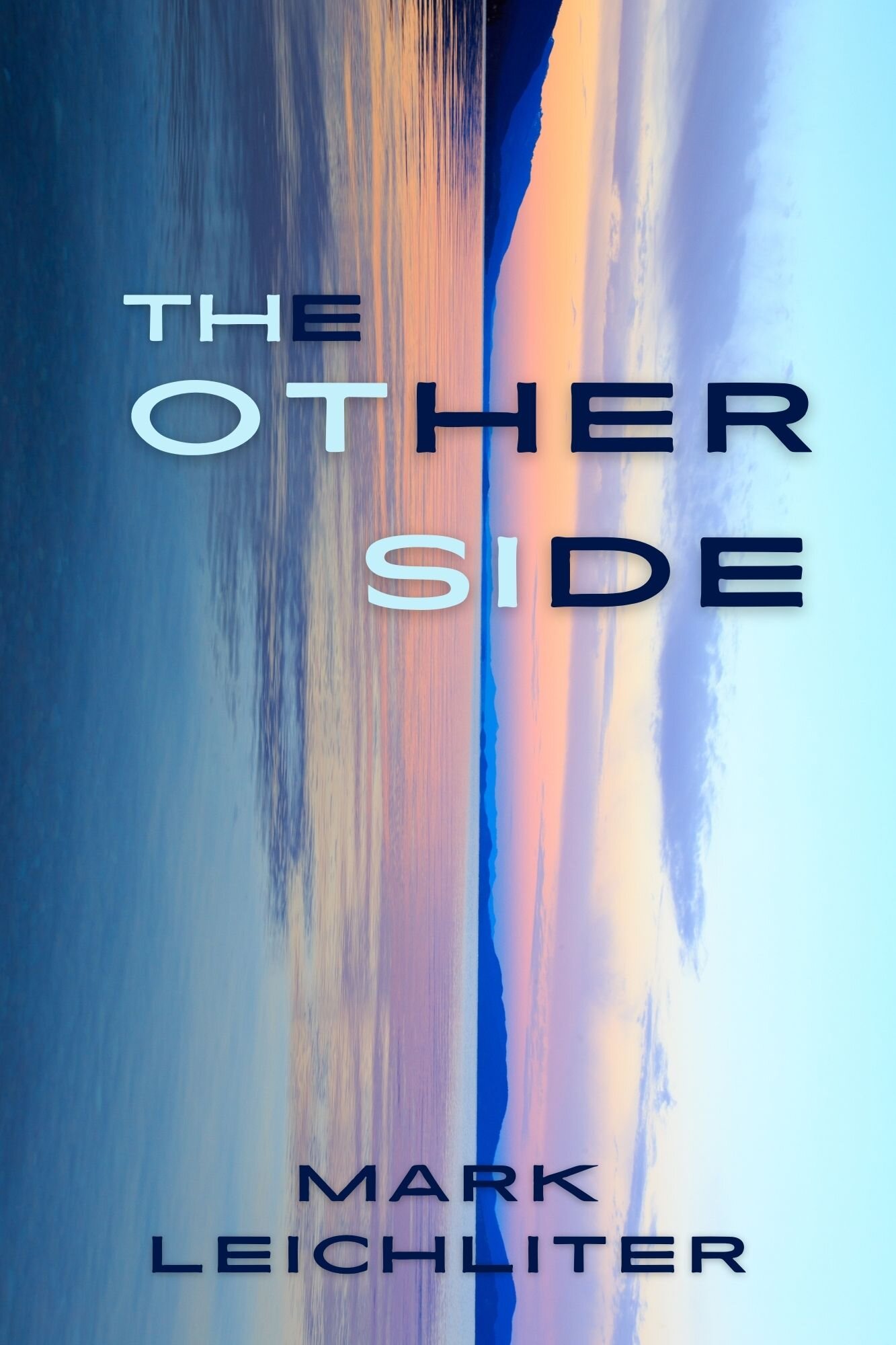
THE OTHER SIDE Cover.jpg

About Mark:

 The Other Side, a contemporary mystery novel, is the crime fiction debut from Mark Leichliter. Writing as Mark Hummel, he is the author of the contemporary literary novel In the Chameleon’s Shadow and the short story collection Lost & Found. His fiction, poetry, and essays have regularly appeared in a variety of literary journals including such publications as The Bloomsbury Review, Dogwood, Fugue, Talking River Review, Weber: The Contemporary West, and Zone 3. A former college professor and writing program director, he has also served as a teacher in an independent high school, directed a writers’ conference, worked as a librarian, and taught on the faculty of several writers’ conferences. He is the founding editor of the nonfiction magazine bioStories. A native of Wyoming, Mark lives in Montana’s Flathead Valley.


Let’s Be Social:

 www.markleichliter.com

Twitter           

Instagram    

Goodreads

Book Links:

 Amazon        

Barnes & Noble         

Apple Books

Behind the Scenes - The Chesapeake Bay Bridge Tunnel

chesapeake bbt.png

When we launched the Virginia is for Mysteries anthology, one of the requirements was that the stories needed to have a Virginia landmark. This was my first published short story, and I chose the Chesapeake Bay Bridge Tunnel that runs from Chic’s Beach (Virginia Beach) to Cape Henry on the Eastern Shore.

I grew up there, and it was always Chic’s Beach, though over the years, I’ve seen the spelling vary from Chick’s to Chix. As locals, this is where we went to avoid the hoards of tourists that descended on our city every summer. It’s a quiet neighborhood on the bay near the bridge. I was always fascinated with the bridge and what was on the other side of the bay. The bridge is really a series of bridges and tunnels that cross the Chesapeake Bay and spans about 23 miles. My parents’ first apartment when they were newlyweds was nearby, and my dad patrolled the bridge’s construction site as a young police recruit.

And it was the perfect setting for “Washed up.” The title takes on several meanings in this mystery, but the obvious is when a suitcase with a shriveled hand and a rusty gun wash up on the beach outside a struggling bar. The notoriety from the media exposure does wonders for the bar’s bottom line. But like in real life, not everything is as it first seems.

We live in Central Virginia now near a lake. It’s beautiful, but it’s not the beach that always holds a special place in my life. The restaurants and neighborhoods have changed through the years, but bridge tunnel is a constant. And I try to sneak in a visit every few months.

BookBrushImage87.png

Check out “Washed up” in Virginia is for Mysteries.

Dealing with Goodbyes in Your Writing Life

Good byes.png

Writers encounter a lot of rejections and goodbyes along their writing journey. It is a part of the process, but knowing that doesn’t make it any easier. As you grow as a writer, there are things you’re going to have (or want) to give up or do less of because your time is finite, and you have to be able to juggle all the demands in your life.

Make Sure Your Events Match Your Audience - Early on, we tried just about every event and conference that would let us speak and sell books. I learned after a few events which ones drew my readers. I am now more selective about events I attend and where I spend my time and money. I don’t have to do every event.

You Can Say No - I like to help and to be a part of things, but there are only 1,440 minutes in a day. I was taking on too much and not guarding my writing time. I had to decide what time I was going to devote to writing and book marketing, and then I had to not do some other activities.

Changes - Life is full of changes. People retire, move, and change jobs. It is difficult when you miss people or your life was upended by something you can’t control. Agents and editors retire or switch jobs. Our friends are no longer here with us. Publishing houses are purchased, and sometimes contracts are not extended. Give yourself time to grieve.

Moving on - I started out with a group of writers, and many of us were at the beginning of our journeys. We did book signings, critique groups, and blogging/marketing efforts together. Things don’t always stay the same. There are times when you need to evaluate your goals and decide if you want to continue doing things or if it’s time to jettison some activities in order to improve your craft. This doesn’t mean to give up friends or stop supporting them. It just means that you may have outgrown the activity or that it may not bring you the same joy or value that it did in the past.

Whatever the goodbye is, you need to give yourself some time to react and grieve. Then it’s time to assess your writing situation Are you ready to make a change? Decide where you want to be and work toward that goal. The writing life is a tough one sometimes. But I still believe the benefits and joys outweigh the obstacles along the way.

#ThisorThatThursday Author Interview with Debra H. Goldstein

#ThisorThatThursday Logo.png
Debra H. Goldstein Headshot black.jpg

I’d like to welcome my friend, Debra H. Goldstein, to the blog. Her latest in her Sarah Blair series launched this month.

Favorite thing to do when you have free time: read, try new restaurants, get together with family and friends.

The thing you’ll always move to the bottom of your to do list: Exercise!

Things you need when you’re in your writing cave: Show music playing.

Things that distract you from writing: A beautiful day outside my window or my husband needing his remote control fixed – again.

Hardest thing about being a writer: Discipline – there are so many distractions from simply sitting down and writing.

Easiest thing about being a writer: Meeting deadlines – I write best under pressure.

Things you will run to the store for at midnight: Toilet paper and ice cream.

Things you never put on your shopping list: a head of lettuce (pre-washed and made salads for me)

Favorite snacks: Pizza, ice cream, Girl Scout Thin Mint and Samoa cookies

Things that make you want to gag:  Almost anything healthy, Nutella, and garlic.

Something you wanted to be when you were a kid: Doctor.

Something you do that you never dreamed you’d do: Walk away from my judicial position to be a writer (passion!)

Things to say to an author: “I love yours books (or stories);” “You write beautifully;” “I stayed up all night reading your book. I had to know how it ended.” “Thank you.”

Things to say to an author if you want to be fictionally killed off in their next book: “I don’t think any of that could ever have happened.”

Favorite places you’ve been: Australia, San Francisco, China, and any theater in New York showing a Broadway musical

Places you never want to go to again: Jamaica – the country was beautiful, but the food did me in. Ended up in the hospital for a week.

Favorite things to do: Washing laundry, reading to children/grandchildren, writing, reading

Things you’d run through a fire or eat bugs to get out of doing: Folding laundry, making a bed, cleaning a toilet (notice the theme here… if I could afford it, I’d add cooking to the list)

Best thing you’ve ever done: Having my children

Biggest mistake: When I’m angry, I’d answer getting married, but after thirty-seven years, that is old hat, so I’ll simply say it’s a toss-up between putting the interior of the oven on fire while cooking or blowing the computer brain on the oven/stove while trying to use the automatic self-cleaning.

The nicest thing a reader said to you: “I’d been sitting with my mother who is in hospice, but for a few hours, while she was resting and my sister was with her, your book made me forget what was going on.”

The craziest thing a reader said to you: “You’ve got everything wrong!” – of course, the book was set in 1970, but the change in the road he was talking about didn’t occur until 1971.

The most exciting thing about your writing life: Every day is different, but there is something thrilling when I realize people like my writing (and occasionally my works are nominated for awards).

The one thing you wish you could do over in your writing life: Start sooner. I waited until I’d already established myself in other careers and in my family life to follow my dream.

Four Cuts Too Many

Sarah Blair gets an education in slicing and dicing when someone in her friend’s culinary school serves up a main corpse in Wheaton, Alabama . . .
 
Between working as a law firm receptionist, reluctantly pitching in as co-owner of her twin sister’s restaurant, and caretaking for her regal Siamese RahRah and rescue dog Fluffy, Sarah has no time to enjoy life’s finer things. Divorced and sort-of dating, she’s considering going back to school. But as a somewhat competent sleuth, Sarah’s more suited for criminal justice than learning how many ways she can burn a meal.
 
Although she wouldn’t mind learning some knife skills from her sous chef, Grace Winston. An adjunct instructor who teaches cutlery expertise in cooking college, Grace is considering accepting an executive chef’s position offered by Jane Clark, Sarah’s business rival—and her late ex-husband’s lover. But Grace’s future lands in hot water when the school’s director is found dead with one of her knives in his back. To clear her friend’s name, there’s no time to mince words. Sarah must sharpen her own skills at uncovering an elusive killer . . .
 
Includes quick and easy recipes!

Let’s Be Social:

Website – www.DebraHGoldstein.com

Facebook – https://www.facebook.com/DebraHGoldsteinAuthor/       

Twitter - @DebraHGoldstein

Instagram – debrahgoldstein 

Bookbub – https://www.bookbub.com/profile/debra-h-goldstein

Book LInks:

Amazon:  https://www.amazon.com/Four-Cuts-Sarah-Blair-Mystery/dp/1496732219

Barnes & Noble: Four Cuts Too Many by Debra H. Goldstein, Paperback | Barnes & Noble® (barnesandnoble.com)

About Debra:

Judge Debra H. Goldstein writes Kensington’s Sarah Blair mystery series. Her short stories and novels have been Agatha, Anthony, Derringer, and Silver Falchion finalists. Debra is on the national board of MWA and is president of SEMWA. She previously was on SinC’s national board and was the Guppy Chapter president.


Behind the Scenes - The Mill Mountain Star

Mill Mtn.png

When we were planning the second volume of Virginia is for Mysteries, I looked at the map in the front of the book and realized most of the stories in the first volume centered around Coastal and Central Virginia. The requirement for stories in the mystery anthology was to feature a historic or popular landmark from the Commonwealth of Virginia. I wanted to set my story in the western part of the state.

My mother grew up in Roanoke, Virginia, and I remember her and my grandmother talking about the star on the mountain top. I finally got to see it when I was in the third grade and later as an adult when we did a book signing in the downtown area.

The neon star beautiful and big enough to be seen from miles around. I did some research on the history, and it became the setting of my story, “Spring Cleaning.” In the story, it's a symbol for Douglas Weimer, who is having issues at work. He laments that he’s been demoted and forced to give up his office with a view of the neon star that’s been atop the mountain since 1949. Douglas, a medical records manager, gets more than he bargained for when he’s moved onto a new team and receives a project with a drop-dead delivery date. His assignment in Roanoke, Virginia, gives new meaning to work deadlines.

Check out Visit the Blue Ridge for more information on the star that started out a Christmas decoration commissioned by the local Merchants’ Association. The City of Roanoke’s website also has some history on the star and its lighting over the decades. At one time, the town used the color of the star to indicate fatal traffic accidents in the valley. The star can be lit red, white, and/or blue.

Volume three of Virginia is for Mysteries is slated for publication this fall. Look for my story, “Derailed,” about the Church Hill Tunnel disaster in Richmond, VA.

BookBrushImage703.png

Check out Virginia is for Mysteries and Virginia is for Mysteries Volume 2 at your favorite book retailer.

Plotters, and Pantsers, and Hybrids, Oh My!

Whatever it is, the way you tell your story online can make all the difference.

Whatever it is, the way you tell your story online can make all the difference.

What is your writing style? There has always been an age-old discussion among writers. And you will find diehard fans on both sides.

Quick Definitions

Plotter - One who is a detailed outliner. He/she plans the entire book before writing.

Pantser - One who writes by the seat of her/his pants. The writer goes where the story leads.

Hybrid - This is a combination of the two styles. There’s some planning and some freewheeling.

I have been in IT for the last twenty-one years, and before that I was involved with business analysis, project management, and technical writing. Planning and outlining have always been a part of my work processes. I am also a list maker and planner of everything from vacations to potlucks. So it was a natural fit for me to plot.

My style has changed over the years. As I dove deeper into the writing process, sometimes a subplot or a character took over, and the structure changed from my plan. In an effort to speed up my writing, I “pantsed” several books. They no longer took five years to write, but I tended to get stuck in the middle. I struggled with where the story was going. It wasn’t really writer’s block, but I was mired in what should come next. With the rewrites and the revisions, I probably spent more time than if I had outlined the book in the first place.

And sometimes the characters or plot did take over. In my Delanie Fitzgerald series, Chaz Wellington Smith, III, the sleazy strip club owner was only supposed to be a minor character in book one. My critique group liked his character, and he is fun to write. I just finished book four in that series, and Chaz is still around. He grew on Delanie and me.

In your writing, use whatever style works for you. I describe myself as a hybrid now. I’m rigid enough to start with a plan and flexible enough to change if it suits the story. My chapter outlines also save time when I put a synopsis together for querying.

There is no right way. Look for ideas or hacks that will help you improve your writing. If something doesn’t work, jettison it for something else.

Happy writing, whether you plot and plan, or write whatever comes to mind.

#ThisorThatAuthor Interview with Terry Shepherd

#ThisorThatThursday Logo.png
ts2.jpg

I’d like to welcome author, Terry Shepherd, to the blog for #ThisorThatThursday!

A few of your favorite things: 

My beautiful granddaughter jumping into my arms when she sees me. Watching my kids parenting their kids and animals. The smile on my wife’s face when I first see her every morning. 

Things you need for your writing sessions:

I write in Vellum and then, run my daily word count through Pro Writing Aid. The last step is narrating it to mp3 audio. It’s always surprising what you find when you read your writing aloud.

Things you love about writing:

I love the characters best. I try to populate my tales with highly diverse casts. Researching the culture and talking to people about their life experiences is a treasure trove. It builds empathy and has given me a unique perspective on the rich variety that makes up humanity. The highest compliment you can get is to hear someone say, “Hey! You told my story!”

Things you never want to run out of:

New people to meet. Kindness. The desire to create.

Words that describe you:

Optimistic to a fault. Impatient with myself. Driven. Passionate.

Favorite music or song:

I’m a sixties guy. Anything from 1963 until 1974 is my wheelhouse. I favor Motown and early Beatles but also love Earth, Wind & Fire and the Manhattan Transfer. I was a rock drummer as a kid and still can’t listen to Buddy Rich’s West Side Story Medley without getting chills.

Something you’re really bad at:

Handwriting. Learning to type in 9th grade was a life changing experience.

Things to say to an author:

“Here’s what I enjoy about your storytelling…”

Things to say to an author if you want to be fictionally killed off in their next book:

“Your book was terrible and I won’t tell you why.”

People you’d like to invite to dinner (living):

The famous: Authors David McCullough & Megan Abbott, Record Producer Bones Howe, Barack and Michelle Obama

The important: My closest college radio friends

The nicest thing a reader said to you:

“You made me believe I could be a heroine, too.”

The craziest thing a reader said to you:

“Your LGBTQ character is exactly like me and we’ve never even met. Have you been stalking me?”

ts3.jpg

About Terry:

Terry Shepherd writes thrillers for grown-ups and detective stories for kids. His first published fiction, the Jessica Ramirez Thriller “Chasing Vega” is a 5-Star hit in both English and Spanish. Book two, “Chasing The Captain” is due out in May. He’s the author of the Waterford Detective series for children and the forthcoming kids time-travel history series "Students In Time." In 2020 he and his wife, Colleen co-wrote the "Juliette and the Mystery Bug" series, teaching kids how to protect themselves from Covid-19 and other “mystery bugs." Terry hosts the Authors on the Air podcast, is co-chair of the Sisters in Crime / Capitol Crimes 2021 Anthology committee and watches the sun come up on the ocean from his home in Jacksonville, Florida.

ts.jpg