How Much of You is in Your Writing?

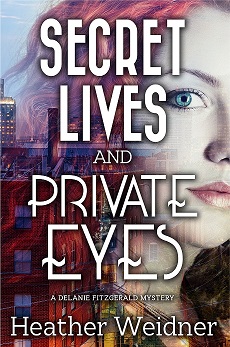
secret lives private eyes cover 50 web.jpg

I’m asked a lot if my sleuth, Delanie Fitzgerald, is me. I wish. She’s my alter-ego. She runs toward dead bodies, and I run away from them. She’s a redhead who drives a Mustang and gets into way more trouble than I do. (I’ve had two or three Mustangs through the years.) We like a lot of the same things, but she’s not me. However, there is a lot of me in my novels and stories.
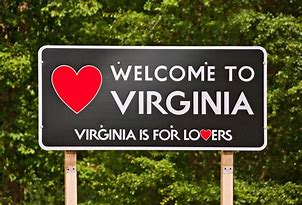
I set all of my books/short stories in Virginia. I write where I know. I’ve lived in the Commonwealth all my life, and I want everyone to know about all the great places, history, and culture of the area. I grew up in Virginia Beach as a CK (Cop’s Kid). It was the best place to be a teenager. We live in Central Virginia now outside of Richmond. And there are so many local attractions, festivals, and restaurants that are fun to include in stories.

80s.png

A lot of my interests (e.g. reading, traveling, history, and pop culture) end up in my work. I am an 80s girl, so you’ll often find a lot of references sprinkled in.

I have always loved to people watch when I’m out and about. Snippets of conversation and descriptions often end up in my work. My family and coworkers aren’t safe. Stuff they say appears all the time. You’ll never know who or what will end up in the next book. I keep a notebook with me, and I jot down quirky things all the time.

Disney+and+Riley+-+Copy+-+Copy+-+Copy.jpg

I have two crazy Jack Russell terriers (terrors). The female, Disney (the brunette), has had two dog characters based on her — Darby in “Diggin’ up Dirt” in To Fetch a Thief and Bijou in a cozy that I’m working on. Her brother Riley was the model for the JRT in Secret Lives and Private Eyes. My Uncle’s Rottie is the model for the dog in “The Fast and the Furriest” in the next Mutt Mystery.

So while my characters aren’t me, there are a lot of my interests (or things I want to try) in my writing. In the latest Delanie mystery (that I’m still working on), she gets involved with some drag queens, contraband pet dealers, and historic artifact thieves.

Spring Cleaning! Tips for Authors

s1.png

We’re having our upstairs painted this week, and we spent a lot of time moving things, pulling down pictures, and getting rid of stuff we don’t use any more. Since it’s that time of year, we may need to do some spring cleaning or purging in our offices and files. Here are some places to start…

s5.png

  1. Clean your work space on your desk. I found so much junk that was no longer needed (and about 50 sticky notes that were outdated).

  2. Look at your bookcases. I cleaned out two shelves of old style guides and dictionaries. I sent a bunch of writing prompt books to the Friends of the Library.

  3. Make sure that you’re backing up your files regularly. Your work is too valuable to lose.

  4. Go through your graphics, pictures, and videos. Archive or delete what’s no longer needed. These take up a lot of storage space.

  5. Remove duplicate files.

  6. Go through your email contacts and purge any you don’t need.

  7. Look through your favorites on your web browser and delete outdated ones or broken links.

  8. Read through your author biography and update it.

  9. Then check your website and social media sites. Update your photo and biography.

s4.jpg
s2.png

How Do You Decide What Author Events to Attend?

Q.png

There are so many events and writer functions to choose from. It’s often a tough decision to make on whether to go or pass. I have several author friends who weigh their decision based on how many books they think they’ll sell.

Your writing is your business, and you do need to make sure that you have time to write and market your work. You, as a professional, also need opportunities to sell your books. And your time is valuable.

That being said, there are times when I’ll do a volunteer event or a workshop where I don’t have an expectation for book sales, but there are often benefits or surprises that go along with these.

Every event is an opportunity to talk to readers. Because I’ve attended an event, I have been invited to a radio interview, podcast interviews, marketing opportunities, book clubs, and other speaking engagements.

I love libraries and writing programs for new writers (especially kids), and I try to make time to do these kinds of events. I spoke to an English class recently about the mystery genre, and I was floored that multiple students had brought copies of my books for me to sign.

I did a group event at a wine festival once. It was hot. We were outside, and book sales were slow. But we did have an opportunity to talk to hundreds of people. I gave out bookmarks, pencils, and pens. I was also pleasantly surprised that my ebook numbers jumped the next week. People who were not ready to buy a book at the wine festival bought one later online.

Once, I did a book club presentation at a senior facility for a friend who was a program director. After a wonderful discussion, all the participants asked me to come back for a book signing.

So, yes, as an author you need to make sure that you divide your time. If you’re on the road constantly, you’re not writing your next book. But, if you don’t go out, you don’t have opportunities to talk to readers. I think it’s a balancing act.

The End! Or Is It?

theend.jpg

There is nothing like the feeling of typing “The End.” But I’ve found “The End” isn’t always the last step. When I’m at the point that I’m sure I’m done, here are the things that I look at.

  1. Check the word count to make sure it fits within the guidelines for your genre.

  2. Spellcheck the manuscript to ensure that you caught all the boo boos that came from editing or the last round of revisions.

  3. Check the last paragraph of each chapter to make sure it encourages readers to keep reading. You don’t want to wrap up things so neatly that the reader decides that it’s a good stopping point.

  4. Print a copy and proofread on paper. You’ll find more than you will proofing on your screen.

  5. Read your dialog out loud to ensure that it doesn’t sound stilted. It should sound like a conversation.

  6. When I think I’ve done my best, then it’s time for beta readers and my critique group. They are great for looking for plot holes or things that don’t make sense.

  7. Look at your chapter lengths. They should be close page number-wise. You don’t usually want a three-page chapter and then a 25-page chapter.

What else would you add to my list?

Ways to Get Traffic to Your Website

traffic.jpg

All authors need a website with your current information and all your books. Getting people to visit your website can be a challenge sometimes. Here are some ideas to drive traffic to your website.

  1. Have a blog on your website and blog regularly. Pick a schedule that works for you and try to stick to it. Find your niche of what you want to share (e.g. tips about writing, social media tips, book promotion ideas, recipes, crafts, etc.).

  2. Share links to your blog posts on your other social media sites for advertising.

  3. Make sure to put your website’s URL on all of your other social media sites. If there’s not a specific field for it, make sure to include it in your biography or description.

  4. Find other authors like you and do a blog take-over. She posts on your blog while you post on hers. You swap audiences and hopefully introduce new readers to you.

  5. Find ways to have guest bloggers or interviews of others on your blog. When the guests share your post, other readers find your site. On my Pens, Paws, and Claws blog, we have #WriterWednesday interviews with guest authors.

  6. Build a network (formal or informal) of other bloggers/writers who will share each others’ posts. You spread your reach to all their followers.

  7. Review books on your blog.

  8. Do guest posts on others’ sites. Include your biography, website URL, book links, and social media links at the bottom of your post.

  9. Put your website’s URL on your bookmarks and business cards.

  10. Some authors give away freebies or have contests on their websites. Others give away short stories or excepts from a future work.

  11. Make sure you keep your content on your blog/website current. If people visit, and things are dated, they often don’t return.

Quirky Writing Habits - What Are Yours?

quirky.png

Do you have to have certain things when you’re writing? Do you have any writing rituals or habits? Here’s my list.

I always have to have some kind of background noise when I work. I don’t like it when it’s too quiet. I usually have some sort of music on. I have different playlists. I usually listen to louder music when I write. I have jazz and other smoother playlists for editing or proofreading. My sleuth Delanie Fitzgerald is an 80s girl, so when I’m working on that series, I usually have a Big 80s playlist going.

IMG_0555.JPG

When I work at home, my Jack Russell Terriers have a dog bed on each side of my desk. They listen to me plot and read dialogue, but they tend to nap during most of the writing process.

If it’s a nice day, I like to write and read on my back deck. I like writing outside. My favorite place to write outside is the beach.

If it’s cold or rainy, I have a big comfy chair in the living room where I like to do rewrites or edits. It’s also my reading chair on snow days.

I am a caffeine junkie, so there is always iced tea, iced coffee, or a soft drink somewhere if I’m in serious writing mode.

blob

My least favorite part of the writing process is making edits and updating the main file. Sometimes, I need chocolate for this task. Dark chocolate works best for me. I don’t normally get to excited about Reese’s Peanut Butter Cups, but for some reason, I love the Easter egg ones. I always stock up on those in the spring.

When I’m plotting, I do mind-mapping or cloud diagrams that show the story line. When I start writing, I color code the chapters to show where there is romance, humor, and clues. That’s a quick check for me to see if I need to spread anything out.

What are your writing habits?

5 Keys for Authors and Social Media

sm22.png

Social media for authors is a vast subject, and if you ask ten people what works for them, you’ll get ten different answers. The algorithms and features on a lot of these sites change frequently, so something that worked for you last month doesn’t work the same way now. I’m doing some workshops in March for writers and their social media platforms. Here are the five things that I think are key for writers to know.

  1. Repeat what works for you. Try a variety of the platforms, but choose one or two that work for you and your readers and focus your time and energy there. If not, you will work yourself silly trying to keep up with all the posts, comments, and emails.

  2. Guard your writing time. Life and about a hundred other distractions will get in your way. Don’t let your social media time take over your writing time. You should be writing your next book.

  3. Be real and be social. Participate in conversations and network on these sites. Like, comment, and share others’ posts. Add to conversations. Start a conversation. And be timely. It looks odd if you comment on a thread from three months ago.

  4. Know your readers and your audience. Know the demographics (e.g. age, preferences, and styles) of your audience and post topics interesting to them. Facebook and Twitter analytics can help you see who is viewing and following your accounts. Find your niche. Your audience is not everyone who reads. You need to narrow it down and target your posts and marketing to that demographic.

  5. Make a plan. Decide which social media sites you want to focus on and figure out a schedule that works for you. I check my major sites every morning at breakfast. If I have time, I check during lunch. And I hop on after dinner and review updates. I also schedule posts on Fridays for the following week. A schedule helps me stay active on my sites, while balancing other things.

Rookie Writer Mistakes - We've All Made Them

blob

Someone recently asked me at an event what advice I’d give to a new writer. This is a list of rookie writer mistakes (in no particular order). We’ve all made at least one.

  1. When you schedule an event, always confirm ALL of the details (e.g. where will you be seated, who’s handling the book sales, the date/time, location, etc.). I’ve had one outside event in January, and several in the middle of August.

  2. Always bring a box of books with you to every event. The bookseller could make a mistake, or you could sell out!

  3. Have a bag with your swag, book stands, pens, tape, etc. with you. Mine has bandages, mints, lotion, and scissors in it, too. At my very first book signing, my one and only pen died. Thank goodness, Mom had a supply with her.

  4. If you agree to an event, guest blog, or interview, meet your commitments. People are counting on you.

  5. Don’t burn bridges. Be professional. You never know who you’ll sit next to on a panel.

  6. ALWAYS get reliable references for services for editing, proofreading, book covers, and book promotions. If it sounds too good to be true, it probably is.

  7. Read all of your contracts. Consult legal professionals. You and your work are your brand, and you need to protect them.

  8. Treat your writing as a profession. Consult your tax advisor for advice about how to record sales, sales tax, etc. This is a business.

  9. Keep all of your receipts and track your mileage for your taxes. (See #8. It’s important.)

  10. Have a separate bank account for your writing.

  11. When you get to the point with your manuscript where you feel the book is done, then it’s time to send it to beta readers, your critique group, or an editor. It’s not ready for agents or publication at this point.

What would you add to the list?