How Productive Are You with Your Writing?

prod.jpg

With work and life’s distractions, I don’t have a lot of writing time. I admire writers who can create multiple novels a year and stick to a daily writing schedule. I’m a binge writer. I write when I have blocks of time, and I don’t always keep to a set schedule.

But I did an experiment this year to see what was possible, and I had one of my most productive years to date. This year, I completed a cozy mystery, and I have a sloppy draft of my third Delanie Fitzgerald novel. I wrote a dog-themed mystery novella that was published in November in To Fetch a Thief. I wrote a short story, “Art Attack” that will be published next May, and I wrote a nonfiction piece that will be published next year too. And before December, I hope to start on another novella for the Mutt Mysteries collection.

It is possible to increase your writing output. Here’s what I did:

  1. I cut out a lot of TV time.

  2. I edited, proofread, and did rework during times that I normally didn’t write. I would print out chapters and put them in my purse for wait times like in the doctor's office or at the DMV.

  3. I started tracking my word count for the week. This helped me stay on track. It also gave me a visual of what I had accomplished.

  4. I tried to find some writing/editing/blogging time each day. It didn’t always work, but I made the effort.

  5. I was a little more choosy and protective of my writing time. I learned how to say no politely.

  6. I used my critique group to keep a monthly deadline. We submit 50 pages for review each month. I didn’t skip months this year. I had something to review each month.

Best wishes with your writing projects. What else would you add to my list?

Writing Advice from the To Fetch a Thief Authors

Final cover TFAT small for social media.jpg

I’m excited to be one of the four authors in the dog-themed mystery, To Fetch a Thief. I asked my three partners to offer some writing advice, and here’s what we came up with:

What is the one thing about the writing life that you didn’t know until you were published?

Jayne: How difficult the marketing phase of things would be. I guess I thought these books would just sell themselves!

Heather: I didn’t realize how much marketing went into the book business. It takes a great deal of time to promote your work. You need to balance the writing/editing time with your promotions.

Rosemary: Until I was published I didn’t understand the role of an editor and that the role may be different from story to story or book to book. Some editors require you accept their suggestions and changes unless you have some compelling reason to not accept them. Luckily, my first editor was a mentor and taught me what was expected and how much to discuss or argue or disagree with an editor. Other editors were unclear on the editing process logistics—the how to indicate changes or indicate non-acceptance of editing. I’ve had some snafus where edits, both mine and the editor’s, were not properly reflected in a story, and that’s frustrating.

Teresa: That I have to market, promote, and sell my books. I’ve learned a lot about promotion and scheduling book signings. 

How long did it take you to get your first work published (from creation to actual book)? What was your first published work?

Jayne: I wear the “100-rejection” badge of honor. It took me almost six years to get The Blond Leading the Blond published by Avalon Books. I finally got noticed because my first chapter was a finalist in a mystery writing contest in which the final judge was the publisher.

Heather: My first mystery to be published was a short story, “Washed up” in Virginia is for Mysteries, a Sisters in Crime anthology. It took about six months to write and polish. Then the book editing/proofreading/formatting process took probably another eight months or so. My first mystery novel, Secret Lives and Private Eyes took me about five years to write and rewrite and rewrite. When it was finally accepted for publication, it took another seven months to become a book.

Rosemary: The first item I had published for pay was a short story I’d written during a long weekend. Once I submitted the story, the gentle editing needed from my end took only an afternoon. “A Fish By Any Other Name” was included in A Shaker of Margaritas: Hot Flash Mommas, the first of the Shaker of Margaritas series, in 2010.

Teresa: I was part of a creative writing group at a community college and my first story was published in a book with that group. It was around six months after my story was accepted. 

Plotter (one who plans or plots out every detail of her writing) or Pantser (one who writes by the seat of her pants)?

Jayne: Plotter. You should see my story board!

Heather: I’m a hybrid. I start out as a detailed plotter, and then I write. The story and the characters always go where they want to go.

Rosemary: I’m a pantser—autocorrect keeps changing this to “panther,” and that’s funny to me because if I were an animal, I most certainly would not be a panther. I’d be a duck or some other bird, I think. But I digress. So, I am a seat-of-the-pants writer with plotter tendencies. Being a pantser is much more fun, if you ask me. Early on I thought I was a plotter because I’m very analytical. I was highly organized for the first part of my life. When I became a parent, all that flew out the window. The first story I consciously totally plotted revealed I was a pantser. By the time I finished plotting that story to the nth degree, I was so sick of the story that I didn’t want to write it. The beauty of a pantser is the creative flow. The raw material for the story emerges organically—“pantsing”—and the rewrite and editing phases allow me to be as analytical as I want to be on a project. That’s a good mix for me.

Teresa: Both. I like to plot and be creative so I can follow where the character takes me. 

What advice would you have for a new writer?

Jayne: Don’t ever, ever give up. It’s a long, long road to publication, but it’s worth it!

Heather: Be persistent. If you want to be published, keep at it. Keep writing. Keep learning, and don’t give up.

Rosemary: My advice to a new writer is two-fold. First, pick a genre. Second, join a writing group dedicated to that genre. Many new writers I meet dabble in several genres, and this wastes a lot of time, in my opinion. Much learning about professional fiction writing is transferable among genres, but one must commit to only one in order to show his or her serious intent and gain the trust of that selected genre’s writing community. For me, meeting mystery writers and hearing their explanations of “this is how mystery writers do it” was the beginning of fruitful learning. 

 This advice has been rejected by a few new writers who don’t see why they have to limit themselves. I’m not talking about limits. I’m suggesting concentration. I advise new writers to immerse themselves in maybe one or two genres at a time, if they really won’t choose one only. I also suggest that they not share about their dual commitments in either writing community and just focus on whatever genre project or group they attend or work with, independent of the other group. In my mind, a new writer (with a day job) could immerse himself or herself in one genre and one genre community for two years and learn enough to know if it’s his or her writing “home” for the foreseeable future.

Teresa: Go to conferences and workshops. And write. These will help develop your craft. 

To Fetch a Thief is the first in the Mutt Mysteries collection. Tell us about your real dogs and what they do while you write.

Jayne: We have two rescues, Tiller and Scout. They are still puppies. I can only write while they are napping. The little one likes to curl up next to me on the sofa and rest his head on my keyboard. That is a challenge! And a distraction! But giving me lots of fodder for future cozies featuring dogs! Already working on my second Mutt Mystery.

Heather: My two Jack Russell Terriers (Disney and Riley) have beds in my office on either side of my desk. Sometimes, they help me plot or listen as I talk through dialogue. Most of the time, they snooze.

Rosemary: My dog is my comfort animal. As I raised my children, our first family dog, Mabel, and our second family dog, Current, were the loving beings in my home with the least needs. And bless their hearts, after home, house, and family needs were met, these dogs were there to provide me with easy, nonjudgmental companionship. I am not a nurturer, so family nurturing took a lot out of me. When I was exhausted and crabby, my dogs nurtured me. Now my kids are grown and my current pooch, our second family dog, “Current,” has a new role. He tears me away from my obsessing about writing and other projects and reminds me to go outside for a walk or to work in the yard with him for company. He seems to know when I really need a break. He reminds me to give him food and water, and thusly to meet my human needs to eat and drink and to step away from too much concentration and relax. He’s usually in the dog bed in my son’s old room while I write in another room nearby. He’ll walk in and interrupt me when it’s time he and I do something else.

Teresa: My dogs are Luke and Lena, both shepherd mixed. They are named after my husband’s grandparents and love to sit by me when I write. 

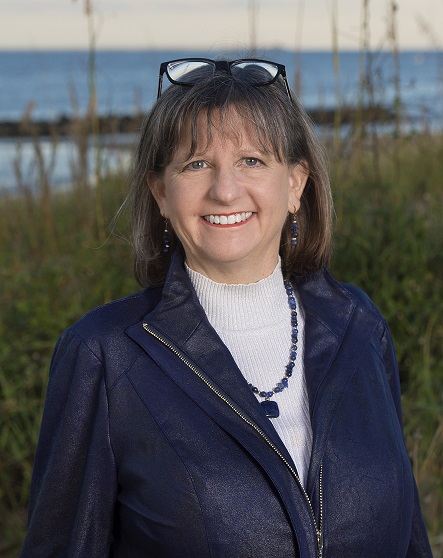
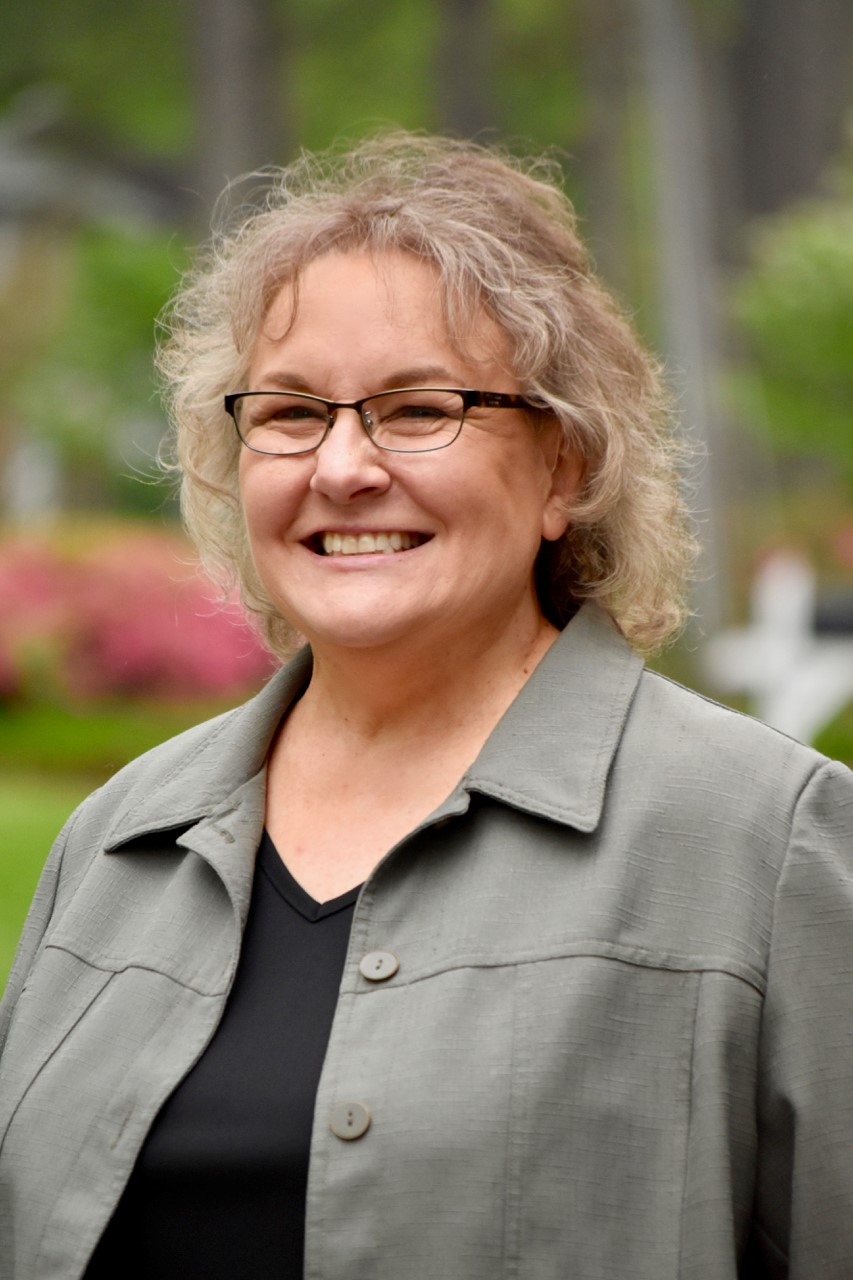
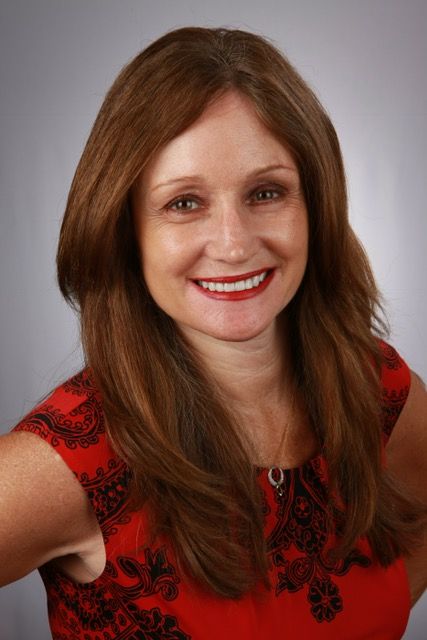
l-r: Jayne Ormerod, Heather Weidner, Rosemary Shomaker, Teresa Inge

To Fetch a Thief

To Fetch a Thief, the first Mutt Mysteries collection, features four novellas that have gone to the dogs. In this howlingly good read, canine companions help their owners solve crimes and right wrongs. These sleuths may be furry and low to the ground, but their keen senses are on high alert when it comes to sniffing out clues and digging up the truth. Make no bones about it, these pup heroes will steal your heart as they conquer ruff villains.

The Stories

“Hounding the Pavement”

by Teresa Inge

Catt Ramsey has three things on her mind: grow her dog walking service in Virginia Beach, solve the theft of a client's vintage necklace, and hire her sister Emma as a dog walker.  But when Catt finds her model client dead after walking her precious dogs Bella and Beau, she and her own dogs Cagney and Lacey are hot on the trail to clear her name after being accused of murder. 

 “Diggin’ up Dirt”

by Heather Weidner

Amy Reynolds and her Jack Russell Terrier Darby find some strange things in her new house. Normally, she would have trashed the forgotten junk, but Amy’s imagination kicks into high gear when her nosy neighbors dish the dirt about the previous owners who disappeared, letting the house fall into foreclosure. Convinced that something nefarious happened, Amy and her canine sidekick uncover more abandoned clues in their search for the previous owners.

 “Dog Gone it All”

by Jayne Ormerod

Meg Gordon and her tawny terrier Cannoli are hot on the trail of a thief, a heartless one who steals rocks commemorating neighborhood dogs who have crossed the Rainbow Bridge. But sniffing out clues leads them to something even more merciless…a dead body! There’s danger afoot as the two become entangled in the criminality infesting their small bayside community. And, dog gone it all, Meg is determined to get to the bottom of things.  

 “This is Not a Dog Park”

by Rosemary Shomaker

“Coyotes and burglaries? That’s an odd pairing of troubles.” Such are Adam Moreland’s reactions to a subdivision’s meeting announcement. He has no idea. Trouble comes his way in spades, featuring a coyote . . . burglaries . . . and a dead body! A dog, death investigation, and new female acquaintance kick start Adam’s listless life frozen by a failed relationship, an unfulfilling job, and a judgmental mother. Events shift Adam’s perspective and push him to act.

Book Links:

24 Symbols

Apple

Barnes and Noble

Kobo


Swag for Book Promotions

swag.png

Everybody loves free stuff! What do you give away at events or as prizes? There are so many items out there that you can personalize. Here’s what I’ve learned along the way.

Shipping - If you are mailing your swag, be careful that what you buy is easy (and cheap) to ship. My author friend bought cute mugs with her book cover on them. But the cost to wrap and ship was outrageous.

And if you’re mailing prizes, make sure that you specify the mailing area. It’s costly if you have to mail items overseas and complete custom forms.

My author friend, Tina Glasneck, said to make sure that your prizes always fit in a standard envelope.

Themes - I try to theme by give aways to match something in the book. I’m part of a dog-themed cozy mystery collection (To Fetch a Thief), and I try to have things that will appeal to dog lovers.

Candy - Candy (the good stuff) is always a hit at events. Just be careful of the temperature. I took chocolate to a summer event, and it was squishy.

Personalized Swag - I had pencils made for my private eye’s company. They also had the book title, my name, and my website. People like pens and pencils. My author friends, Mary Behre and Kristin Kisska, always give away pens with purple ink. People tend to keep them because who doesn’t love purple ink?

I always have bookmarks made for each of my books and short stories. After many events, I’ve seen my ebook sales spike. Some folks prefer ebooks. I always include the cover, my picture, the ISBNs, and my contact information for each book. And don’t forget the back of the bookmark. You can include your other books that the reader may like. Keep a stack with you always. You never know when you’ll run into a reader.

I had notecards made with my book covers on them. The back side is blank. I use these to write notes for just about anything.

I use Vista Print and Next Day Flyers for business cards, note cards, and bookmarks.

Prizes - I use Etsy to find cool give aways that my readers would like. I’ve found wine glass charms, stickers, magnets, pins, and jewelry. (My Delanie Fitzgerald series has an 80s theme in the first book, so I often give away 80s pins instead of candy.) I also give away gift cards because they are easy to mail and fit in a standard envelope. Amazon and other sites have egift cards that you can email to winners.

What kind of swag do you like to give or get? Let me know what you’d add to my list.

Getting Back on Track...

tt.jpg

I finished my SAFe (Strategic Agile Framework) training and passed certification exam recently. And it’s been a while since I’ve studied and crammed for an exam. I spent a lot of time over the last two weeks reading and studying (and learning hundreds of acronyms).

Needless to say, my book marketing and writing projects have been neglected, and I’ve lost some of the momentum I had on my WIP (work in progress - which is also an Agile term).

Stuff happens. Life and work will often throw your writing off schedule. The holiday season is fast approaching, and that always affects my productivity. Here are some ideas to get your writing back on track.

  1. If you’re an early bird or a night owl, capitalize on that. Start your day earlier or stay up later to build in some extra writing time.

  2. Turn off the TV or electronic gadgets and use that time for writing.

  3. Use your lunch or meal times to build your word count.

  4. Print out chapters and use waiting time to proofread or edit.

  5. Don’t beat yourself up if you neglect your writing. Life happens. Get back to it as soon as possible.

  6. Set a reasonable schedule or goals for the week and try to stick to it. You’ll be surprised how much your word count will grown when you write every day.

  7. Find a writing buddy or someone who’ll tell you if you stray. I have two friends on Facebook who remind their writer friends that they should be writing. Public shaming can be a motivator.

What would you add to my list?

Dm9gOeNXcAAYcIk.jpg

10 Things About the Writing Life

write.jpg

When I do interviews or panel discussions, someone always asks what advice I would give to other writers. So I decided to put together my list of 10 things I’d tell someone about writing or the writing life.

  1. Do not give up. If you want to be published, be persistent. Keep writing.

  2. Turn off the TV (or phone or Internet surfing) and write.

  3. Work on your craft. Learn as much as you can about your genre and writing. You need to know about the writing conventions that readers expect.

  4. Learn about the publishing industry and the business of books. (It’s ever-changing.)

  5. Find yourself a writing group. Writing and editing are solitary. You need to be around other writers to share celebrations and disappointments. I learn so much from my writer friends who are generous with their time and advice.

  6. Writing/publishing books is a business. You need to treat it as such. Be professional.

  7. Learn all you can about book marketing and promotion. It’s often harder than writing the book.

  8. If you get stuck, don’t give up. Do something to get your creative energy back.

  9. Don’t be too hard on yourself. Learn from mistakes or from something that didn’t go well and then move on. Don’t get stuck wallowing in self-pity. It’s a mire that’s hard to get out of.

  10. You will doubt yourself and your choices. It happens to everyone. Set goals and look for ways to improve. Don’t get stuck in the pit of self-doubt.

What would you add to my list? I wish I’d known this in my teens and twenties when I started dabbling with writing.

Serious Play and How It Can Help Creativity

IMG_3445.jpg

I attended a Leading SAFe (Scaled Agile Framework) class this week, and one of the training methods was to demonstrate team facilitation skills and exercises. One was Serious Play with Lego. Check out the link for the methodology.

IMG_3446.jpg

The Serious Play is a good technique for adult learners. It stimulates creativity and causes you to use both sides of your brain while you’re listening or thinking. As a writer, you can do these exercises when you’re plotting or trying to get out of a rut.

Legos/Building Blocks

When you’re brainstorming or plotting, pull out the building blocks and build. You don’t have to have a plan. Let your subconscious guide you. You’ll be surprised at the creativity it sparks.

pd.jpg

PlayDoh or Modeling Clay

Back in my training years, I’ve used PlayDoh in classes to get people to use their tactile skills and to energize them to come up with new ideas. As a writer, if you’re stuck or need to work out a plot point, break out the PlayDoh. The smell will bring back lots of childhood memories.

cr.jpg

Coloring

If you’re stuck, get out the crayons or colored pencils and color or draw. Studies have been done about the recognizable smell of crayons. The hand-eye work stimulates the creative regions of the brain and stimulates activity.

These are some fun ways that will bring back memories to get your creativity kick-started. What else would you add to my list?

Book Launch Ideas - Tips for Authors

cal.png

Launching a book and planning your book birthday events are fun, exciting, and often overwhelming. These are suggestions that I’ve learned over the years:

Organization

  1. Get organized. Create a four-month calendar (2 months before the date and 2 months after). Record all of your tasks and promotional events.

  2. Make a list of all the places (physical and online) where you’d like to promote your book.

  3. Be creative. Look at your list above and think of other options to add. For example, we had wine-themed anthology, so we looked for wineries, wine festivals, and wine shops that would host of us for book signings.

Tasks

  1. Make a list of all the places you need to update with your book information (e.g. social media biographies, webpages, blog, Amazon author page, BookBub page, etc.).

  2. Update your blog and website with your book information.

  3. Order swag for events and give-aways. Make sure that what you order is easy to mail.

  4. Send out press releases to your local media outlets. Don’t forget the weekly publications and the shopper give-aways.

  5. Create a book information sheet with your synopsis, updated biography, social media links, and book links. Make sure you include this with all blog tours and interviews.

  6. Create a page on your website for all of your books. Include a short summary and buy links for multiple outlets.

  7. Look at your task list and add “tell everyone you know.” Don’t forget to submit your announcement to the member news sections of groups you belong to. Many groups have newsletters where they recognize accomplishments. I send all my releases to all my alumni newsletters.

Promotion

  1. Contact all your writer friends who will help you promote your book on their blogs or newsletters. Schedule those on your calendar.

  2. Decide how much and what you’re going to spend your marketing dollars on. What are you going to spend on pre-sales, launch events, and after-launch? Are you going to pay for blog tours, email blasts, or Facebook boosts?

  3. Decide if you plan to host Facebook parties, Facebook takeovers, newsletter takeovers, or Twitter parties. You’ll need to schedule, plan, and recruit other authors to help with the promotion and give-aways. (Check out my past posts on Hosting Twitter and Facebook parties and Facebook Hops. They are fun, but they take a little bit of work to organize.)

  4. I also look for volunteer or charity events for causes that I support. I often donate a prize and book basket for raffles or give-aways. And these are always stocked with book swag.

What else would you add to my list? It’s a time to celebrate your accomplishment!

Logoverysmall.png

Ideas - How to Keep Them Organized!

idea.jpg

I have way more ideas for stories and characters than I can use at any one time. I used to jot them down on paper or sticky notes. I’d clip articles out of newspapers and magazines, so I had folders of ideas. But it became unruly quickly. Here’s how I keep it all organized and usable.

p.png

Electronic Links and Pictures: If it’s a picture, web page, or blog post, I have Pinterest boards to organize ideas. For example, I was researching vintage trailers and tiny houses for a WIP, so I built a Pinterest boards to keep my information in one place.

ex.png

Single Spreadsheet: I finally created a single spreadsheet for all of the hundreds of sticky notes that were cluttering up my life. I created a column to tag each idea (e.g. character name, dialogue sample, story idea, etc.). That allows me to sort by the category when I’m looking for something specific. I also add notes if I’ve used the idea. I may still jot things on sticky notes or paper, but they now get transferred to the spreadsheet.

fav.png

Web Favorites: If you mark favorites in your browser for websites, you may want to export it from time to time to ensure that you have a backup in case of a crash or device failure. (In Internet Explorer, locate your “Add to Favorites” button. Click the down arrow and select Import and Export. Follow the screens to export your favorites to a file.)

tab.png

Character and Place Name Table: I also build a Word table for each series I write. Each book gets a column. I put basic information about each character and location. I track which books these appear in. When I’m done, I sort my list alphabetically, so I can make sure that I’m not reusing names or naming characters with similar names. This helps me keep the character details consistent in each book.

What other ideas would you add?