How Social Media Analytics Can Help Authors

ssss.jpg

Analytics and numbers are important. They can tell you a story about your social media footprint and what your readers are seeing (or not seeing). Sometimes, as an author, we get too wrapped up in writing and marketing that we don't watch our metrics and see what they are telling us.

blog2.jpg

Blog/Websites - I look at my website/blog analytics at least daily. This tells whether or not the site is getting active traffic. My website has a new geographic feature that shows me on a world map where my visitors are coming from. That helps when I want to target ads to my readers. Plus, it's really cool and humbling to see all the readers from different countries.

These numbers will tell you if your blog promotions are working. You can see the date/time when users hit your site. This also gives you a clue for days/times that are best for your posts. Most of my North American readers are active between 7:00 and 10:00 PM. My European readers are active between 12:00 AM and 2:00 AM (my time). 

Over time (and that's the key; you need to build up several months' worth of information), the popular content metrics will tell you what posts and pages draw the most viewers (and which do not). Keep this in mind when you revamp your site. You can also see which types of blog posts are more popular too. Do more of what gets attention. Cut out what's being ignored.

fb.png

Facebook - As you increase your page likes on Facebook, you get access to more analytics on your fan/author page. Click Insights to see the information. You can see traffic and how many people your posts reached. In the middle of the page, you can see your most recent posts and the number of people you reached organically (without advertising) and through paid ads or boosts. I typically check these analytics before, during, and after an ad campaign or a post boost. 

twitter.png

Twitter - To see your Twitter analytics, click the Tweet Activity link on your home page. It shows the number of tweets (Tweet Count) and your impressions. An impression is a tweet that generates interactions/replies. Change the date range to see information for different time periods.

There are smaller graphs on the site that depict your number of interactions, link clicks, retweets, likes, and replies. This information shows you what type of content is generating interaction. And this can help you reconfigure your content to subjects that create more activity. You will see whether tweets with pictures/videos or specific hashtags generate more activity.

Numbers tell a story, and I think they're important. I just don't recommend you spend excessive time fretting over them. (You have your next book to write.) You will lose and gain followers. It happens. You'll post something that you think is brilliant and get no responses. Then other times, you'll post something benign, and it goes viral.  I look at posts that generate a lot of traffic and try to craft future posts like them. I also at my posts to ensure that they are not all "buy my book." "Social" is the key to social media. Authors who are successful on their social media sites know how to interact, comment, share information, and share others' celebrations.

Happy posting. Look me up on social media.

Logoverysmall.png

What I Learned from "Defining Your Personal Brand"

1111111.png

I recently attended a workshop about "Defining Your Personal Brand." The focus was your brand in the physical and digital worlds. And it's great advice for authors. Here's what I learned:

1. You need to be authentic in how you present yourself and with all your posts.

2. Be aware of your appearance, your communications, and your nonverbal communications because that's how people perceive you.

3. The goal is to connect with others. Make people feel comfortable around you. Your non-verbal cues have a lot to do with this. Are you friendly? Are you approachable? Are you confident?

4. A lot of body language is subconscious. Often the person doesn't know he/she is projecting cues. One example is facing the door when you're ready to leave. 

5. When you smile, you appear confident to others.

6. Keep a mirror by your phone. People can tell by your voice if you're smiling.

7. Smiling and laughing are good for the heart.

8. People tend to frown when they are thinking or concentrating on something. Be aware. Others see it as a frown.

9. It is important to call people by name.

10. When you make eye contact, you appear trustworthy.

11. Everyone has a digital footprint. You need to have a presence on the internet, so you can be aware and control the message about you.

12. Control what you can control.

13. Ninety-four percent of job recruiters use the internet/social media when recruiting and interviewing. What does your presence say about you?

14. Don't get caught up in heated or passionate conversations online. You don't have to respond to everything. Pause before responding.

15. Once you post something, you can't take it back. If you don't want it read aloud in court or see it on the front page of the newspaper, then don't hit send.

16. Don't let the speed of technology get in the way of good judgement.

17. Always be honest and accurate. If you make a mistake, make an effort to correct it.

18. Don't ever assume anonymity in the digital world.

Many thanks to Dr. Vincent Magnini and Ilsa Loeser for a great presentation. And thanks for the review of my digital footprint!

Playlist for THE TULIP SHIRT MURDERS

TheTulipShirtMurdersFinalWEB.jpg

I love music. It has always been a huge part of my life, and I have playlists for reading, writing, editing, and revising. Music is always on at home or work. I love all kinds of genres, but I seem to gravitate back to songs from the Big ‘80s. Songs from my high school and college days will always be my favorites. And that era plays a huge role in the first novel in my series, Secret Lives and Private Eyes.

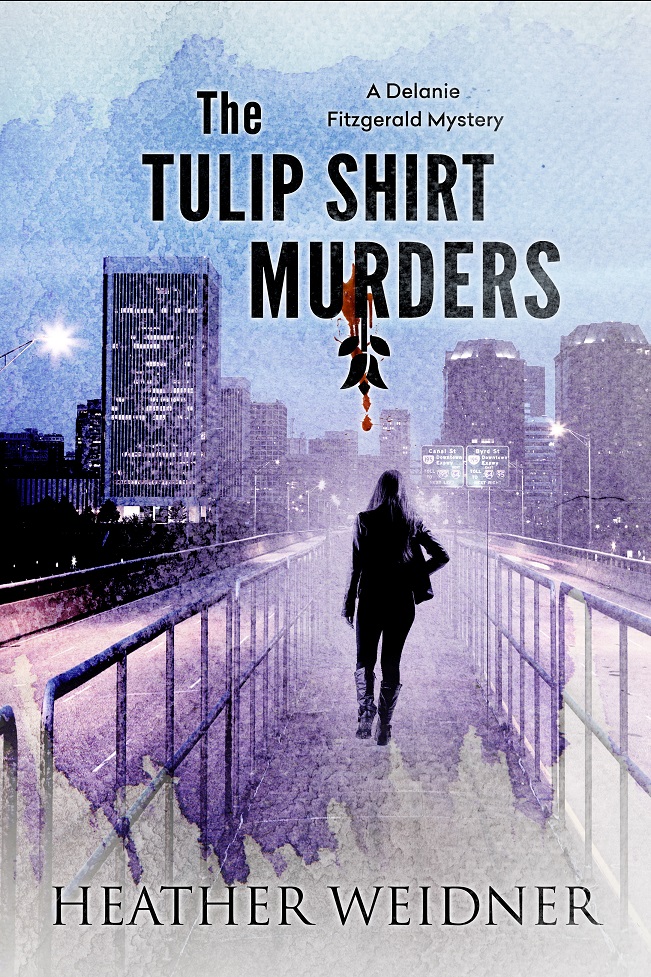
Private investigator Delanie Fitzgerald, and her computer hacker partner, Duncan Reynolds, are back for more sleuthing in The Tulip Shirt Murders. When a local music producer hires the duo to find out who is bootlegging his artists’ CDs, Delanie uncovers more than just copyright thieves. And if chasing bootleggers isn’t bad enough, local strip club owner and resident sleaze, Chaz Smith, pops back into Delanie’s life with more requests. The police have their man in a gruesome murder, but the loud-mouthed strip club owner thinks there is more to the open and shut case. Delanie and Duncan link a series of killings with no common threads. And they must put the rest of the missing pieces together before someone else is murdered.

So here's my playlist for The Tulip Shirt Murders. These songs make me think of Delanie, her sassy spirit, her nose for trouble, and of course, her beloved Mustang.

1.       Adam Ant's “Goody Two Shoes”

2.       Robbin Thompson’s “Candy Apple Red”

3.       Kelly Pickler’s “Red High Heels”

4.       Robbin Thompson's “Sweet Virginia Breeze”

5.       Bon Jovi's “Wanted Dead or Alive”

6.       Rachel Platten's “Fight Song”

7.       Cyndi Bruce Springsteen's “Dancing in the Dark”

8.       Jake Owen’s “Barefoot Blue Jean Night”

9.       Keith Urban’s “Jeans on”

10.   Cyndi Lauper's “Girls Just Wanna Have Fun”

11.   The Beach Boys' “Fun, Fun, Fun”

12.   Wilson Pickett's “Mustang Sally”

13.   Chuck Berry’s “My Mustang Ford”

14.   Jason Aldean’s “Tattoos on This Town”

15.   Toby Keith’s “Whiskey Girl”

16.   Rascal Flatts’ “Fast Cars and Freedom”

17.   Florida Georgia Line’s “Cruise”

18.   Rascal Flatts’ “Life is a Highway”

19.  Jim Croce’s “Roller Derby Queen”

20.  George Jones’ “White Lightnin’”

21.  Brad Paisley’s “Moonshine in the Trunk”

22.   Mark Wills' “Nineteen Something”

23.   Bowling for Soup’s “1985”

24.   And Hall and Oates' “Private Eyes”

Music is such a big part of our lives. We remember lyrics from songs that were popular ages ago, and it invokes a variety of emotions. This list makes me think of my sassy character and the adventures she has as she tries to track down bootleggers and a serial killer.

Logoverysmall.png

What I Learned from a Plotting Party...

What I Learned from a.png

My Sisters in Crime chapter had a plotting party for our annual (before the) holiday get-together. Everybody brought ideas or stories they were working on, and we brainstormed as a group. We had fun, fellowship, and food (and lots of chocolate). Here's what I learned...

1. Always have chocolate when you're plotting your story! 

2. When you start to plot a book or short story, start with a character and his or her motivations. why would he/she do something?

3. Give all of your characters a quirk or some unique feature that makes them memorable.

4. Tame the number of characters. You don't want to confuse your readers.

5. For mysteries, hide clues in plain site.

6. Name your characters names with different first letters. Make sure that you don't have sound-alikes like Chris, Kristine, and Crissy. 

7. Don't reveal everything to your readers at once.

8. Everything in your plot needs to advance the story. If it doesn't, it needs to be cut.

9. Your characters need to be at a crossroad in the story from time to time. They'll have to make decisions.

10. If you get stuck, relax and do something else. Your subconscious mind will help you guide your characters. You'll come up with where the story needs to go.

11. Your sleuth needs to be in jeopardy. There needs to be conflict.

I've never been to a plot party before, and I learned a lot about how others' write and organize their work. Writing is usually a solitary sport, so it was fun to get together with other writers. 

Logoverysmall.png

How to Market Your Book When You're Shy...

bear.jpg

Many thanks to Madeline McGowan and Kristina Stanley for the idea for this post. 

Not everyone likes to be the center of attention. Some folks like to fly under the radar. Book marketing is a hard job, and you often have to force yourself to step outside of your comfort zone if you want to be successful. You just have to conquer the fear. Tame your butterflies and make them fly in formation.

1. Public speaking (in front of small and large groups) is often a part of the deal. I do about 50 appearances a year, and many want an author panel, interviews, or workshops. Public speaking gets easier with practice, but you have to keep doing it to improve. Look at groups like Toastmasters to get experience and gentle critiques. There are also coaches out there that you can hire to assist. (I taught and trained for years, and that didn't bother me. But public speaking made me shiver to my core. I finally conquered it with Toastmasters.)

2. Use your strengths. If you feel more comfortable with email or social media, use these methods to contact reporters, book reviewers, or book store owners. Sending a written query gives you a chance to reread and polish it before you click send.

3. Cold calling is hard - whether it's in person or on the phone. I am the program chair for my local Sisters in Crime chapter. I often have to call a variety of different authors, companies, or law enforcement agencies to get speakers for our meetings. It does get easier the more you do it. If you are really nervous, write down the key points you want to cover, the contact information, and the date. I also write down next steps in case I have to follow up later. This helps me be organized and focused about what I want to say. And if I'm booking an event, I always send reminders and confirmations.

4. Tell everyone you know about your book. You don't know who's in a book group that may want a guest speaker.

5. Look for creative ways to get the word out about your book. Does your college, homeowner's association, or club have a newsletter that allows announcements? Use these for your promotion.

6. There is safety in numbers. Find a writers' group that likes to work together for promotions and marketing opportunities. I am so grateful for all my author friends who like to do book signings as a group.

7. Look for opportunities to participate in Facebook take-overs, Facebook hops, and Facebook and Twitter parties. These are set times that you post on the site or offer a give-away. This is a great way to get your book out there and in front of new readers.

8. Read blogs and join Facebook or Goodreads groups. Be social. Comment on others' post. This might not sell books immediately, but it builds relationships.

9. Look for opportunities to guest blog on other sites. It takes a little work to write the post, but you get exposure to new readers. I have a blog called Pens, Paws, and Claws with 9 other amazing authors. We feature authors who want to be interviewed about their books and pets. Drop me a line if you're interested.

10. Keep good contact lists of folks you meet along your writing journey. When I add them to my contact list, I add notes, so I'll remember where we met. Make sure to keep contact information for book sellers, reporters, and book bloggers.

11. If you want something, don't be afraid to ask. You'll miss out on opportunities if you don't jump in. 

12. Always be professional. Writing is a business, and you need to treat it that way. You don't know who you'll run into again later.

13. Leave reviews for authors when you buy/read their books. Everyone can use reviews. It's good to help other authors. It may not sell your book, but it helps build relationships. 

Best wishes with your book marketing! The second book in my Delanie Fitzgerald Mystery series launched this month. I'm so excited that Delanie, Duncan, and Chaz are back for more sleuthing.

TheTulipShirtMurdersFinalWEB.jpg
Logoverysmall.png

Taming the Email Box

email.png

Email has been around for a while, but it seems to take over my life from time to time. I get about 400 emails a day among all my personal and work accounts. If I don't stay on top of them, they expand exponentially. Here are some ideas I use to control the chaos.

1. I have one home email address that I use when a company or website asks for an email address. I skim that inbox and delete the junk quickly.

2. I have one email that I use for my writing, publishing, and book promotion. I also have one that is for personal things like hair and doctor's appointment reminders. This helps me keep my life organized.

3. I create folders in my email program for emails I want to keep for reference. I have LOTS of folders (e.g. book events, book marketing, critique group, etc.). I make subfolders if needed. This helps me keep contacts with book events and reporters with news articles.

4. Only things that are not addressed stay in my inbox. Emails either gets deleted or filed.

5. If I receive a new contact, I add it immediately to my contact list - before it's lost.

6. I update my calendar immediately when things change.

7. If I need to keep my reply for some reason, I move a copy to its folder. When I'm booking events, this helps me remember details of proposals, recommendations, and confirmations.

8. I make sure to keep a copy of all contracts, royalty reports, and any other important documents.

9. I read and delete emails throughout the day on my phone. If there is something I need to address, I leave it in my inbox as a reminder. 

10. I also print all receipts for tax purposes when they arrive. This makes it easier at tax time.

What else would you add to the list?

Logoverysmall.png

Writing Tips - What I Learned at Festival of the Written Word

I attended several of the panels this year before mine on "Developing Characters Your Readers Will Care About" with Bill Blume and Keesya Hill-Jones, who are so talented and fun. I enjoyed our talk. Here's what I learned from this year's creative writers:

1. Dale Brumfield encouraged writers to focus on reading, researching, writing, revising, and repeating all the above. 

2. The authors recommended creating a writing schedule for yourself to ensure you have time to write and revise during your busy life.

3. Find and build your library of resources. Collect business cards and connect online with people you meet. You never know when you can help them or they can help you.

4. Make sure that you back up your computer files. It's heartbreaking when you lose your work in progress.

5. If you really want to write something powerful, fictionalize your worst secret.

6. Use your writing as a safe space to explore your deep and creative thoughts.

7. Writing also lets you experience things inside the minds of your characters.

8. Balance is key in your writing. And if you write short stories, you need to pay attention to this because you have smaller space to tell your tale.

9. Exploit everything you hear or come in contact with. Make sure you jot down notes when you observe people or hear dialogue. It will provide you with ideas for your stories.

10. Writing is a business, and you need to treat yours as such.

This is one of my favorite annual book/writing events. If you're in Central Virginia, make sure to check it out. 

Logoverysmall.png
DNzppHGW0AE4dpT.jpg
IMG_1961.jpg
IMG_1968.jpg

Blogging Tips for Writers

blog.jpg

Even before you start to publish, one of the first things you hear (all the time) is to build your author platform, get a website, and start a blog, all important parts of your marketing. Your blog is where you can post your updates and share information. A blog allows you the opportunity to build followers and readers outside of your books. And you can set up a place to collect newsletter subscribers. Here are tips I've learned through the years about blogging.

1. Your blog needs to be on your website, so that you drive traffic to your site. If you have a website and a separate blog, you're missing an opportunity to have your blog readers check out your home site.

2. You need to decide what you want to blog about. If your subjects are too broad, then it's hard to build a following. On my personal site, I blog about the writing life and writing tips. I also have another group blog called Pens, Paws, and Claws. Here, we blog about writers who love pets (and all things pets). I also have a #WriterWednesday feature on this site to promote other authors.

3. Decide how often you want to blog. I used to blog twice a week, and it became a difficult schedule to maintain with all the other things going on in my life. I blog on my site on Fridays. On Pens, Paws, and Claws, one of the featured authors blogs each Saturday, and we have guest interviews on Mondays. Find a schedule that works for you (and doesn't take away from your writing time). 

4. Use your other social media sites to promote your blog and share your blog posts. Post links to your other sites. It will drive traffic to your blog (and website).

5. During the week, I schedule Tweets about my current blog post and others from the past. This is a good way to share your information. I use TweetDeck to schedule these, but there are a lot of different applications out there to help you with scheduling.

6. There are lots of blogging promotion groups on Facebook. If you participate in these, you agree to share their content, and they share yours. It's a good way to find new readers and bloggers. It's also a great way to get your information shared to a variety of social media sites.

7. There are several sites that will help you ping your site to let search engines know about your site. It's important to do this from time to time to ensure that people can find you. I use Ping-o-matic, but here are plenty to choose from.

Best wishes with your blogging. Let me know what else you'd add to the list.

Logoverysmall.png