Website Tips for Authors

I finished creating a website and blog with WordPress recently. I've also used Squarespace and Wix. All have their benefits and a few challenges. I like all three platforms, and they are fairly easy to use. All have good online tutorials, learning videos, and customer support.

Here are thirteen things writers need to consider when building a site or know about their website if someone else creates/maintains it for you.

  1. Decide up front if you want to maintain all or parts of your website and how comfortable you are with the web-building tools. I needed a website that I could easily update when events, books, and photos changed. I like to keep my content fresh, so I'm updating something at least weekly.
  2. If you're going to blog, the blog should be on your website. This drives blog traffic to your website.
  3. You are your brand.  Your website, blog, and social media sites should have the same branding (look and feel).
  4. Your website should provide you with a way to see your statistics/analytics. You need to be able to see how many visits you receive daily, monthly, and yearly. I like that I can compare my totals to previous points in time. This helps me to see if my marketing/social media campaigns are working.
  5. Whether you or someone else creates your site, you need to do a quality check on it. Make sure all links work. Click every button and link. Check all forms and contact information.
  6. Make sure you have your own URL. You are your brand, and it should be your name. 
  7. Make sure the colors you choose for your website match the tone that you're trying to set with your books. Lighter genres should have brighter colors. Horror, thrillers, suspenseusually have darker palettes of blacks, grays, and red.
  8. Don't go crazy with fonts. Sans serif fonts are easier to read online. (Sans serif letters do not have the tiny tick marks at the letter's endpoints.)
  9. Your website should adapt to mobile devices (not just shrink down the page for a small screen). It should be mobile friendly. Check your website on a tablet and a phone to ensure it looks right on all devices.
  10. If you're not sure what you want on your website, visit other author, agent, and editor sites to get a feel for what to include. 
  11. Keep your content and pictures fresh. Nobody returns to an outdated site. And don't have a 10-year old author picture.
  12. Have a place on your site where folks (reporters, reviewers, bloggers, event hosts, etc.) can get your picture and biography. A short and long biography are ideal.
  13. Make sure you have a way for people to contact you (email or contact form).

What else would you add to the list? Best wishes with your website. 

15 Quotes for Writers

I like the motivation hashtags on Twitter. They gave me the idea to pull together some of my favorite quotes for writers (published and pre-published) on books and writing. Writing is hard work, and it is often solitary. Here are #motivations to get or keep you going. I also found some interesting reviews from Rotten Reviews (edited by Bill Henderson). If you are a writer, you're not alone...

Writing


"The role of a writer is not to say what we all can say, but what we are unable to say." —Anaïs Nin

"I try to leave out the parts that people skip." —Elmore Leonard

"The act of putting pen to paper encourages pause for thought, this in turn makes us think more deeply about life, which helps us regain our equilibrium." —Norbet

"I'm not a very good writer, but I'm an excellent rewriter. " —James Michener

"Don't tell me the moon is shining; show me the glint of light on broken glass." —Anton Chekhov

"I love writing. I love the swirl and swing of words as they tangle with human emotions." —James Michener

"The pen sometimes builds a more enduring monument than can the hammer or chisel." —James Lendall Basford (1845–1915), Sparks from the Philosopher's Stone, 1882

Books and Reading

“The dearest ones of time, the strongest friends of the soul—BOOKS.” —Emily Dickinson

“Easy reading is damn hard writing.” —Nathaniel Hawthorne

“A mind needs books as a sword needs a whetstone, if it is to keep its edge.” —George R. R. Martin

“One sure window into a person’s soul is his reading list.” —Mary B. W. Tabor

“Books are the treasured wealth of the world and the fit inheritance of generations and nations.” —Henry David Thoreau

Rotten Reviews

Wuthering Heights - Emily Bronte: "...wild, confused, disjointed, and improbable...the people who make up the drama, which is tragic enough in its consequences, are savages ruder than those who lived before the days of Homer." (The Examiner)

Alice in Wonderland - Lewis Carol: "We fancy that any real child might be more puzzled than enchanted by this stiff, overwrought story." (Children's Books)

The Great Gatsby - F. Scott Fitzgerald: "A little slack, a little soft, more than a little artificial, The Great Gatsby falls into the class of negligible novels." (The Springfield Republican)

11 Things I Learned at Active Shooter Preparedness Training

This week, I attended a lot of training. I had a two-day refresher on the COBIT 5.0 business/IT framework, and I had active shooter preparedness training yesterday by Virginia Capitol Police. Here's what I learned from the latter:

  1. Your response should be Run, Hide, or Fight (in that order).
  2. Look around your office and make a quick evacuation plan in case you had to flee. It's a good idea to do this when you go to new places. 
  3. If you are hiding, cover windows, turn out lights, and mute your cell phone. A phone on vibrate could give away your location.
  4. Look around your office and see what you could use as a weapon if you had to. 
  5. When fleeing or evacuating, stay calm. Put your hands up and spread out your fingers. The first responders may not know who the shooters are, and if you're carrying a bag or jacket, you don't want to be mistaken for a shooter.
  6. Most active shooter incidents are over in ten to fifteen minutes, but it does take law enforcement quite a while to clear a building after an event. If you're hiding, stay put until you're cleared by law enforcement.
  7. If you are hiding, lock your door or find something to block it. 
  8. The first police on scene for an active shooting are there to neutralize the shooter(s). They are not there initially to aid victims. 
  9. If you call 911 to report a shooting, be able to provide as much information as you can (e.g. number of shooters, location, number of victim, types of guns, etc.)
  10. Always follow all law enforcement instructions. It's a tense situation, and everyone is stressed. Don't make sudden moves. Stay calm.
  11. If you're in danger, find cover that will protect you from bullets (e.g. cement walls, heavy desks, etc.). Cars are not good cover unless you can get behind the engine block.

It was a good session. I tend to look for escape routes when I'm in new places (or on trains or planes). I'm a CK (cop's kid), and that was drummed in my head my whole life. Always have a plan. Also, I think it's important to know what you have in your office in case you do have to fight. (There's a heavy duty fire extinguisher outside my office.) 

I hope you never have to experience a horrific event. But it is a good idea to be prepared. Make a plan.


5 Tools to Help You with Your Social Media

I am often overjoyed and overwhelmed with all the social media platforms that are now part of my everyday life. I want my posts to be strategic, but I also want to be well, social -- to share information and to promote other authors. It can take up a lot of time, and it can get out of control if not managed.

Here are some tools I've found that can help. Some are free, and others are subscription-based.

1. I use Tweepi (a paid subscription) to manage Twitter followers. I've found there are lots of accounts that follow you, and then unfollow you as you reciprocate. I use Tweepi to clean up there and to remove inactive accounts. To me, it's well worth the subscription to keep my followers organized.

2. I downloaded the Followers+ app for my phone. It has a paid upgrade, but right now, I'm using the free version. I use this to clean up Instagram followers. When I post pictures, I pick up quite a few followers, but many disappear after a few days. This app lets you see those who don't follow you and allows you to unfollow them.

3. I love Canva. There are many free options to create graphics for your social media posts and web graphics. Social media posts with graphics/visuals get more attention. I've used it to create logos too. You can purchase backgrounds and specialty items, but the free version usually works for me.

4. I use the free version of Tweetdeck to schedule tweets throughout the week (during work hours and in the wee hours of the morning). With the free version, I can't do a bulk load of tweets, but that's okay. I try not to schedule hundreds for the week. I look at my metrics on Twitter and try to target the times that my readers tend to be active.

5. Bitly is a great tool for reducing URLs. (On Twitter, every character counts.) I can choose my own URL or use a random one they provide. I use this for posts to all my social media sites. If I save the shortened URL, I can see how many clicks its received on the Bitly dashboard.

What other tools would you recommend?

9 Things I Learned about Hosting a Twitter Party

My author pal, Kristin Kisska, was my partner in crime when we organized and planned a Twitter party for our mystery anthology, 50 Shades of Cabernet. She provided great ideas and insights. I had never attended one before. Here's what I learned...

  1. Agree on a hashtag for your event and include it in all your marketing. Ours was #50SoC. Participants searched for that hashtag and followed along with all our tweets and contests.
  2. You may want to search your hashtag choice to see what others are using it for. Will it fit your brand? Chances are, you won't get a hashtag that's yours alone, but you could get lucky.
  3. For contests, assign everyone who's hosting the party a number. When they ask a question for their give-away, they need to preface their tweet with Q and their number. (Example: If I am number 1, my question tweet would be Q1: What is your favorite....) Anyone who wants to participate in the give-away, tweets A and the correct number. This helps the hosts easily identify the participants.
  4. Choose a couple of hours for your party. Long timespans are hard unless you have lots of folks hosting and tweeting. Make sure to keep time zones in mind when scheduling. We had multiple authors sign up for 30-minute hosting timeslots. It made it easier. And some hung around for the entire event.
  5. Make sure that you have some topics planned for discussion. You'll want to keep the conversation going, and you'll want to have material to fill in the lulls. We were promoting our mystery anthology that was wine-themed. We talked about mysteries, sleuths, wines, and our stories.
  6. Start publicizing your event early. Include the time, time zone, and hashtag. Make sure you market it on multiple social media sites (multiple times).
  7. Be social. Make sure to include as many folks as possible in the conversation.
  8. If you're doing give-aways, decide on the rules up front (e.g. who picks the winner? how do you pick a winner?) We let each author who gave away a gift decide how he/she wanted to choose the lucky person.
  9. If you're doing give-aways, choose prizes that are easy (and inexpensive) to mail. I get a lot of my give-away on Etsy.  I've found cute bookish wine charms, stickers, and buttons there.

When you see an interesting Twitter party, stop in and visit. The conversation is good, and you may even win a prize. Happy Tweeting!


20 Things I Learned about Specialized Law Enforcement in Virginia

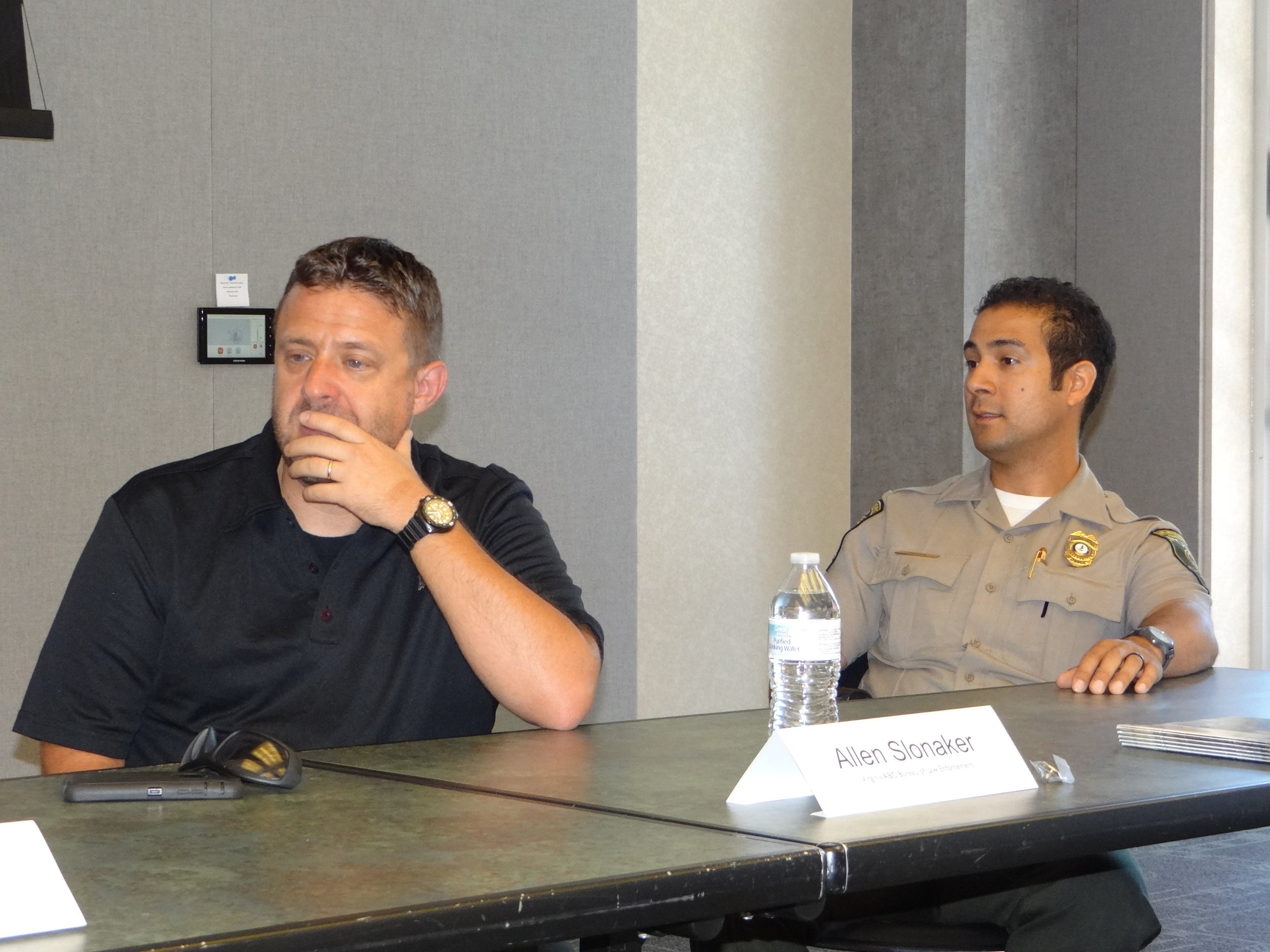
Recently, Sisters in Crime - Central Virginia hosted a specialized law enforcement panel with officers from CSX Railroad, the Virginia Alcohol Beverage and Control Board, and the Virginia Game and Inland Fisheries. Their jobs and jurisdictions are unique, and I picked up some good information for future mysteries. Here are a few things I learned.

  1. The railroad police began with the Pinkerton guards. Allan Pinkerton was also the Father of the Secret Service.
  2. All of these law enforcement agencies work closely with other local, state, and federal groups. They are often involved in special task force efforts.
  3. Railroad tracks are on private property. If you're on them, you're already trespassing.
  4. A lot of modern shipping (retail, HAZMAT, and military) goes by rail.
  5. Train riders (stow-aways) often tag the railroad cars to leave messages for others in their community. Hopping trains is illegal. If caught, you could receive a ticket or be arrested.
  6. If you have an issue or an emergency at a railroad crossing, look for the blue sign at the gate. It has a contact number. If you're stuck on the tracks, notify the railroad authorities on that sign. They can notify any oncoming trains.
  7. Technology helps with safety (e.g. camera on trains and sensors on the tracks).
  8. It takes time to stop a train. A train hits a car with the force that a car would hit a soft drink can. If you get stuck on the tracks, get away from the car.
  9. Trains are quieter now (except for the whistle). If you're on the tracks (and if you have headphones on), you might not hear it.
  10. Virginia prohibition enforcement began in 1934.
  11. Currently there is an exhibit on alcohol and Prohibition at the Library of Virginia. It's called "Teetotalers and Moonshiners." It runs through December 2017.
  12. In the past ABC officers were called revenuers.
  13. If you're interested in the history of moonshine, check out the National Geographic's documentary. A lot of it was set in Virginia.
  14. Game wardens became Conservation Police Officers in 2007 in Virginia.
  15. The Department of Game and Inland Fisheries uses science to determine the wildlife populations across the Commonwealth. They decide if hunting/fishing numbers need to be increased or decreased to protect natural populations.
  16. Virginia's Game and Inland Fisheries just celebrated its centennial. For more information, check out its YouTube channel.
  17. Curtilage is the maintained area around a house. This is usually the boundary of where they can search unless there are special circumstances.
  18. Baiting for hunting is illegal in Virginia. Often you will see corn on the ground (deer) or peanut butter on trees (bears) to attract animals.
  19. Blaze pink will be an official safety color in addition to blaze orange.
  20. Coyotes are not native to Virginia, and there are no bag limits on them. If you hunt and fish in Virginia check their publications or website for licensing and restrictions.

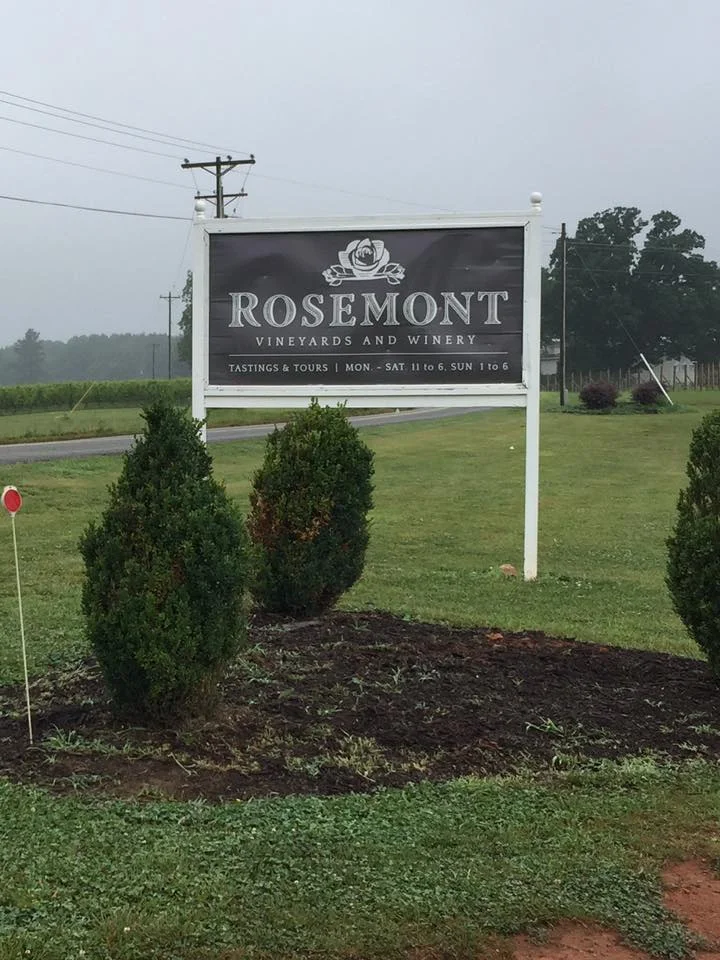
My 2017 Wine Tour - Stop #3 - The Rosemont Vineyards and Winery in LaCrosse, VA

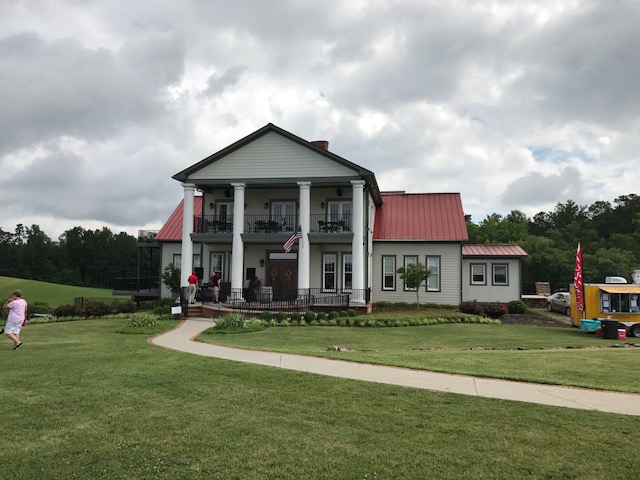
The 50 Shades of Cabernet authors signed books yesterday at the Rosemont Vineyards and Winery's Art Festival. The house and grounds are lovely. We met so many new friends, and I bought a bottle of their Virginia Red for Father's Day.

The vendors had so many beautiful arts and crafts. And a lot of the lake people (Lake Gaston, Kerr Damn, and Buggs Island) brought their dogs for a stroll. Add this one to your list.

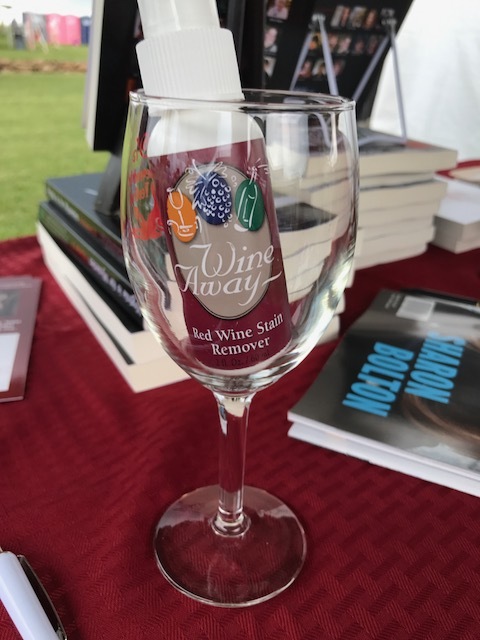
Here's what I learned on this stop of my summer wine tour. Wine Away (Red Wine Stain Remover) is wonderful. One of the gals spilled wine on her shirt. The stain was gone after she used this. My writer friend, Ellery Adams, said that it has saved her couch cushions before.

I'm enjoying my wine tour this summer, and for a girl who used to buy wine in a box, I'm learning a lot. Some of our writers will be at the Williamsburg Winery next Saturday. Stop in and see them.