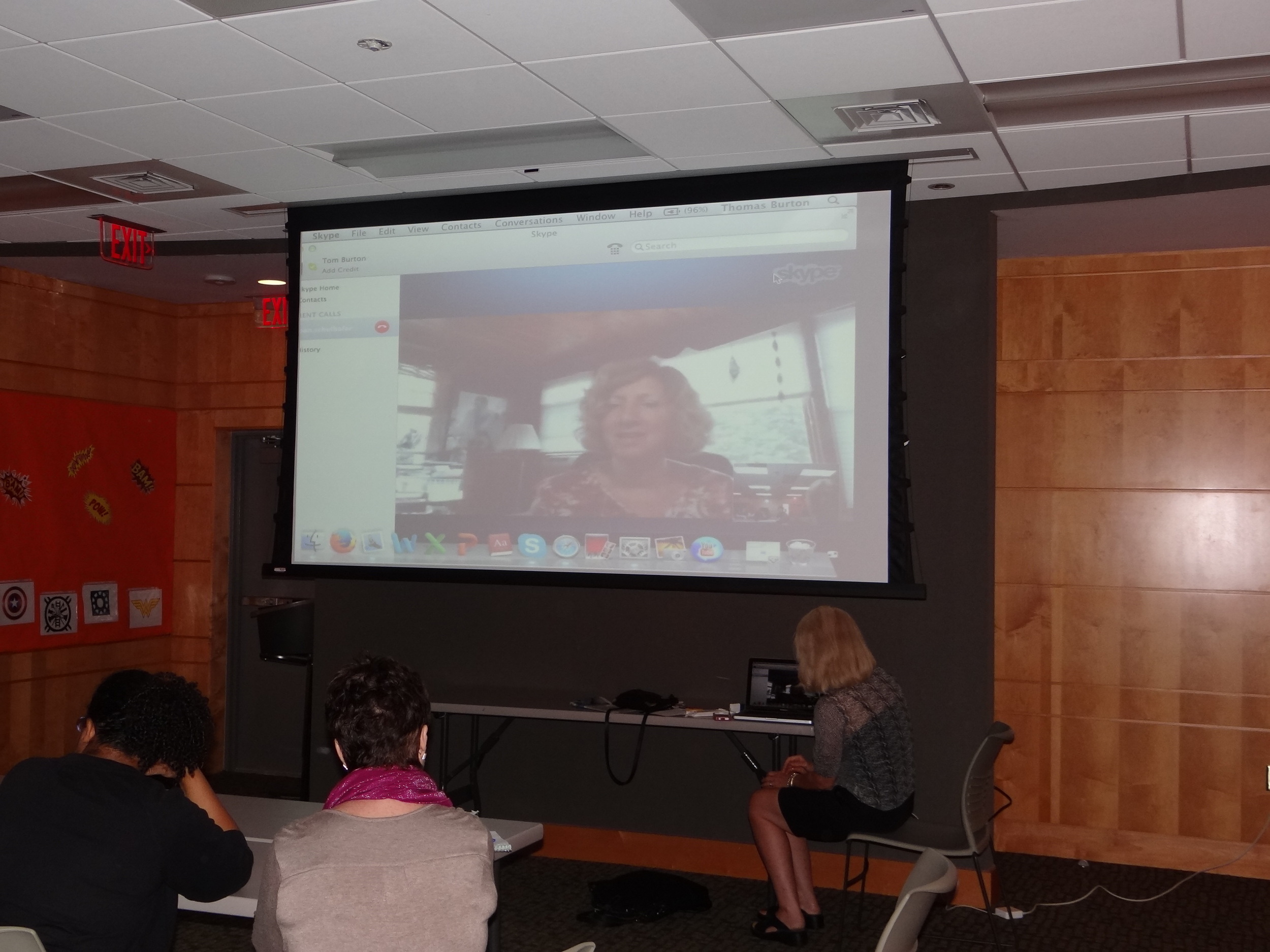
What I Learned from Publicist, Joan Schulhafer

Joan Schulhafer skyped with our Sisters in Crime - Central Virginia chapter recently and provided great information about publicizing yourself as a writer and your book. Here are nine things I learned from her presentation:

1. Authors need to balance their online and in-person presences. You need a mix of both.

2. You can't do everything, but get out and get involved.

3. Attend conferences and network with everyone.

4. Build your email list. It's valuable for authors.

5. Blogging is important. It's a way to keep your website fresh. Blog posts do not have to be deep, witty, or perfect.

6. Pictures are important. Take lots of pictures. Post pictures with your content.

7. Make sure that your biographies and other information are current on all the social media sites where you have accounts.

8. Authors needs to be on Facebook, Twitter, YouTube, Google+, Instagram, and Pinterest. If your readers are younger, you need to be on Snap Chat.

9. Be polite on social media. Don't forget to thank those who help you.


Murder at the Library - October 30

I've had so much fun this summer working with Maggie King, Fiona Quinn, Margaret Howard, Thaddeus Huff, and Ginger Gutting on the planning and plotting for the "Murder at the Library" on October 30. It's a fundraiser for the Clover Hill Friends of the Library. We wrote the murder mystery for the Friends. There will also be a silent auction, a panel discussion about publishing mysteries, and book signings. Join us for some fun on Halloween weekend!

Sisters in Crime authors Fiona Quinn, Mary Miley, Rosemary Shomaker, Vivian Lawry, Mary Burton, Tina Glasneck, Kristin Kisska, LynDee Walker, and I will be there. Come and see us!

Tweet! Tweet! Why Twitter is Important to Writers

Twitter is a powerful resource. It connects you with others and helps build relationships. When I was first introduced to it, I felt like I was posting to the wind. Luckily for me, I found  Krista Davis on Guppies (an online chapter of Sisters in Crime) who ran a workshop to help newbies understand what this was all about. At the time, I had twelve followers and had posted ten tweets. She set up an online chat and we asked questions, retweeted each other, and became accustomed to the platform and its conventions.

I also found Debbie Ridpath Ohi's website on tweeting for writers. This is an excellent resource for beginners or experienced tweeters. The Help file in Twitter also has a lot of good FAQs.

You need to find folks with similar interests. If you're trying to build followers, search for your interests. You can search for general or specific topics (e. g. writing, mysteries, agents, or dogs). If you put a hashtag (#) in front of your search, you will get tweets others have tagged to that subject. Many conferences, fundraisers, and events create their own hashtags. For example, if you're looking for tweets and information about the Bouchercon conference in Raleigh, NC in October, search #Bouchercon. You'll see official information and what others are saying. There are quite a few literary agents who participate in Twitter pitches. It's a great way to connect with readers, writers, agents, and librarians.

You can include hashtags in your tweets, so that others searching for that topic can find you easily. Be careful not to use too many. Two is about right.

If you're trying to build followers, look at who followed you. Click Followers and select someone. You can see who they follow and who followed them. There may be people you want to add to your account.

I use Twitter to drive traffic to my blog. When I create a new post, I use TweetDeck to schedule a few nightly tweets for the upcoming week. I have noticed a huge difference in my website/blog traffic since I started this.  I use Bitly to shorten my blog post URLs. It also has a click tracker, so I see what posts are getting the most attention.

I use Tweepi to clean up my follower list. Sometimes I follow folks who never follow back or don't tweet. "Zombie" accounts that people create to sell followers end up in my list occasionally. And once in a while, you'll get a bunch of followers who drop you after you follow them.  I open Tweepi about once a month and unfollow these.

Look at your Twitter presence. Make sure that you have a picture. (If you don't have a photo, you get an egg.) Also make sure that you include a link to your website and have a good bio. Update these as things change.

Be yourself. Twitter is a social media platform, and you should use it to build relationships and find kindred spirits. Share (retweet) good information. If you're a writer, follow the 80/20 rule. Only 20% of your posts should be "buy my book" tweets. People are looking for conversations and interesting information. If you only deliver a sales pitch, you'll get ignored.

I also build lists in Twitter to keep up with groups of followers. When you add people to a list, you can click on it and see a feed from just the members. I am part of several groups, and I want to keep up with the members' tweets. Lists help me stay organized.

I hope to see you in the Twitterverse. Make sure you follow...

Krista Davis

Debbie Ridpath Ohi

Heather Weidner


The Edits Came Today...

The edits for Virginia is for More Mysteries arrived today. We are getting closer to having book two in print.

We also had a wonderful day yesterday at the Suffolk Mystery Authors Festival. The group signed lots of books and presented two workshops to standing room only crowds.

l-r: Heather Weidner, Jayne Ormerod, Maria Hudgins, Teresa Inge, and Vivian Lawry

l-r: Heather Weidner, Jayne Ormerod, Maria Hudgins, Teresa Inge, and Vivian Lawry

What's Your Social Media Strategy?

You are your brand. Your author presence on social media should have a strategy, plan, and purpose. You want a unified look.

Drive Traffic to Your Blog or Website - One of your primary goals should be to drive traffic to your blog or website. Tweet links of your blog posts (new and recycled). Schedule them with a tool like TweetDeck or Hootsuite to post during hours you don't normally tweet. I schedule tweets at night or while I'm at work, and I've picked up new readers from different time zones. Schedule sparingly though. If someone follows you on different sites or views lists, you don't want hourly tweets of the same thing.

Analyze Your Content - Look at your posts and tweets. Are you getting likes, favorites, retweets, and shares? If not, consider rewriting your content. Make sure that you include videos or pictures. Also use hashtags (no more than two) to get noticed by like-minded readers.

Diversity is Key - Make sure your social media use focuses on the "social" part. You should join conversations, share others' materials, and thank those who share your stuff. People tend toignore you if all your posts are "buy my book." If you use hashtags regularly, make sure that you share others' postings from that list. You don't want to be a lurker.

Use Analytics - Facebook, Google, your website, and other sites have analytics. There is a lot of good information there about who's coming to your site and when. If you notice you have higher traffic on certain days, plan your posts then. Likes, shares, and retweets expand your reach.

Learn What Your Readers Use - Use the social media sites that your readers frequent. I learned this from Rachel Thompson of Bad Redhead Media. Google social media demographics. There is a lot of free information out there. Target your social media platform to what works for your audience. (The majority of Facebook users are women over forty.)

Be Adventurous - Be willing to try new social media sites and techniques. Try it and check your analytics. If it doesn't give you the results you want, modify it or try something else.

Look carefully at all of your social media sites. The colors, look, and writing style should be the same or similar. Themes are good. Your pictures and name should be the same on all sites. Make sure that you cross-pollinate your sites. List your website and blog in all of your biographies. Make sure that all of your links work.

I never knew how much marketing was involved with writing books. Best wishes for your writing and promotional projects!


Subtle Ways to Promote Your Book

There are a lots of ways to get the word out about your new book without bombarding friends and fans with "buy my book" posts. Here's my list of some underutilized resources.

Alumni Newsletters - Most alumni groups have a section for graduate news. Make sure to submit your acceptances and awards. Many clubs, sororities, and fraternal organizations groups also have space for this in their newsletters. Make sure that you word your announcement as news and not a sales plug.

Professional and Service Organizations - When my professional organizations or my company's annual giving campaign have service projects as fundraisers, I donate a themed basket with my books and swag.

Volunteer - Our writers' group gets calls from local libraries and book groups for speakers. They want authors for workshops and special events. These usually come with opportunities to sign books. Plus it's a great way to build relationships and meet readers.

Join Forces - Partner with other writers to share book and content information. I've also seen similar writers host contests and online events. Your reach grows exponentially when there is a bunch of you.

Expand Your Platform - Use social media to expand your reach. Build Pinterest boards for your books. Add your book events and speaking engagements to your LinkedIn profile. Post photos of events and your book signings on Instagram.

Writers' Groups - Join a professional writing group for your genre. They have lots of resources for promoting your work. Mine has a tweet network for retweeting and sharing author information.

Take Pictures - Take photos of things you do, at writing events, at others' events, and at your book signings. People like to see themselves, and pictures generate discussion and shares on social media.

Happy writing!


9 Cool Sites for Writers

These days you have to be writer, publicist, and marketer. I am always looking for interesting tools and sites for marketing my writing. Here are nine sites every writer needs to know about...

Canva lets you create graphics and memes for your social media posts. It's an easy-to-use online design tool.

Spoken.ly helps you create and share memes and quotes.

TweetDeck helps you organize and schedule your tweets. I use the free version as my Twitter scheduler.

Fiverr is a site where you can commission work or projects for five dollars or a nominal fee. You can get inexpensive artwork, cartoons, voiceovers, and videos here.

Ping-o-matic allows you to enter your blog's URL, and it will ping a variety of search engines to make sure they're aware of your site. This helps with search engine optimization.

GotPrint is a great site for ordering all kinds of print materials.

Next Day Flyers is another site for all kinds of print materials. They have a quick turnaround on orders.

Etsy is a great site for unique gifts. I order book and mystery-related items for gift baskets and reader give aways.

Bitly allows you to create shortened or customized links for social media posts. You can also use it to track clicks on your links.

What other sites would you recommend for writers?