What I Learned from a Plotting Party...

What I Learned from a.png

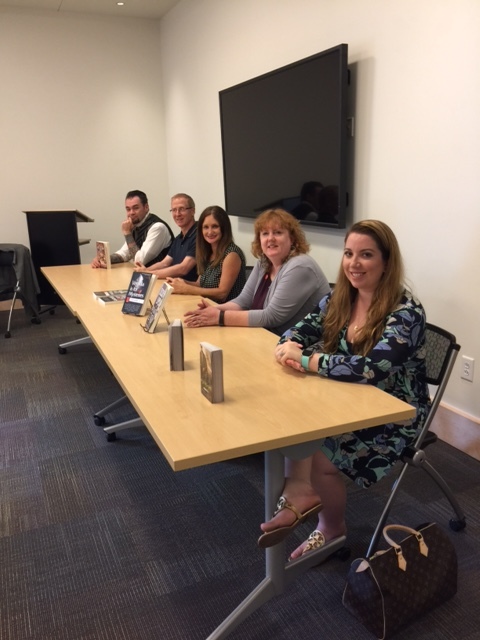
My Sisters in Crime chapter had a plotting party for our annual (before the) holiday get-together. Everybody brought ideas or stories they were working on, and we brainstormed as a group. We had fun, fellowship, and food (and lots of chocolate). Here's what I learned...

1. Always have chocolate when you're plotting your story! 

2. When you start to plot a book or short story, start with a character and his or her motivations. why would he/she do something?

3. Give all of your characters a quirk or some unique feature that makes them memorable.

4. Tame the number of characters. You don't want to confuse your readers.

5. For mysteries, hide clues in plain site.

6. Name your characters names with different first letters. Make sure that you don't have sound-alikes like Chris, Kristine, and Crissy. 

7. Don't reveal everything to your readers at once.

8. Everything in your plot needs to advance the story. If it doesn't, it needs to be cut.

9. Your characters need to be at a crossroad in the story from time to time. They'll have to make decisions.

10. If you get stuck, relax and do something else. Your subconscious mind will help you guide your characters. You'll come up with where the story needs to go.

11. Your sleuth needs to be in jeopardy. There needs to be conflict.

I've never been to a plot party before, and I learned a lot about how others' write and organize their work. Writing is usually a solitary sport, so it was fun to get together with other writers. 

Logoverysmall.png

Writing Tips - What I Learned at Festival of the Written Word

I attended several of the panels this year before mine on "Developing Characters Your Readers Will Care About" with Bill Blume and Keesya Hill-Jones, who are so talented and fun. I enjoyed our talk. Here's what I learned from this year's creative writers:

1. Dale Brumfield encouraged writers to focus on reading, researching, writing, revising, and repeating all the above. 

2. The authors recommended creating a writing schedule for yourself to ensure you have time to write and revise during your busy life.

3. Find and build your library of resources. Collect business cards and connect online with people you meet. You never know when you can help them or they can help you.

4. Make sure that you back up your computer files. It's heartbreaking when you lose your work in progress.

5. If you really want to write something powerful, fictionalize your worst secret.

6. Use your writing as a safe space to explore your deep and creative thoughts.

7. Writing also lets you experience things inside the minds of your characters.

8. Balance is key in your writing. And if you write short stories, you need to pay attention to this because you have smaller space to tell your tale.

9. Exploit everything you hear or come in contact with. Make sure you jot down notes when you observe people or hear dialogue. It will provide you with ideas for your stories.

10. Writing is a business, and you need to treat yours as such.

This is one of my favorite annual book/writing events. If you're in Central Virginia, make sure to check it out. 

Logoverysmall.png
DNzppHGW0AE4dpT.jpg
IMG_1961.jpg
IMG_1968.jpg

What I Learned about "Stepping up to the Stage" from Joan Bowling - Public Speaking Tips for Authors

22046419_1969206869988779_8316711948562908902_n.jpg

This week, I attended the James River Writers' Writing Show, "Stepping up to the Stage" with Joan Bowling. She had some great presentation and public speaking tips for authors. Here's what I learned...

  1. Prepare! Prepare! Prepare! Make sure that you're ready for your event. 
  2. Relax! You are more confident when you feel comfortable.
  3. Make the butterflies you feel fly in formation. Get control of your nerves.
  4. Breathing helps. Calm your thoughts.
  5. Nervousness means you care. Use that energy in your presentation.
  6. You need to create an impression or mood with what you're going to say.
  7. Start off with a question or an "imagine a time when" story. You want to draw your listeners in.
  8. Practice your opening. 
  9. You want your presentation to be an easy conversation. She said to avoid the "wind up." "Hi. Thank you for having me here. I am so honored to be here..."
  10. Know your audience and have questions prepared.
  11. Listening is crucial. 
  12. Be present.
  13. If you're on a stage, do a sound check. Walk around and get to know the environment before the event. 
  14. If you've not used to using a microphone, practice at home with a hairbrush.
  15. The microphone is an extension of your chin. Hold it below your chin. Your audience needs to see your mouth.
  16. When it doubt, use a microphone. It's hard to sustain a voice loud enough for the audience to hear for 45 minutes.
  17. Mingle with the audience before an event.
  18. When you are on stage, scan the audience. Don't do a windshield wiper thing with your head. Scan in a slow "W" formation, so it looks more natural. 
  19. If you're terrified, look at your audience's foreheads. They can't tell that you're not looking directly at them.
  20. Be hydrated before you speak. Stay away from dairy. 
  21. If you're doing a reading, animate it. Leave them with an emotion. Read a funny, scary, or sad excerpt. 
  22. If you're reading, hold the book so they can see it, but don't cover your face. They shouldn't see the top of your head during the entire reading. 
  23. Some people print out the excerpt and read from the paper. (Just make sure that you have your book on the lectern or table, so they can see the cover.
  24. Know the power of a pause. Pause from time to time to let your audience catch up and to draw them in.
  25. Don't do accents in readings.
  26. Get comfortable with the sound of your voice. Tape yourself and listen.
  27. If you're doing TV, make it a live conversation. 
  28. Always have your book with you.
  29. When you're doing a presentation, don't end on a question. End where YOU want to leave the audience. Leave them with an impression.

Joan had some wonderful advice. Check out her website and her newsletter. These are all great ideas that writers need in their toolbox when they're doing a reading or a presentation. 


Proof of Alien Life or Just Story Ideas?

aaaa.png

You never know where story ideas will come from. Recently we installed two cameras outside. I have a blind driveway, I've always wanted to be able to see who drives up without having to run upstairs to look out a window or open a door. 

I never really knew what was going on in my front yard. And it's been fun. I like being able to see when packages are dropped off. Here are some other things we've "captured" recently.

I thought we captured proof of alien life when I saw this. I have no idea what this is. The bug looks gigantic on the camera. Hopefully, he and I won't meet. I may send this to the "What's Bugging You" team to see what kind of critter this is.

I'm not sure if this little guy was saying hello or attacking the camera. I'm pretty sure he's not the blue bird of happiness. 

And then there are the deer who eat my azaleas and tulips. They come through about every other night for a visit. 

My private investigator, Delanie Fitzgerald, and her sidekick/computer hacker Duncan Reynolds, use security cameras in their investigations. I'm going to expand the use in the next book and add some of the funny things that they might capture. I'm enjoying the videos from the unexpected in my front yard. And you never know where a story idea will come from...

Happy writing!

Logoverysmall.png

Collaborating on a Mystery Party Script

DSC_6813.JPG

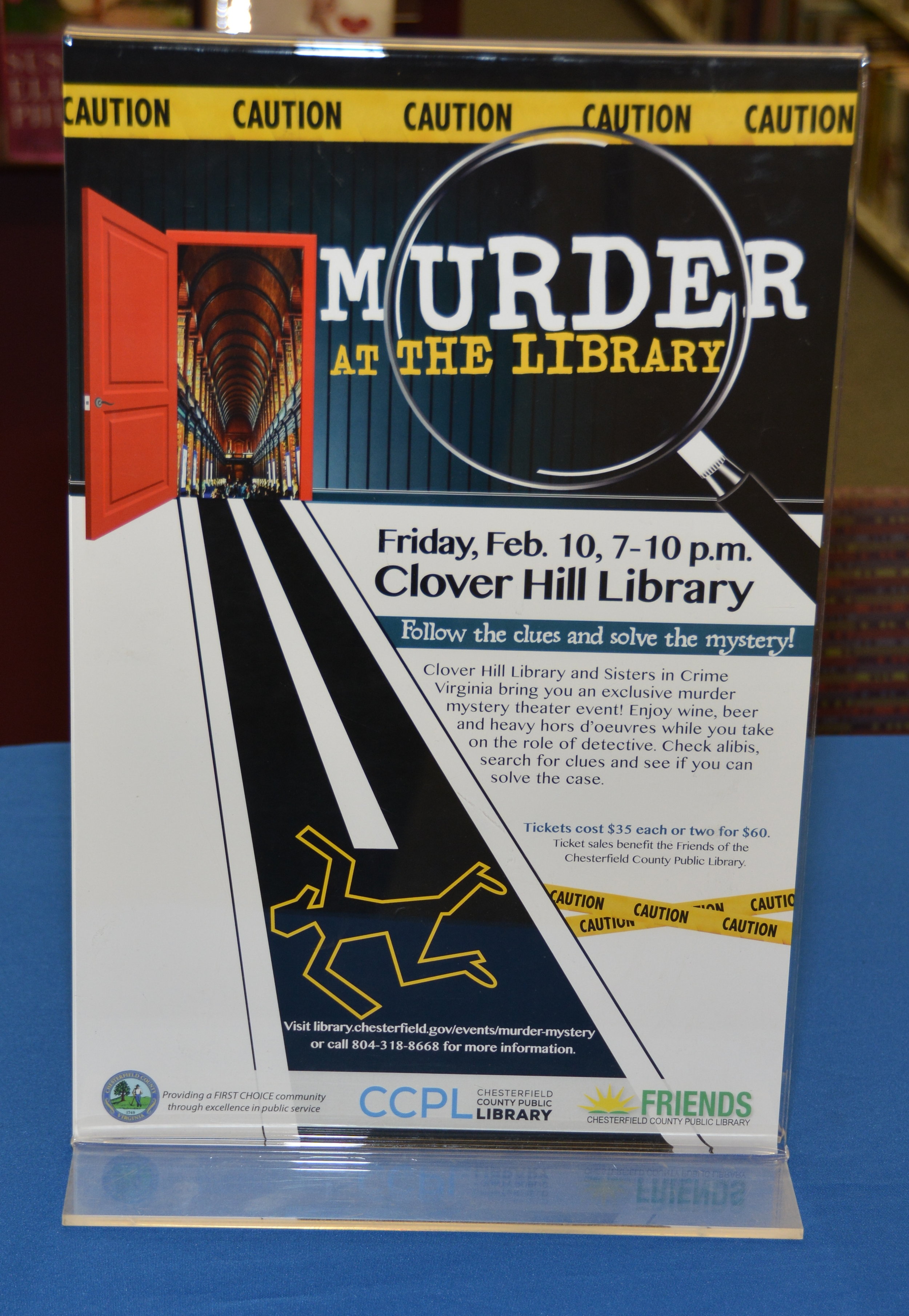
For the past few years, my Sisters in Crime chapter volunteers have been asked to write a script for our library's fundraiser. We write the script, and the very talented librarians and staff bring the play to life. On the night of the event, the guests are divided into two groups. One views the mystery clues, and the other attends an author panel. They switch. Then there's time for the guests to interview the actors and look for clues. Afterwards, there is the big "who dunnit" reveal and a book signing.

The first two years, we killed off the head librarian and the children's librarian. The next event has even more surprises. I met with Mary Miley and Rosemary Shomaker yesterday to create the characters and plot the murder. The collaboration was a lot of fun. Writing is usually a solitary sport, and it was neat to bounce ideas and motives off each other. I just hope the folks in the next booth didn't think we were plotting a real murder.

This event has sold out in the previous years. And it is such a thrill for me to see something we created brought to life. The actors do such a good job of filling out the characters and making the scenario seem realistic. Each guest gets a handout with a list of all the characters and room to make notes. At the end, they vote on who they think the guilty person is.

Here are some things we do to prepare the script.

  1. Work with the library's planning team to get an idea of themes and interests for the event.
  2. Come up with the crime (usually a murder) and build clues around it. It needs to be something that can be done either on or off stage. (The first year, the guests were invited to an event, and they arrived to find the police investigating the head librarian's murder. The next year, the guests were attending a concert by a popular children's musician, and there was a murder.)
  3. Create an interesting/zany cast of characters. Each character needs to have some distinguishing characteristic that the actors can exploit.
  4. Name the characters so that there's not confusion about who did what. You don't want a Kevin, Kyle, and Kurt. 
  5. Think of characteristics or props that the actors can use. The planning team seeds the library with clues and red herrings. 
  6. Make sure that every character has some combination of means, motive, or opportunity. The guilty one should have all three. 
  7. Ensure that there are ways for the audience to get the clues they need (e.g. through action, dialogue, or questioning the suspects). 

I'm looking forward to the next murder mystery evening. I can't wait to see what the actors do with our latest script. 

Logotiny.png
DSC_0188.JPG

Plan B - Computer Tips for Writers

22.jpg

I work in IT, and we're always preparing for outages and how to recover from disasters. We have a plan B or a work-around for lots of scenarios, so that our users can continue working if there is a disruption of service.

As a writer, your computer and other tools are part of your business, and your writings are valuable. You need a back up plan if something goes wrong. If you've ever lost a file or had a computer die on you, you know that sinking feeling. Here are some tips that can help.

  1. You need to backup your files regularly (on an external harddrive or to the cloud). Find the way that works best for you. Make sure that backups are part of your routine. Your work is too important to lose.
  2. Check with your website/blog provider to ensure that backups are part of your plan. It's a lot of work to recreate your site if something catastrophic happens. 
  3. Keep up with emails from your website/blog provider and other software services. If your subscription runs out, your access is revoked. Make sure to keep copies of all of your receipts.
  4. Make sure that you have anti-virus software on your computer. There are a lot of services out there, and you need to find the one that works best for your. Attacks, viruses, and malware unfortunately are a part of daily life.
  5. If you signup for software services, often there is an auto-renewal feature. If you leave it on, make sure you know when it's time to renew and that you want to continue the service. If you turn it off, make sure that you renew at the proper time. See #3. Be aware that it could expire and you lose access.
  6. Keep all of your passwords in a safe place (not in a spreadsheet or Word document on your computer). I use KeePass. It's a password locker, and it's free. You just have to remember the one password to access the application. 
  7. You may want to back up your contacts. You can export a list and save it outside of your email software. This list is hard to recreate if it's damaged or inaccessible.
Logoverysmall.png

15 Quotes for Writers

I like the motivation hashtags on Twitter. They gave me the idea to pull together some of my favorite quotes for writers (published and pre-published) on books and writing. Writing is hard work, and it is often solitary. Here are #motivations to get or keep you going. I also found some interesting reviews from Rotten Reviews (edited by Bill Henderson). If you are a writer, you're not alone...

Writing


"The role of a writer is not to say what we all can say, but what we are unable to say." —Anaïs Nin

"I try to leave out the parts that people skip." —Elmore Leonard

"The act of putting pen to paper encourages pause for thought, this in turn makes us think more deeply about life, which helps us regain our equilibrium." —Norbet

"I'm not a very good writer, but I'm an excellent rewriter. " —James Michener

"Don't tell me the moon is shining; show me the glint of light on broken glass." —Anton Chekhov

"I love writing. I love the swirl and swing of words as they tangle with human emotions." —James Michener

"The pen sometimes builds a more enduring monument than can the hammer or chisel." —James Lendall Basford (1845–1915), Sparks from the Philosopher's Stone, 1882

Books and Reading

“The dearest ones of time, the strongest friends of the soul—BOOKS.” —Emily Dickinson

“Easy reading is damn hard writing.” —Nathaniel Hawthorne

“A mind needs books as a sword needs a whetstone, if it is to keep its edge.” —George R. R. Martin

“One sure window into a person’s soul is his reading list.” —Mary B. W. Tabor

“Books are the treasured wealth of the world and the fit inheritance of generations and nations.” —Henry David Thoreau

Rotten Reviews

Wuthering Heights - Emily Bronte: "...wild, confused, disjointed, and improbable...the people who make up the drama, which is tragic enough in its consequences, are savages ruder than those who lived before the days of Homer." (The Examiner)

Alice in Wonderland - Lewis Carol: "We fancy that any real child might be more puzzled than enchanted by this stiff, overwrought story." (Children's Books)

The Great Gatsby - F. Scott Fitzgerald: "A little slack, a little soft, more than a little artificial, The Great Gatsby falls into the class of negligible novels." (The Springfield Republican)

Don't Go It Alone - Find a Writer's Group

It can be lonely in your writing cave. Writers need to find their groups. It's important to have others to chat with, brainstorm ideas, and share celebrations (and setbacks). I am very fortunate to be a part of several writing groups.

I've been a member of Sisters in Crime for almost seven years. It's a wonderfully supportive group of mystery and thriller writers. Our local chapter has programs and opportunities for our writers. We've partnered with another chapter to produce two short story anthologies to provide our members publication and book marketing opportunities.

Several of our published authors in our chapter created Lethal Ladies Write. We blog together and promote each other on social media. We also partner for book signings and workshops. My chapter also has a critique group, and their feedback on my works in progress is invaluable.

I am also a member of SinC's online chapter, the Guppies (The Great Unpublished). It's another supportive group, that even when folks are published, they hang around to offer assistance and information. They offer online workshops, training, and listservs for a variety of interests.

I joined James River Writers last year, and I wondered what took me so long. It is based in Richmond, VA. This group celebrates and supports all kinds of writing. It offers programs, workshops, and an annual writing conference that grows and grows every year.

Each of these groups off me support, new ideas, advice, and comradery. And they also help me to understand that I'm not alone on my writing journey. Sometimes, I need to be reminded of that.

There are a variety of writing groups out there, some local and others online. Some are genre-specific, and others are more general. Here are some you should check out: