What I Learned from Hosting an Author Facebook Party

As part of our recent launch for our mystery anthology, 50 Shades of Cabernet, we scheduled a Facebook party. It was a great way to interact with fans and friends. And we created some buzz about the book. Here's what I learned from our virtual party experience.

  1. If you're planning on having a give-away or contest, make sure you read Facebook's Terms and Conditions on contests before you start your planning. These change from time to time, so you need to make sure you have the latest information, so you don't violate any agreements. (In Facebook, click on Settings and select Terms.)
  2. Schedule your event in advance. Think about the time for the party. You don't want to limit it to just your time zone, but you don't want to commit to a large time block either. Ours lasted three hours.
  3. Recruit author friends to stop by for a specific time. We had a group of authors, so we divided up the time slots. You want people who will chat, ask questions, respond to questions, and keep the conversation going.
  4. Divide your party into 30- or 60-minute blocks for the authors to staff. Ask them to sign up for a slot. We also invited them to stay as long as they wanted, and many stayed longer than their hour.
  5. Plan your give-aways. We offered some each hour, so we asked the authors to sign up for these too and let us know what the prize was. We spread these out throughout the evening. And many of the guests stayed to see what the next prize was.
  6. Decide if you want your party to have a theme. We decided that our book launch was the focus. We talked about the book, our stories, wine (the theme of the anthology), and all things writing. Each author had some questions to throw in to keep the conversations going. Make it fun! Many of the authors posted a picture of the wine they were drinking and where they were at the time of the party.
  7. We were going to have different threads or Facebook posts for different topics and give-aways, but some of the guests got confused, so we kept all of the conversation in one thread. You'll want to decide the logistics before you start the party.
  8. Remind your guests and authors to refresh their pages frequently.
  9. Publicize your event about two weeks in advance. Create a Facebook event and invite guests. Have all of the authors share the event and talk it up on their social media sites.
  10. Make sure you specify the time zone for your party, so folks in other areas don't miss your event.

8 Writerly Things I Learned at Mysterypalooza

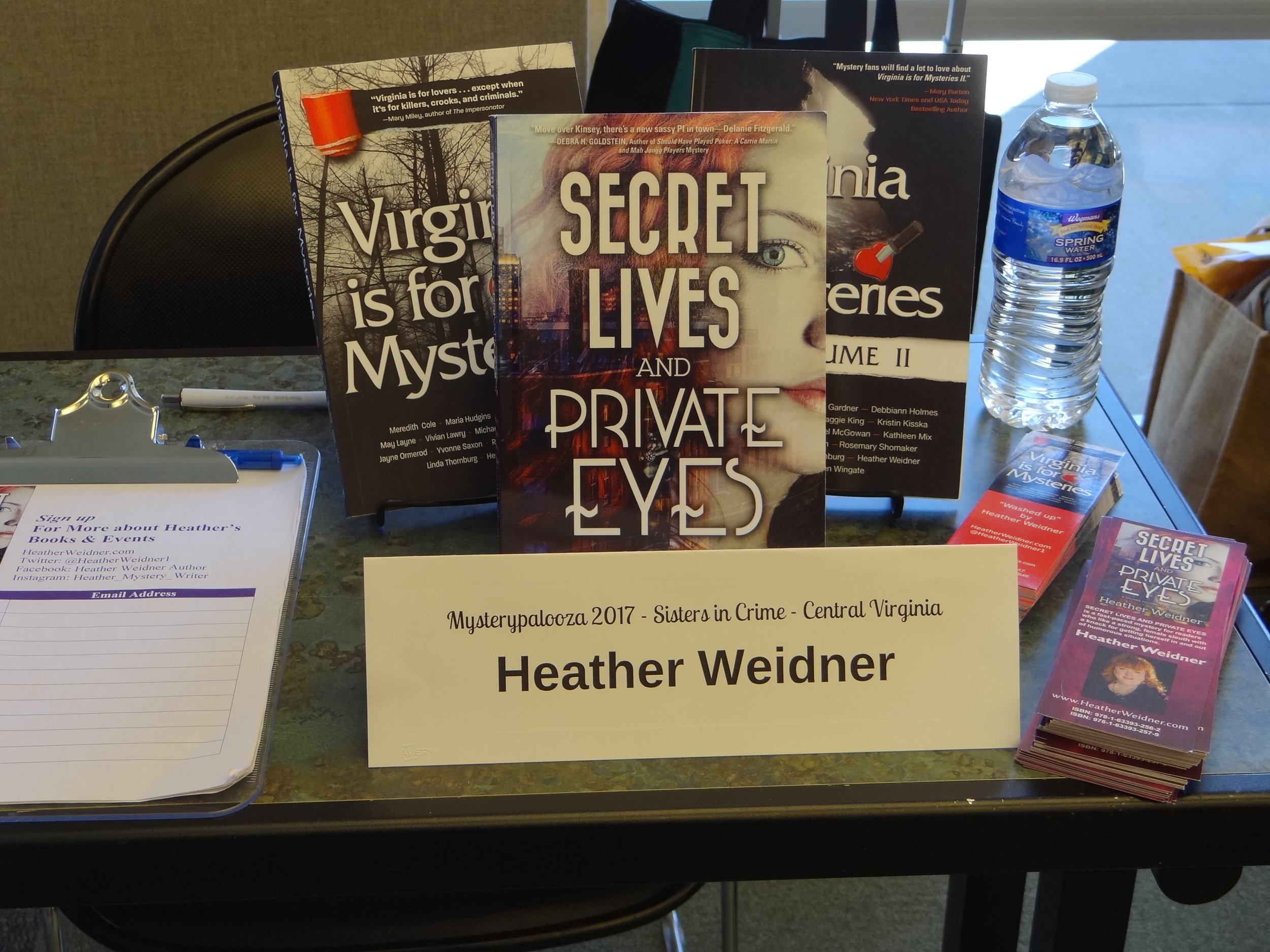
Sisters in Crime - Central Virginia hosted Mysterypalooza last weekend. It was our chapter's 30th Anniversary Celebration for Sisters in Crime, and we had such a fun event. Mary Burton, Mary Behre, Tracey Livesay, LynDee Walker, and Mollie Cox Bryan were our panelists, and here are the eight writerly things I learned from their discussion.

1. There are so many different pathways to publication. Every author had a different journey. Several began their careers writing in another genres. And most of the panel had traditionally published. They also had books published independently or with smaller presses. Authors today are often a hybrid. You have to find what works for you and your books.

2. I enjoyed the ladies' talk about their writing lives. Most are full-time authors; though, one does have a part-time job. They described their writing spaces at home, and they ranged from full-fledged offices to a desk in a bedroom and a desk on an unheated sunporch.

3. We had a long discussion of plotters (outliners and planners) and pantsers (write by the seat of your pants). One in the group was a true plotter. Several were pantsers, but there were hyprids or combinations of the two. Some call them hybrids or plotsers. I heard a new term. Some called the hybrids "panty liners." It just proves that not every style works for every writer. Find your style.

4. The Mysterypalooza authors came from different backgrounds, and they often used their past experiences in their work. We had two former reporters and a former lawyer in the group. It's important to be able to call on what you know for your writing.

5. Author professionalism came up several times in the conversations. The panel stressed the importance of acting and looking the part when you pitch to agents, editors, or publishers. Sage advice: Follow all submission guidelines. Do not be disqualified because you didn't follow instructions.

6. Know your strengths when you are pitching to an agent, editor, or publisher. Look for smaller conferences where there are opportunities to pitch your project. If public speaking or selling yourself terrifies you, look for pitch opportunities that you can do via email or Twitter.

7. Work out your elevator speech for your book or series. Write it down. Rehearse it, and know it. Don't introduce yourself as a writer. Describe what you write in one to three sentences.

8. Find a group of writers or a writing organization that you can network with and learn from others. Many have great programs and opportunities.

I treasure my writing groups. I have learned so much from other authors. And these groups have afforded me lots of opportunities for book signings, presentations, field trips -- in addition to the commaraderie of being able to network with writers who are at different stages of their careers.

Pet Peeves - What Drives You Nuts?

I started making a list of pet peeves and it grew. Originally, I was brainstorming ideas for why someone would commit a murder or a crime, but it was cathartic to write them all down. Some are humorous, and others make me go, "Grrrr!"

  1. People who leave grocery carts in parking places instead of returning them to the corral 
  2. People who leave two squares of toilet paper for the next person
  3. People who leave an empty box or container on the pantry shelf
  4. People who talk on the phone in a public restroom
  5. People who see that the copier or printer is out of paper and walk away
  6. Telemarketers, especially those who call me at work on my cell phone
  7. Those little ribbons for hanging in women's shirts and sweaters
  8. Tags in clothing
  9. People who don't hold the elevator doors for others
  10. Sales people who don't listen
  11. The fact that there are fewer hot dog buns in a package than the number of hot dogs in a package
  12. People who talk on the phone or text during a movie in the theatre
  13. Blogs that require me to login before I can comment or share
  14. Companies that bombard me with surveys - In most cases, I paid for the service; I don't need homework.
  15. People who dump things they don't want at the grocery store on other aisles or at the check out counter
  16. People who are always preoccupied with their phones and don't talk to the people around them -- especially their children
  17. Companies that use way too much packing material -- Thank goodness, I don't get those Styrofoam peanuts anymore. They used to stick to everything.
  18. People who drip or spill and don't clean up their mess
  19. People who talk during theatre performances or concerts
  20. Dog-eared corners in books

Who knows, some of these may end up in a future book or story. What would you add to the list?

50 Things I Learned about The Writing Life...

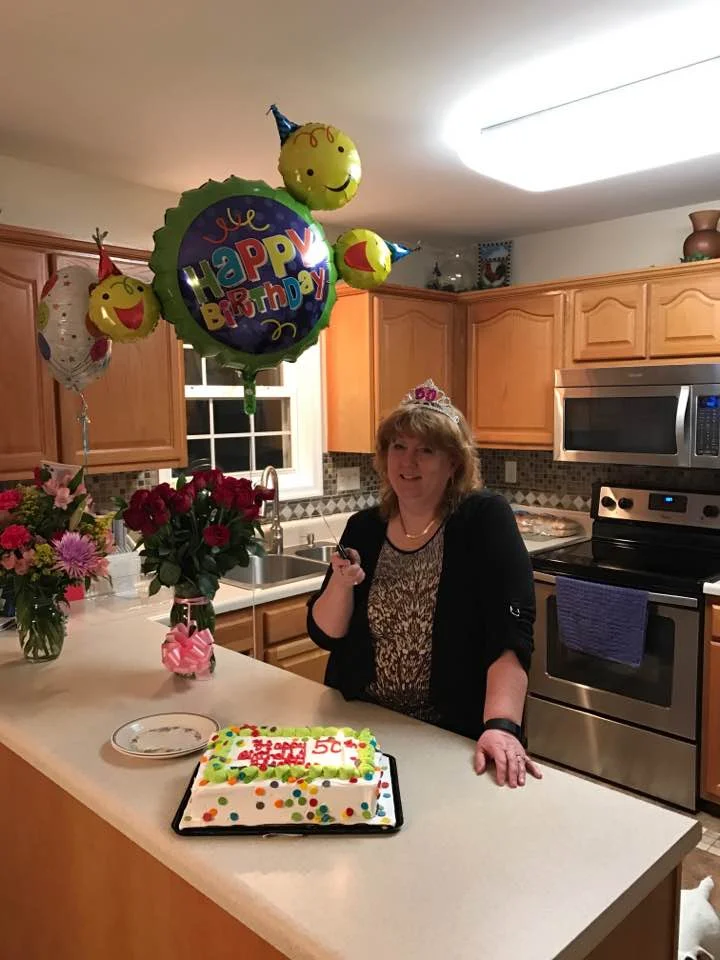
I had a milestone birthday this week. So in celebration of that, here are the 50 things I learned about the writing life...

  1. Publishing is a business. The goal is to sell books.
  2. Make sure that you're writing your next book.
  3. Writing is a lot of work. The first few "sloppy" drafts need a lot of work.
  4. Build relationships through your social media platform. They make a difference!
  5. Set a blogging and social media schedule that works for you. These sites need care and feeding, but they shouldn't be a 24x7 job.
  6. Everyone has an opinion. Comments and reviews can sting, but learn what you can from them and then move on.
  7. Try to write something every day.
  8. Keep a notebook or electronic notes of names and story ideas. You never know when you'll encounter something that'll work in your next book or story.
  9. Look at your social media posts. Make sure that they're not all "buy my book."
  10. Make sure that you share others' celebrations on your social media sites.
  11. Writers have to network, market, and build their platforms. Just make sure you leave enough time for writing.
  12. Collect email addresses at your events for your newsletter's mailing list. Get a clipboard and make sure you take it with you to signings.
  13. Writing is often lonely. Find your tribe. Look for other authors or groups who will assist and support you. (I am so fortunate to have my Sisters in Crime - Central Virginia, Sisters in Crime, Guppies, and James River Writer friends.)
  14. Find beta readers or a critique group to help you revise and edit your work.
  15. Look for volunteer opportunities to give back to your community. It's also a great way to meet new people. The writing life is often solitary.
  16. Build a street team or an advance team to help you with early marketing and reviews.
  17. Volunteer to do guest blogs or interviews. It's a great way to keep your name in front of people.
  18. Remind yourself that you do not have to do everything. There are lots of opportunities, but you can burn out if you're constantly on the go. Take care of yourself.
  19. Keep one master calendar for all of your events and deadlines. It helps me stay organized.
  20. There are going to be setbacks and disappointments. You need to persevere.
  21. Learn from your mistakes. Make note of how you'd do it differently next time.
  22. I try a lot of events and marketing ideas. If it doesn't work for me, I see what I can learn from it and move on.
  23. Order bookmarks and postcards. Make sure you always have them with you.
  24. Check out Canva. It's a great tool for websites and social media banners and post artwork. It's easy to use, and a lot of the backgrounds are free.
  25. Make a list of the words you overuse. Then use your word processor to root them out of your manuscript.
  26. Keep a chart or list of your characters and settings (especially if you write a series) to ensure you keep the details correct.
  27. Take pictures at your events or on your adventures to share on your website or social media platforms.
  28. Review your website from time to time to ensure your content and photos are current.
  29. Check all of your links on your website and social media sites to verify they are correct.
  30. Review your social media biographies or descriptions to ensure that they are current.
  31. Make sure that you backup your computer files. It's devastating when you lose your work.
  32. Make sure you keep your author headshot current. (People will comment if your picture is ten years old and no longer looks like you.)
  33. Don't burn bridges. You never know who you'll encounter later.
  34. Always be professional. Be on time and strive to meet all deadlines.
  35. Most of my correspondence is done via email. I keep lots of folders to ensure I can find the email when I need it. I also add new contacts to my address book immediately, so I don't lose them.
  36. Post a link to your blog to Twitter, Google+, Pinterest, and Facebook to drive traffic to your blog/website.
  37. Read your work aloud to find issues with wording and dialog.
  38. I create a Pinterest board for each of my stories/novels, so I have a visual of the setting, characters, and other story elements.
  39. Print your manuscript and proofread line by line after each round of editing to catch issues.
  40. When you are revising, check the last paragraph of each chapter. Make sure it compels the reader to keep reading and not find a stopping place.
  41. Use your word processor's view feature to make your pages small (e.g. 25%). Look at each chapter to make sure the lengths are relatively similar. You don't want a 30-page chapter and then a 6-page one.
  42. Get readers or writers to read your manuscript. You'll get a better critique than if you ask a friend or family member.
  43. Don't rely on your word processor's spell or grammar checker. It's not always correct.
  44. Keep all of your receipts and be diligent about tracking your mileage. You'll be glad when it's tax time.
  45. Keep a box of books in the trunk of your car. I've encountered times when the bookseller couldn't get books in time for an event. Also, at several events, the bookseller sold out, so it was nice that I had some extras to provide on consignment.
  46. Take time to celebrate your wins and successes.
  47. I use Etsy to find book- and mystery-themed gifts that are easy to mail for give-aways.
  48. Look to see if your neighborhood, work, club, or alumni association has a newsletter. If there's an announcements or celebrations section, submit your next book launch or release.
  49. If you have a chance, participate in a Facebook hop. It's a lot of fun, and I met lots of new readers and fans.
  50. Don't give up. The writing life is a challenge, and it's difficult sometimes, but it is worth it. I still squeal when that box of books arrives.
Beware of mystery author with a knife!

Beware of mystery author with a knife!

What Are Your Overused Words?

When I'm proofreading and editing my work, I often am blind to the overuse of some words. I can spot them in seconds in others' works, but not always in my own. So as part of my review, I've created a list of words that are my offenders, and I use Word's search feature to help me find them. When you do that first search, you will be amazed at the number of times they appear in your manuscript.

Here are my repeat offenders...

  1. almost
  2. appear
  3. as is
  4. begin
  5. down
  6. even
  7. felt
  8. few
  9. got
  10. just
  11. like
  12. nearly
  13. only
  14. quite
  15. really
  16. seem
  17. so
  18. stuff
  19. that
  20. then
  21. thing
  22. very
  23. was

What would you add to the list?

Get Rid of the Blahs and Get Your Writing Life Organized

My living room and foyer look bare without all of the holiday decorations. It doesn't help that it's gray outside, and we're expecting a bunch of snow tonight. Winter is my fourth favorite season. It seems that January is the time that I start to count down to spring. It's just blah, and I want to hibernate.

You may be stuck inside, but there are lots of things you can do to get your writing life organized and kick start your creativity. Here are some ideas...

  1. Clean off your desk. Get rid of the clutter, so you have a place to work.
  2. After you clean up your desk, work on your electronic files. I bought an external hard drive, and it's where I store all of my archived photos. At the beginning of each year, I migrate last year's photos to free up space on my computer. And don't forget all the old photos on your phone.
  3. Look at your blog, website, and social media sites. Do they need an update? It's a new year, and it's time for a new look. Nobody revisits a site with outdated content.
  4. Look at your biography - especially on your social media sites. Is it current and consistent across your platform?
  5. Organize your book marketing supplies. I designated shelves in my office closet. It's where my posters, flyers, bookmarks, prizes, and extra books live now. I'm all ready to go for my next event.
  6. Make sure that you back up your electronic files regularly. It is devastating when you lose your work. There are lots of backup and storage options these days. Make an investment and ensure that your work is secure.
  7. Look at your author photo. Is it current? It may be time for a new one. It surprises readers when you show up at an event, and you look fifteen years older than your photo.
  8. Organize your calendar. I have way too many electronic calendars, and it was difficult to keep them all in synch. I bought a pocket calendar, and all my writing commitments go there.
  9. Dig out an old project. We all have those files of unfinished work. Maybe it's time to give it a new life.

I hope you enjoy your weekend. Here in Central Virginia, we're expecting about eight inches of snow. It sounds like a writing weekend to me.

Confesssions of Binge Writer - A Style That Works for Me

It's the last day of 2016, and folks are getting their resolutions ready. I have a confession. I am a binge writer. I try very hard to write every day, but I don't always work on my current WIP (work in progress). I write on weekends, holidays, vacations, and during lunch. Life and my day job get in the way sometimes. I write something every day, but it's often blog posts, marketing materials, or guest blogs/interview questionnaires (or performance evaluations, executive summaries, or project proposals).

When I start a new short story or novel, I try to keep working on that project until I have a solid first draft. I start out as a plotter with an outline (that's often color-coded), then as I write, I turn into a pantser (one who writes by the seat of her pants). I tend to go where the story and characters take me.

I don't revise it until the first draft is completed. My friend Mary Burton calls this the "sloppy copy," and it is. I comb through a printed copy for plot and grammatical errors. I also look for other inconsistencies. When I'm done, I change the view in Microsoft Word to 25%, and I look at chapter lengths to make sure that none are too short or too long. Then I reread the last paragraph of each chapter to make sure it compels the reader to keep reading after her bedtime. I learned long ago that you don't want to provide the reader with a convenient stopping place. There needs to be a reason to turn the page.

After my third or fourth draft, I'm ready to submit it to my critique group. They're all mystery readers and writers. I admire the folks in this group who can submit fifty pages and continue to write the manuscript. I like to have the whole novel or story drafted before I submit it.

I then submit the manuscript to a private line editor. She also reads a lot of mysteries, so I appreciate her insight. When those revisions are done and I've checked it one last time, the work is ready for submission.

I've read a lot of "how to write" books and blogs over the years, and I know that I should write every day. I an envious of those who have a word count goal and stick to it. But I've come to the realization that I have to use the style and techniques that work for me. So for now, I write when I can. Sometimes, I take a break to network, learn new things, do marketing, or have an adventure. But even if I'm not writing, I find something interesting that I add to my idea file - bits of dialogue, character names, setting ideas, and interesting places to hide a body.

So figure out what your style is and what helps you meet your goals and deadlines. Other writers' ideas are great. Try them, but if they don't fit your style, try something else.

Are there any other binge writers out there? Happy writing and happy New Year!

What's in a Character Name?

Naming characters, even minor ones, takes some thought. There are lots of hidden meanings and information that can be transmitted by names. Here are eight things I've learned through the years about choosing monikers.

1. If you give random characters names with little or no significance, be sure that you don't over use the choices. I always end up with too many Bills, Bobs, and Mikes that I have to change during revisions.

2. I keep a character master list that's in alphabetical order. It's actually a Word table, and I add columns for each book in the series. I can track which names I used in what book. I can also easily see which characters return in later books. And it helps me locate names I've already used, so I don't have repeats.

3. It is often confusing to readers to have the same or similar names (even similar sounding ones) in the same work. My friend, Kathleen Mix, creates an alphabetical list of characters for each of her books. Her rule is that only one character gets a name that starts with a particular letter. (Example: A: Alice, B: Bob, C: Cherrie...)

4. I try to make sure that my names are age appropriate. If you Google ​popular baby names by year, you'll see the top names of each year. If a character is in her late 40s and American, Michelle, Jennifer, Heather, and Laurie are all good choices.

5. My friend likes to make all of her character names unusual and unique. She's had multiple editors ask her to change them. It's usually okay to have one unique name or spelling, but multiples often attract the attention of editors.

6. I name my minor characters after friends and family. Sometimes, I sneak in famous names from pop culture. My coworkers often find their names sprinkled through my books.

7. I like to pay homage to literary greats. My sleuth, Delanie Fitzgerald, is named after F. Scott Fitzgerald. Her firm is called Falcon Investigations. I named that after Dashiell Hammett's ​The Maltese Falcon.

8. I also Google names to see if the meaning fits the character that I'm describing. I look for connotations that the name has to make sure it fits my character.

Best wishes with your writing and your character names.