15 Things I Learned about Writing Short Stories from Art Taylor

I had the pleasure of hearing Art Taylor speak recently at our Sisters in Crime - Central Virginia meeting about crafting short stories. Here's what I learned.

  1. Edgar Allan Poe is not only the father of the American mystery, but the father of the American short story.
  2. For detective stories (whether it's a murder, caper, or puzzle), it all hinges on the clues.
  3. Every word counts.
  4. Character descriptions should be part of the single effect of the story.
  5. The plot drives the detective story.
  6. Think about what you can suggest without explicitly saying it.
  7. Every story needs conflict. There should always be an escalation of conflict in the story.
  8. Always up the ante. Shovel on more grief and conflict.
  9. Check out he Art and Craft of Fiction by Michael Kardos and riting Fiction by Janet Burroway.
  10. Narration is the stage direction and description is the scenery of the story.
  11. Exposition is telling. It is a way to provide information, but it should be done in small bits. What does the reader need to know?
  12. When you're revising your story, look at everything and ask, "Does this need to be here?"
  13. Use jump cuts. (Jump the action to the next scene.) You don't have to describe every detail of every day.
  14. Watch films and how the stories are plotted. This can help you with pacing your story.
  15. Look at your draft. Can you cut the first and last paragraph? You should strive to start your story closer to the action.

27 Things I Learned about Writing at the James River Writers Conference

I had the pleasure of being a part of two panels at the recent James River Writers Conference. I also sat in on some other great sessions. Here's what I learned about writing...

  1. Write first; edit later.
  2. Practice. Practice. Practice. Keep writing - no matter what happens.
  3. Your editorial voice and your writer voice have to be in harmony. It was recommended to just write during the first few drafts. Go back and fix things later.
  4. Read your work out loud to find issues with your dialog and pacing.
  5. You and your work are your brand.
  6. Your brand is your promise to your readers. They expect a certain type and style of writing from you. That's why if you switch genres, many publishing houses want you to use a new name and develop a new brand.
  7. Finding your own voice is key. It has to be your story.
  8. Your job is the writing.
  9. Know who your audience is.
  10. You need to balance the creative and the business sides of your writing life.
  11. Find your tribe - a group of authors who support each other.
  12. Turn off the TV and write.
  13. Writing should be your focus.
  14. Take care of yourself.
  15. If you're having trouble pacing your novel, take a screenwriting course or workshop. Screenwriting has a tight timeframe to work with, and pacing is key. It will also help with dialog.
  16. Marketing and what's hot in the industry are lways changing. Do not write to what is currently in vogue. It will have changed by the time your work gets published.
  17. Create a mailing list. This is the most valuable tool for an author.
  18. Make sure that your blog is on your author website.
  19. Be able to describe your book in an enticing way. Make sure you have practiced your elevator speech.
  20. Publishing is a subjective industry.
  21. While you're querying, make sure that you're working on your next book.
  22. Make connections. They are important. Get to know bookstore owners, librarians, bloggers, and readers.
  23. Market your book heavily during the presale period. Don't wait until its launch.
  24. Don't over-extend yourself. Your job is to write. It's okay to say no.
  25. Do your research.
  26. Keep writing. Make sure that you're always working on your next book.
  27. There is no magic secret to writing. You will know what works for you.

My Fan Girl Moment - I Met Nikki Giovanni

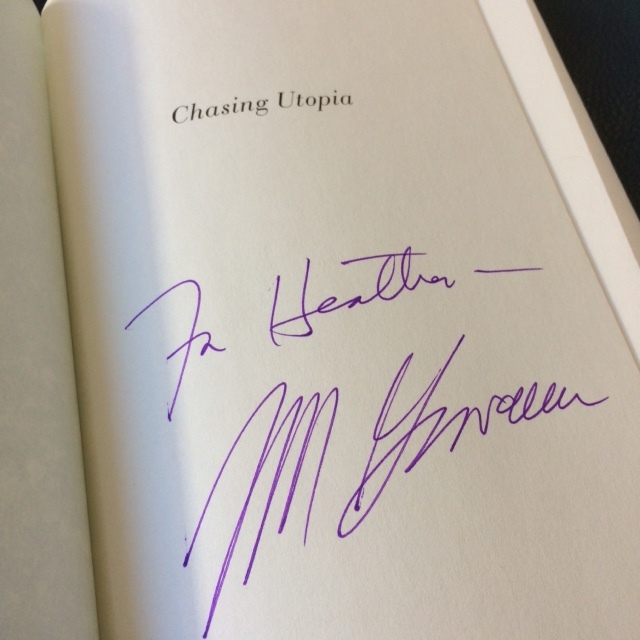
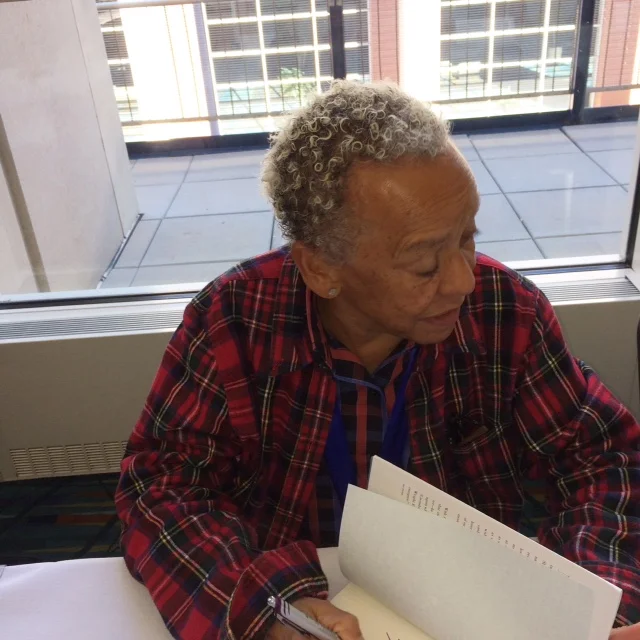
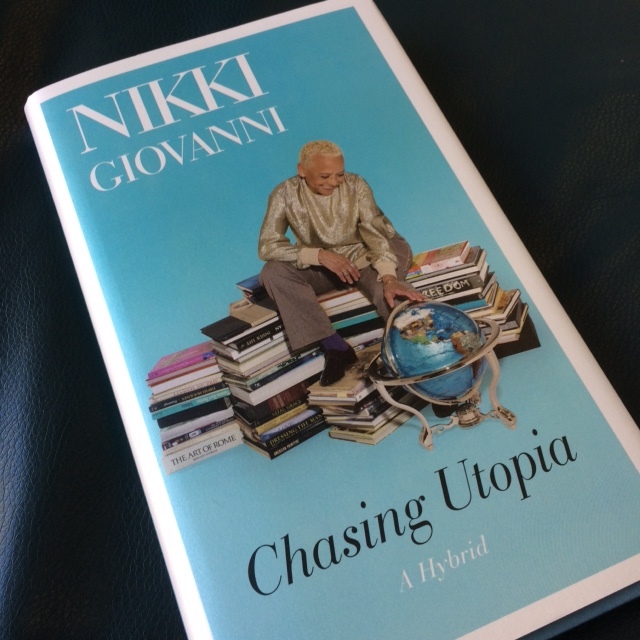
I had the pleasure this month to meet and hear Nikki Giovanni speak at the Library of Virginia's Literary Awards Luncheon. She received the well deserved Lifetime Achievement Award.

Nikki Giovanni is a Virginia and national treasure. Here's what I learned from her discussion.

  • We all get old. Otherwise, we die young.
  • Don't hold things in.
  • Build a community. Relationships are important.
  • She decided as a young girl to be happy. She controlled her outlook.
  • She was friends with Toni Morrison and Maya Angelou. And her stories of friendship were priceless.
  • She talked about her speeding tickets on I-81.
  • Read something every day. (She likes the comic strip "Pickles.")
  • You have to let people know you love them while you can.
  • Keep writing!
  • You have to write your story.

9 Things That Helped Me Improve My Writing

I've been writing for a while, but I'm still considered a debut author.  I've had three short stories and a novel published, and I'm working on the second in my Delanie Fitzgerald mystery series. For me, the writing part of the project is easy. The time-consuming part is the editing and revising. Here are nine things I learned to help me with my writing.

1. I joined a critique group. It was important for me to have other mystery/thriller writers and readers review and comment on my drafts. I have learned so much from this group. It is extremely helpful to have a group of beta readers provide commentary before you try to acquire an agent or publisher. You will be surprised at what you missed in your self-edits.

2. I stopped reading "how to write" books and started writing. I tended to get bogged down in the books, and I never got around to writing with a purpose. I had a stack of "how to write," "how to publish," and "how to plot" books. The only book about writing that I really learned a lot from was Stephen King's On Writing. That reference needs to be on every writer's shelf.

3. Publishing is a business. I hired a private copy editor to review what I think is my final draft before I submit it to my publisher and his editors. It is an added expense, but the feedback I get is well worth it.

4. When you're writing it is important to be consistent with terms and usage. Is it Internet/internet; a.m./AM, tv/TV? I keep a style sheet and use the search feature on my word processor.

5. It's also important to keep your descriptions and facts straight, especially when you're writing a series. I keep a table of all of my characters (mini-biographies) and locations. I add a column for each book, so I can track who is in what book. I write down all the details (e.g. eye color, hair color, likes, etc.), and this helps me round out the picture, even with minor characters.

6. When I'm revising, I look at the size of each chapter. If some are too long or short, I try to balance them out.

7. I also look at the last paragraph of each chapter when I'm revising. Do they compel or encourage the reader to keep reading? If you end a chapter with a character going to sleep, it slows down the action, and your reader may see it as a good stopping point. You want them to keep reading.

8. When I'm writing, I tend to overuse some words and phrases. I keep a list of words to watch for. When I'm ready to revise, I search for these and rewrite where I can. Beta readers are another great way to find these terms. They will tell you if you tend to repeat things. (My worst offenders are "just," "only," "that," and "in a few minutes.")

9. Pay attention to your dialog attributions (e.g. he said/she said). Readers tend to skim over "said," and the repetition doesn't bother them. It stands out to readers when you try to be creative and avoid using "said" (e.g. replied, retorted, noted, stated, etc.). Use synonyms sparingly, and stick to "said" most of the time. Also, if you have two characters talking, you don't have to use "said" each time one speaks.

I hope these help you on your writing journey. Drop me a note or a comment and let me know what works for you.

Tips for Making Time for Social Media

I never imagined how much time is involved in book marketing and building (and maintaining) your author platform. I work full-time and write part-time. Life gets in the way sometimes, but I make sure I build in time for the care and feeding of my social media sites. Here are my ideas for writers.

Social is the key word. You need to have a presence, and you need to be active on the sites you choose. But, you can't do everything, and all platforms may not work for you and your books. Decide what sites you and your readers like. And know the demographics of each site. The Pew Research Center has a good overview of each of major players. For my readership, I focus on Facebook, Twitter, Google+, Instagram, Pinterest, and Goodreads. I occasionally post on LinkedIn, but that's usually about my IT life.

Lists in Facebook (Interests) and Twitter are a big time-saver. This helps me stay organized. The list gives me a newsfeed of just the accounts I select. There are a lot of posts out there. This helps me see just what I'm interested in.

Create a daily schedule for your social media time. I get up at 5:00 AM, so I check my sites during breakfast. I often check on them at lunch. In the evening while watching TV, I spend time catching up on posts. You need to respond to comments and participate in conversations. Social media doesn't work if you don't post or if all your posts are "buy my book."

Schedule Facebook posts (author page) and tweets to happen when you're not usually active (during the work day or in the wee hours of the morning). I've picked up followers from different time zones this way. I'm an early bird, but a lot of readers are night owls.

Look for blog/social media support groups. There are also quite a few hashtags that encourage support for writers and bloggers. I have joined several online groups, and we share each others' content and engage with posts.

For your social media to work for you, you can't just be a poster or a reposter of others' content. That's a good start, but you need to comment, like, and share. The interaction is what increases your reach.

These are the things that work for me. How do you manage your social media?

How Working Full-time Helps My Writing Journey

I am IT manager by day, and writer the rest of the time. My dream is to one day retire and write full time. While work gets in the way of writing more than one book a year for me, and it sometimes wears me out to the point that I don't want to look at a computer screen any more that day, it does play a role in my writing journey.

Work limits my writing/free time, so I am more apt to use my available time to its fullest. My work day is regimented, and I tend to structure my writing time out of habit. (When I'm off for holidays or vacations and I have multiple days to write, I'm less structured.) Most of my days start at 5:00 AM.

I get some great ideas, character traits, and quotes from my co-workers. I have even been known to name characters after some of my co-workers.

When I'm home working when I have more than one day off in a row, I'm usually sequestered with just the pair of Jacks. Working keeps me plugged in to trends, discussions, and other social interactions. I think the solitude and the social parts of a writer's life need to be balanced. I'm an extravert, and I get my energy by interacting with other people. I know that when I do decide to write full-time, I'm going to have to include other social activities in my week for balance.

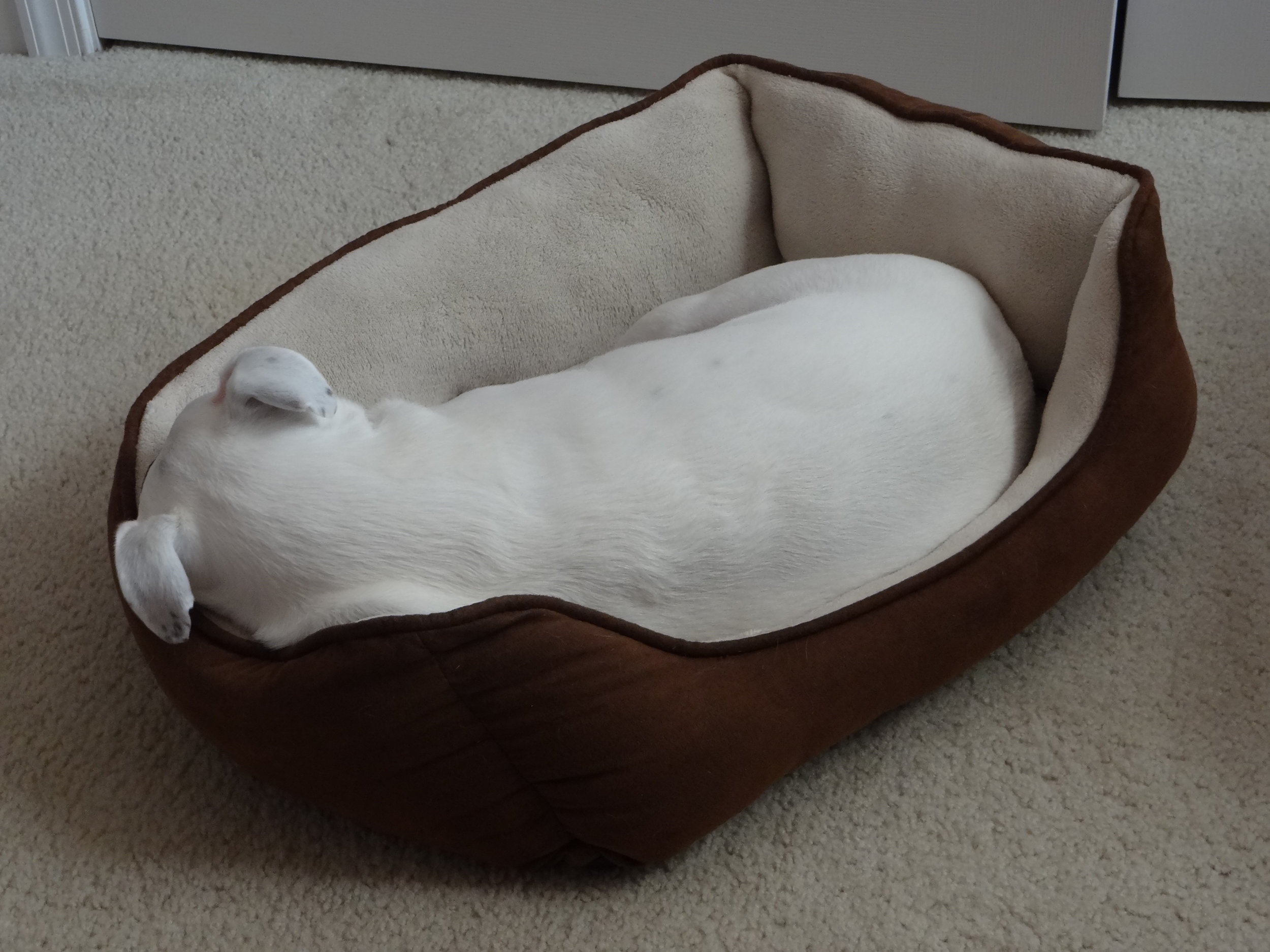
Riley: "I'm bored with writing time."

Riley: "I'm bored with writing time."

Yes, when Disney was a puppy, she chewed on the corner of my desk.

Yes, when Disney was a puppy, she chewed on the corner of my desk.

I work in IT, and my team gets to test lots of new technologies and hardware. It's fun to try out cool tools. Plus, I have a whole team of SMEs (Subject Matter Experts) if I ever have technology, computer, or geeky questions.

My company is very volunteer-oriented, and it affords me a lot of service opportunities and experiences that I wouldn't normally have. Trying new things, meeting people, and making a difference in our community are always good. Plus, they often generate ideas for my writing.

I commute to downtown Richmond. Our office is on a hill above the James River. We have one of the best views in the capital city. It's a great place to walk around at lunch. There's lots to see, and the cityscape and river-view are inspiring. Plus, changes in scenery can spark your creativity. Downtown Richmond is full of activities, great restaurants, and lots of historical sites.

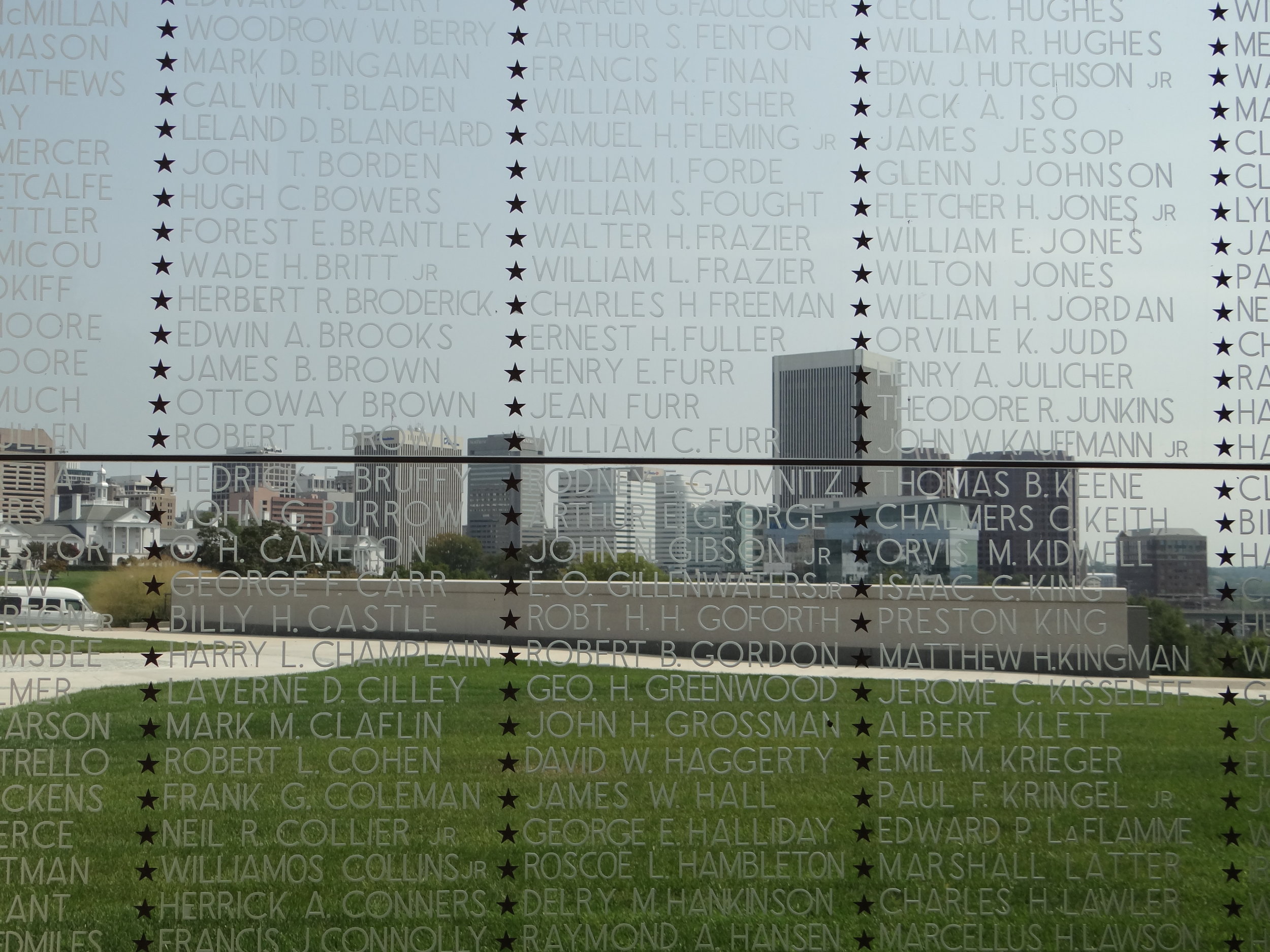
This is a view of downtown Richmond through the Virginia War Memorial.

This is a view of downtown Richmond through the Virginia War Memorial.

Going to work every day, keeps me in a routine and provides lots of social interaction.  I'd like my writing life to become my job when I retire, but for now, I like the balance that my work life provides.

Playlist: Songs about Writing

Music is a big part of my writing journey (and life). I always have some sort of music playing while I write, edit, or work. And the organizer in me always wants to make lists, so here's my big playlist of songs about books, writers, and writing.

  1. "Dancing in the Dark" Bruce Springsteen
  2. "Everyday I Write the Book" Elvis Costello
  3. "Eyes Without a Face" Billy Idol
  4. "I Am A Rock" Simon and Garfunkel
  5. "I Be Bound to Write You" Muddy Waters
  6. "I Write the Songs" Barry Manilow
  7. "Lady Writer" Dire Straits
  8. "Losing It" Rush
  9. "Mr. Writer" Stereophonics
  10. "Open Book" Cake
  11. "Oxford Comma" Vampire Weekend
  12. "Paperback Writer" The Beatles
  13. "Piano Man" Billy Joel
  14. "Rewrite" Paul Simon
  15. "The Book I Read" Talking Heads
  16. "The Book I'm Not Reading" Patty Larkin
  17. "The Book of Love" The Monotones
  18. "The Book of My Life" Sting
  19. "The Empty Page" Sonic Youth
  20. "Unwritten" Natasha Bedingfield
  21. "When I Write the Book" Nick Lowe
  22. "Write Your Own Songs" Willie Nelson
  23. "Writer's Block" Just Jack

Here are some about specific books and authors.

  1. "1984" David Bowie
  2. "Feed my Frankenstein" Alice Cooper
  3. "Goodbye Yellow Brick Road" Elton John
  4. "Hemingway's Whiskey" Kenny Chesney
  5. "Hey, Jack Kerouac" 10,000 Maniacs
  6. "Romeo and Juliet" Dire Straits
  7. "Sylvia Plath" Ryan Adams
  8. "The House on Pooh Corner" Kenny Loggins
  9. "Walt Whitman's Niece" Billy Bragg and Wilco
  10. "Tom Sawyer" Rush
  11. "Virginia Woolf" Indigo Girls
  12. "White Rabbit" Jefferson Airplane
  13. "Wuthering Heights" Kate Bush

And don't forget about the band, American Authors.

My Dogs and My Writing Journey

I have two crazy Jack Russell Terriers (Riley and Disney). They are from the same litter, and everything is a game to them It's like having twin three year olds running through the house at 60 mph (all the time).

But they are great companions, and they listen when I want to plot scenes or read through dialogue. Here are some of the things that they've taught me about my writing journey.

1. Live in the moment. Enjoy what you're doing. The Jacks aren't concerned with yesterday or tomorrow. They focus on the here and now.

2. Don't work all the time. Make sure to build in some fun time. When I'm writing at home, they let me know when we've been still too long.

3. Everything is a game to the pair of Jacks. They think tying shoes, folding clothes, and unloading the dishwasher are part of playtime. And if the task isn't fun, they'll go find a ball and make it more interesting. I need to work on making my tedious tasks fun.

4. Reward yourself occasionally. The Jacks can hear a cheese wrapper or the treat box 100 yards away. Walks and car rides are two of their other favorite treats.

5. Be a good listener. They're my audience when I plot or read dialogue aloud.

6. Make new friends and foster relationships. The Jacks love people, and they always want to stop and greet everyone they meet. Everyone is someone new to play ball with.

7. Wag more and bark less. That's always good advice.

I hope your writing projects are going well. The Jacks and I are getting ready to start another round of editing on the second book in the Delanie Fitzgerald series.