My Two Cents about Writing...

This month, I'm participating with other bloggers in the Sisters in Crime Blog Hop.

What are some things that new writers need to know?

1. Good writing is work. If you want to be a writer, you need to make time to improve your craft. This means writing and rewriting.

2. Write. Write. Write. Keep writing. Dreaming about being an author doesn't cut it.

3. Spend time proofreading and editing. If you're not good at it, find someone who is.

4. Find a good critique group. You need people to read your draft and provide constructive feedback. I love my mystery group (SinC-Central Virginia). It's made up of readers and writers. They don't pull punches, and that's what I need to improve.

5. Use social media to network with other writers, agents, and readers. Build your platform. But balance your networking and writing time.

6. Be strong. There are going to be rejections, bad critiques, and not so favorable reviews. Learn from them and move on. It stings, but take what you can, and don't dwell on them. And don't obsess about your number of followers, sales, and reviews. It will make you crazy.

7. Have fun. Enjoy what you do and every step in the process. I can't explain the joy that comes when you see your author's copy or your name on the cover.

For more writing blogs, check out Maggie King's site. Also see #SinCBlogHop and #SinC-Up.

You can find me on Twitter @CrazyforWords13 and on Facebook.


What's Your Writing Playlist?

I love music, and it's a part of just about everything I do. I even have a "Play it Loud" list for driving on the interstate in the red Mustang.

 I was asked recently what's on my playlist for writing. And it depends...

With fifteen different, themed playlists with hundreds of hours of music, I usually listen to rock or country with a fast pace and uplifting words. I write and edit better when there's a beat. These are my favorites right now:

  • Kid Rock
  • Florida Georgia Line
  • Train
  • Pharrell Williams (He's from Virginia Beach too.)
  • Colbie Caillat
  • Neon Trees
  • Fun.
  • Bruno Mars
  • Sara Bareilles
  • Uncle Kracker

But, I also often go back to old friends:

  • Van Halen
  • Elvis
  • UB40
  • Prince
  • Billy Joel
  • Elton John
  • Culture Club
  • Duran Duran

And if you're a mystery writer who's stuck, put on Train's "50 Ways to Say Goodbye." He offers a variety of ways to get rid of that annoying character.

What do you listen to when you write? Is there a specific genre that works best for you?

For more blogs about writing, check out author, Maggie King.

#SinC-up and #SinCBlogHop


Catch Phrase: A Lesson for Writers

My nieces introduced me to Catch Phrase this weekend. It's a timed game where you have to describe a word or phrase without using any part of it. So, not only do you have to know what the thing is; you've got to find a way to communicate it to your team in a way that they will understand. It's frustrating when your team doesn't get what you're describing.

It's the same with basic business communications. To pass on a idea to your readers, you need to:

  • Be clear and concise.
  • Use words that are understandable to your audience.
  • Look for common experiences.
  • Present the material in an organized fashion.
  • And proofread to make sure that your message is clear.

Best wishes with your writing. It's often harder to write in a plain, clear fashion. It often takes several revisions and some editing.

Hanover Book Festival

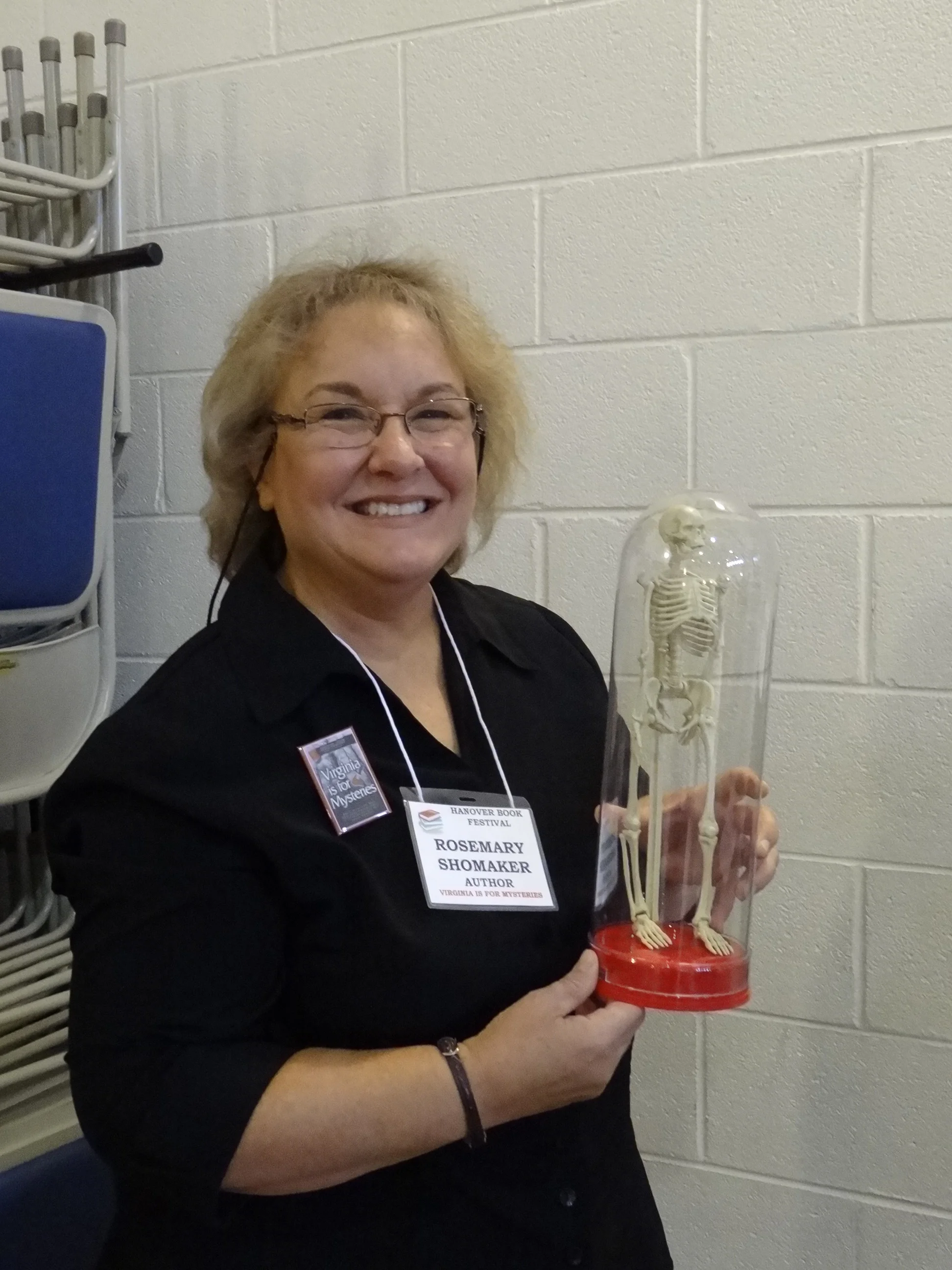
Front: Maggie King and Vivian Lawry Back: Heather Weidner, Fiona Quinn, and Rosemary Shomaker

Front: Maggie King and Vivian Lawry Back: Heather Weidner, Fiona Quinn, and Rosemary Shomaker

Rosie and a Friend

Rosie and a Friend

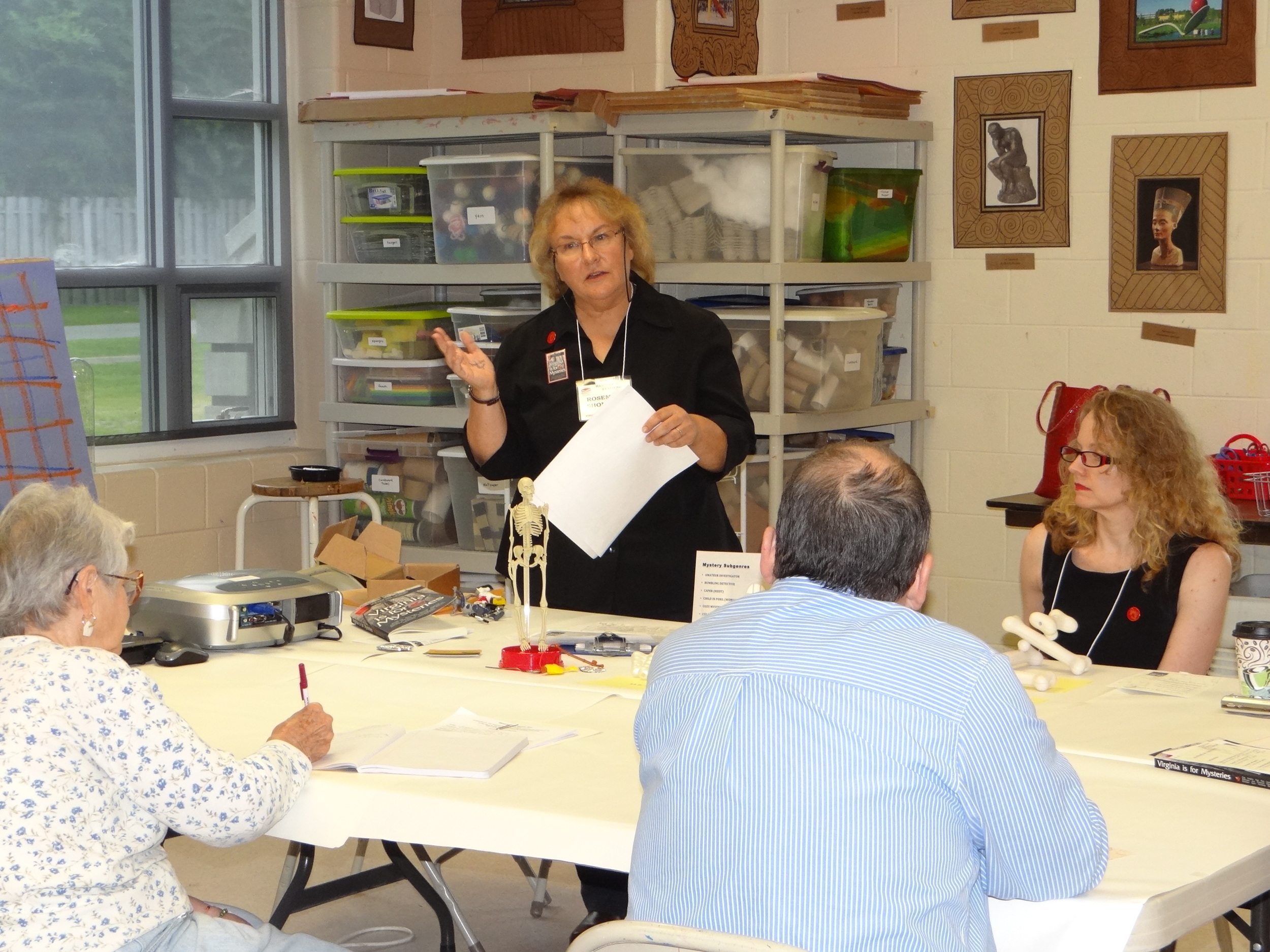
We had a really nice time at the Hanover Book Festival yesterday. Rosie Shomaker and Fiona Quinn led our workshop, "Anatomy of a Mystery," and we signed lots of copies of Virginia is for Mysteries. It is always nice to talk to so many mystery readers and writers!

Anatomy of a Mystery with Rosie and Fiona

Anatomy of a Mystery with Rosie and Fiona


Squeezing in Time to Write

I work full-time, and I have several volunteer projects. Sometimes, it's hard to find time to write. Here are some ways that I've been able to squeeze in some time.

1. Make an Appointment - When you have time off, reserve some of it for writing. If you're serious about writing/editing, you need to make the time. I've had to jettison a few things too.

2. I use my lunch hour for writing time. That gives me an extra five hours a week.

3. Join a Critique Group - Your group will keep you motivated. You need to have new samples to submit, so it gives you a schedule and a deadline.

4. Keep Score - Keep a count of your writing progress. You will quickly be able to see the peaks and valleys. It is also another good motivator. I keep a work count in  a spreadsheet. I started last June when I did an online challenge with my group. At the end of the month, I was amazed at the progress I had made. A little competition helps too.

5. Get up Early - Get up an hour or two earlier and devote the time to writing. If you wake up in the middle of the night and can't sleep, write.

Best wishes with your work in progress!

The Value of a Critique Group

A critique group can help you refine your writing and get your manuscript ready for publication. The support and ideas are invaluable. But it does take some courage to put your writing out there for comments and criticism. You also need to be in the mindset to take the criticism and improve your manuscript.

Find a group that fits your work style and genre. Some are virtual (online), and others are in person. Mine meets monthly at a local library. We have six to nine authors who attend regularly. It may help if you can ask to visit before you join or submit your work to get an understanding of the rules, conventions, and group dynamics.

Make sure you know the rules. In our group, there has to be at least two submissions in order to have the monthly meeting. We also don't require members to submit something each month.

We make notes about grammatical and formatting issues and give them to the owner. We don't spend the group's discussion time talking about commas. Also, if someone mentions an issue that others noted, they jump in when it is first discussed, so we don't have to repeat items that have already been mentioned.

I like that my group has a good mix of published and pre-published writers. There is also a good balance between readers and writers. Our group started out with all female members, but we're now more gender and age diverse. That's helpful because we get a variety of opinions and ideas.

Don't take the criticism personally. The goal is to offer help to improve your writing. You're there to listen and learn, not to defend your work against every comment. And in the end, they are all opinions. If you really don't agree with something, don't use it.

I am very fortunate that my group focuses on mysteries and crime stories. The critiques are more valuable when the group members know the conventions of the genre. They also offer connections and advice that help writers at all stages of their careers.

You need to make sure that you're contributing to the group. Make the time to do serious critiques/reviews of their submissions. It takes some effort, but the advice has been invaluable for me.

My group is supportive. We help each other with marketing, social media, book launches, and technology. And we celebrate each other's successes!

Advice from a Certified Homeland Protection Professional

Allen Norton, Certified Homeland Protection Professional, from GDSI Intelligence and Training spoke to our SinC-Central Virginia group about international and home-grown terrorism and the characteristics of each. He provided a lot of good details and samples of training materials/documents for our mystery and thriller writers.

His presentation focused on foreign and domestic terrorists and characteristics of each. He had quite the collection of propaganda and recruiting tools. It was interesting to see the variety of materials. The common theme, despite the dogma, throughout all of them was hatred.

Who knew some groups even had membership applications to become a terrorist? He explained the left/right continuum of the major terrorist organizations. The extremes on the left side tend to be more politically motivated, and the goal is to create a new or their own political structure. The extreme right tends to be religiously motivated and wants to return to some previous state from the past.

It was interesting to see how technology and social media have changed the recruiting and communication tactics and practices of these groups.

DSC02664.JPG


Writing and Editing...

I finished the June writing challenge with my virtual writers' group. I added over 34,500 words to my work in progress. And the first draft is done. Whoo hoo! I need to do some more polishing to get it ready for critique group.

I'm also putting the finishing touches on two short stories that I'm going to submit to the second Virginia is for Mysteries anthology.

I enjoy purusing #amwriting. It's an interesting mix of writers and projects.

What are you working on?