What I Learned on a Recent High School Visit

It's been a long time since I've been in high school. I had the great pleasure of spending time recently with a senior English class that was doing a module on mysteries and thrillers. I had my handouts, overview, and give-aways ready, and I barely got in the door before I got peppered with questions about mysteries and my writing. The class was mixed in their mystery experience. Many liked watching crime-related shows and movies, while others did read mysteries. There were a handful who had never read any kind of mystery.  I love the energy and the interest. And I've never had anyone step through a critical discussion of my short story and the literary techniques I used. What fun!

We had a great discussion, and here are the highlights...

  1. The class really liked red herrings, foreshadowing, and irony in stories. They liked books with a plot twist.
  2. It was fun to talk about mystery and thriller authors. Many on my handout were new to the class, so they had lots of questions about subgenres and who wrote what type of book.
  3. They liked mysteries that combined several subgenres (e.g. romantic suspense, medical thriller, or legal thriller).
  4. Most of the class' interest in mysteries started with TV shows and movies.
  5. They were also very interested in what mystery resources were out there. We talked about websites, blogs, and author websites.
  6. We had a long discussion about how some popular sleuths had had lots of different interpretations and incarnations in movies and TV, such as Sherlock Holmes and Dr. Watson. They all had a favorite, but Benedict Cumberbatch and the BBC won the popular vote.
  7. They were interested in why some sleuths had sidekicks and others didn't. I typically don't have a sidekick in my short stories, but my private investigator has her computer-hacker partner to assist with research that she's unable to get through normal channels.

I enjoyed my visit, and many thanks to Ms. Arnold for inviting me.

What Ryka Taught me about Search and Rescue Dogs

Recently, Dave and Ryka from K9 Alert Search and Rescue talked to our writers' group about search and rescue dogs. They also did several indoor and outdoor demonstrations, so that we could see the dog in action. Here's what I learned in case I ever include a search or cadaver dog in a mystery.

1. Ryka is certified to search for missing persons and human remains detection (search and rescue as well as cadaver searches).

2. They are part of a non-profit group that assists the Commonwealth of Virginia's Emergency Management and local law enforcement.

3. Police dogs are trained to track all human scents. This means that they are looking for a scent at the scene. They are searching for the freshest trail. Search dogs are trained to hunt for a particular human's scent.

4. Humans are all like "Pig-Pen" in Peanuts. They give off a cloud of scents and skin cells wherever they go.

5. In the past, lost persons in the woods could often be found near water. He said that now they are finding lost people at higher elevations (often because they are trying to get a cell phone connection).

6. Scents are affected by the sun/heat and the wind. Thermals affect how far/high scents travel.

7. Searches for missing persons often include K9 teams, trackers, horse teams, and helicopters. Helicopters are often used for forward-looking searches. He said that the ground teams are usually the ones to locate the missing person.

8. He said that one handler and dog can cover about forty acres in 2-3 hours.

9. Cadaver dogs are trained to do a passive alert when they find a scent, so they don't disturb a possible crime scene. When Ryka alerted, she sat near the area where she detected the scent.

10. He said that if they are doing a search in a building, they often ask for the AC/heat to be turned off because the vents distribute the scent throughout the building.

11. Clandestine graves are often shallow. Many times, they're covered with a small amount of dirt and debris.  

These volunteers do amazing work and provide invaluable assistance during times of crisis. I loved watching the camaraderie between handler and dog. To find out more about K9 Alert Search and Rescue, check out their website.

Growing up as a "C.K." and How It Inspired My Love of Mysteries

I'm a "C.K." (Cop's Kid). I had a great, but sometimes unusual childhood. But I wouldn't trade it for the world. I think it played a huge influence in my love for all things mystery.

As a small child, I'd go with my dad to the shooting range. One of my first jobs was to collect shell casings in a metal peanut can when he was done firing. Those suckers were hot. You had to be careful.

He was the SWAT commander in the 1970s, and they needed practice bullets. I sacrificed a ton of crayons for practice ammunition. What other elementary school kid knew how to melt crayons and fill shell casings?

In first grade, my dad was the BEST for career day. He arrived in a police car, and then he had the police helicopter fly over and land in the field next to the school. He was way cooler than the insurance salesman. I still owe him for that one. He and the helicopter pilot were a hit!

One summer evening, my sister and I learned how to use a night scope. It was fun to watch the neighbor's dog illuminated all in green.

But NEVER watch police shows with law enforcement professionals. There were very few police dramas that my dad liked because most were too "Hollywood" and not real. I loved "CHiPs," and I never heard the end of it about Ponch and Jon not even riding their own motorcycles. (I didn't care that they were towed behind a truck.) But this stuck with me, and as a mystery writer, I do a lot of research to make my stories as accurate and plausible as possible. And my dad, now a retired police captain, is my best resource on police procedures and crime scenes. (The only police shows that he liked were "Hill Street Blues," "NYPD Blue," and "Barney Miller.")

As a C.K., I learned respect for guns and law enforcement. I am still a fan. Our police, fire, and first responders are heroes. They risk everything every day. I too vividly remember when my dad was called out for emergencies, and I wondered whether or not he'd come home that evening. These men and women (and their families) give up a lot in service for us. He worked just about every holiday, and we was right in the middle of every emergency or crisis.

While it wasn't a "normal" childhood, we had some interesting dinner conversations, and it was a wonderful time that I wouldn't trade for anything. Happy Father's Day, Dad!

Who are Your Favorite Detectives and Sleuths?

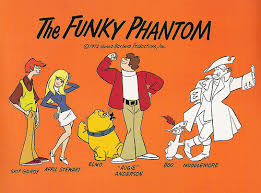
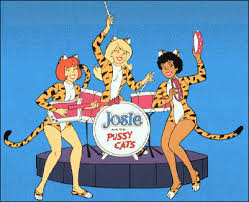
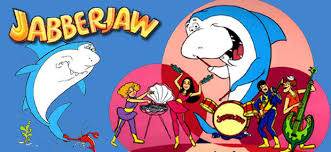
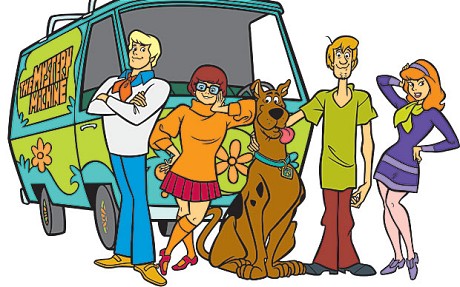
I have loved mysteries since Scooby Doo, Josie and the Pussy Cats, Jabber Jaw, Speed Buggy, Hong Kong Phooey, and the Funky Phantom. Seventies cartoons were full of sleuths and capers. In elementary school, I started reading the classic Nancy Drews and raced to finish the Hardy Boys. Then I moved on to Agatha Christie, Alfred Hitchcock, and One-minute Mysteries. Now, I read anything from cozy to thriller.

Here are my top detectives...

  • C. Auguste Dupin
  • Cagney and Lacey
  • Dick Tracy
  • Elvis Cole
  • Frank and Joe Hardy
  • Hercule Poirot
  • Jim Rockford
  • Mike Hammer
  • Miss Marple
  • Nancy Drew
  • Nero Wolfe
  • Philip Marlowe
  • Quincy
  • Sam Spade
  • Sherlock Holmes (in all forms)
  • Steve McGarrett
  • Thomas Magnum
  • And of course, Scooby Doo!

Who would you add to the list?

A Playlist for SECRET LIVES AND PRIVATE EYES

I love music. I have playlists for reading, writing, and revising. Music is always on at home or work. Listening to my 80s Favs this morning made me think about the characters in my debut novel, Secret Lives and Private Eyes (June 20, 2016).

Business has been slow for Private Investigator, Delanie Fitzgerald, but her luck seems to change when a tell-all author hires her to find rock star, Johnny Velvet. Could the singer whose career purportedly ended in a fiery crash almost 30 years ago still be alive?

And as though sifting through dead ends in a cold case isn't bad enough, Chaz Wellington Smith, III, a loud-mouthed strip club owner, also hires her to uncover information about the mayor's secret life. When the mayor is murdered, Chaz is the key suspect. Now Delanie must clear his name and figure out why landscaper, Tripp Payne, keeps popping up in her other investigation. Can the PI find the connection between her two cases before another murder - possibly her own - takes place?

So here's my playlist for Secret Lives and Private Eyes.

  1. Adam Ant's "Goody Two Shoes"
  2. A-Ha's "Take on Me"
  3. Cyndi Lauper's "Girls Just Wanna Have Fun"
  4. Robbin Thompson's "Sweet Virginia Breeze"
  5. Wilson Pickett's "Mustang Sally"
  6. Modern English's "I Melt with You"
  7. Icicle Works' "Birds Fly" (Whisper to a Scream)
  8. Van Halen's "Why Can't This Be Love"
  9. The Beach Boys' "Fun, Fun, Fun"
  10. Bruce Springsteen's "Dancing in the Dark"
  11. Bon Jovi's "Wanted Dead or Alive"
  12. Rachel Platten's "Fight Song"
  13. Mark Wills' "Nineteen Something"
  14. And of Course, Hall and Oates' "Private Eyes"


What's in Your TBR Pile?

Disney Dog and One of My TBR Piles

Disney Dog and One of My TBR Piles

My "To Be Read" (TBR) pile is huge. Actually, I have two - one in the den, and one on my nightstand. When I die, there will probably still be a stack of unread books. When we moved to this house, we didn't have a lot of furniture, but we had boxes and boxes of books. Just about every room as at least one bookshelf.

My grandparents and parents started my love for books and reading a long time ago. Someone asked me recently if I read differently as a writer. I'm not sure if it's because I'm a writer or whether it's because of a busy schedule. But I do notice differences in my reading habits lately.

I used to feel obligated to finish every book I started. Now I give myself permission to quit if the book doesn't grab me. If novels are riddled with typographical or grammatical errors, I usually put them down. Since I do a lot of writing and revising, typos and stylistic errors jump out at me and scream. I like plots that move. I get annoyed with mysteries that I can figure out in the first half of the book.

My free time is limited. I work full-time, do volunteer work, and write. I tend to be more selective in what I read. I read what I like, and I don't follow best-seller or popular book lists like I used to. My favorite genres are mysteries, histories, and biographies.

I read ebooks on my iPad. I love the convenience of downloading anywhere and taking a library with me. But I still like the feel of paper.

What's in your TBR pile? Have your reading habits changed?

What I Learned about Crime on Campus

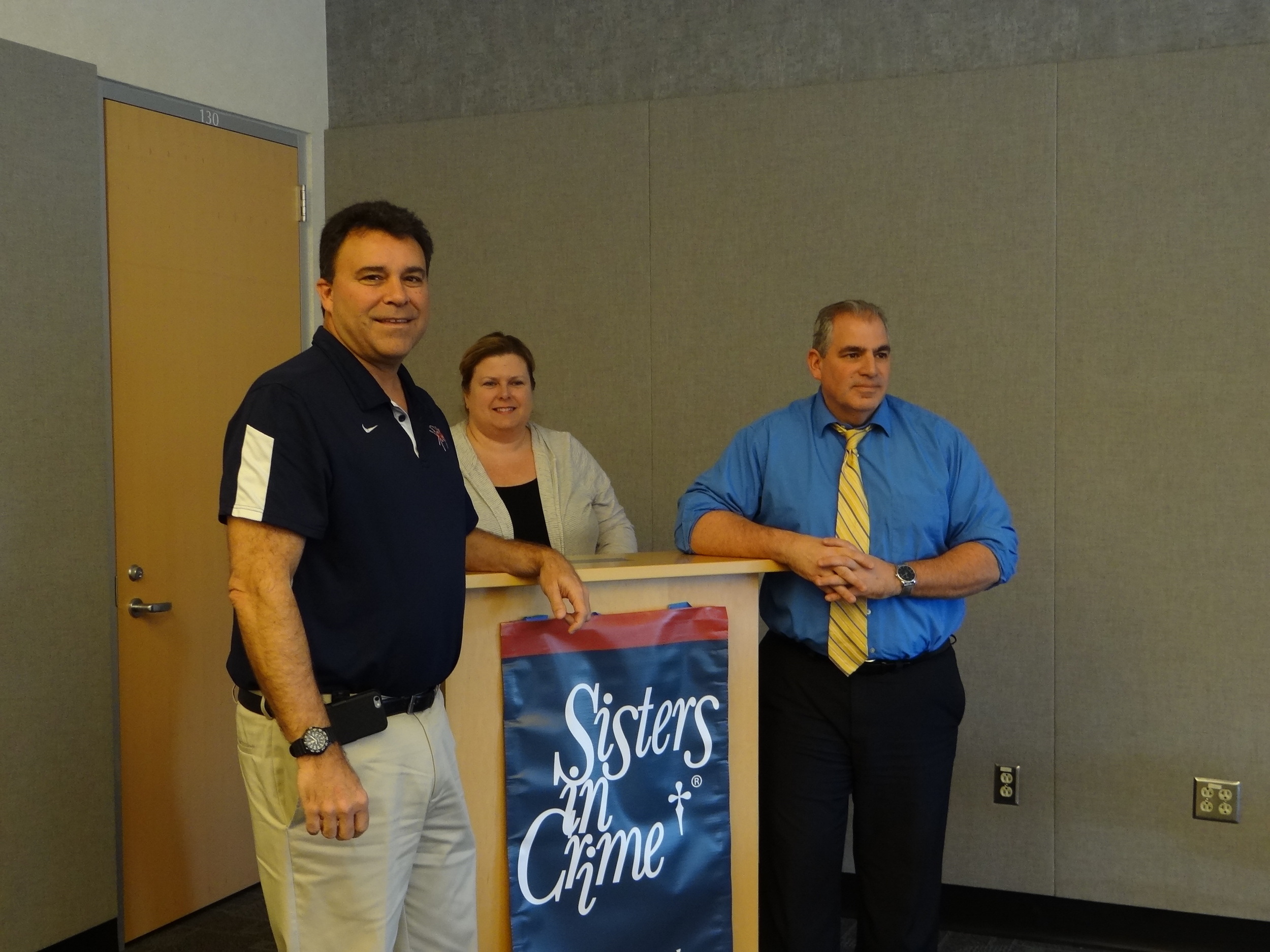
Campus Chiefs of Police Paul Ronka and Dave McCoy spoke at our Sisters in Crime - Central Virginia meeting this week about crime on campus. And yes, someone did ask, "where's the best place to hide a body" on a college campus.

Here's what I learned from both of them. One serves a commuter campus with three locations in Central Virginia, while the other serves a larger private college, where most of the students live on campus.

  • If you're writing a mystery about college life, most incidents happen in the wee hours.
  • While most of what they deal with are parking, stolen items, underage drinking, narcotics, and sexual assaults, their officers are now trained to deal with active shooter or hostage scenarios. They conduct regular training with students and faculty. Life has changed for law enforcement after Columbine. The strategy used to be to set up a perimeter, wait for the SWAT team, and try to engage the shooter in negotiations. Now, the focus is for the first officers on scene to do a tactical entry and locate the shooter.
  • When events occur on campus, their officers are involved with the investigation, but they also involve the local police, state police, FBI, and Homeland Security, as needed.
  • Chief McCoy's campus requires study abroad for many of its students, so he is often called upon to worth with the state department and law enforcement agencies in other countries when incidents or crimes occur involving students from his campus.
  • Both are also responsible for emergency training and drills for earthquakes, hurricanes, and other catastrophic events. They have a variety of tools and alert systems for emergency notifications.
  • After the horrific college campus shootings, colleges in Virginia now have Threat Assessment Teams to evaluate and investigate safety concerns and incidents. These teams determine the best plan of action for the safety of the campus and the students involved.
  • If you're a writer, you need to check out Yik Yak. It's an anonymous site where people (usually college) students in about a mile-radius of your location post comments about all kinds of topics.

Neither officer gave us the "best place to hide a body," but they did talk about maintenance tunnels, steam tunnels, and rooftops. I'm sure there are lots of interesting locations on a college campus...

l - r: Dave McCoy, Cynthia Price, and Paul Ronka