#ThisorThatThursday: Welcome, Jayne Ormerod

#ThisorThatThursday Logo.png

I’d like to welcome Jayne Ormerod to the blog for my inaugural #ThisorThatThursday author interview. I gave the authors a series of questions in pairs and asked them to tell us about themselves.

Jayne O3.jpg

A few of your favorite things: Almost all food and wine; a good book on a rainy day; a walk on the shore in any weather; and dogs. If I had a big enough yard, I would be that ā€œcrazy dog lady.ā€

Things you need to throw out: I have a lot of clothes I need to throw out, partly because I bought on-line and the sizing/quality was way off and it was too much of a hassle to return. My spice rack could do with a good cleaning out, too. I used one spice the other day that had a Use By date of 2001.

Things you need for your writing sessions: My laptop. I just can’t write the old-fashioned way. I edit as I go, which requires lots of deleting and moving of text.

Things that hamper your writing: My puppy laying his head on my laptop while I am writing. He is QUITE the snuggler, and my new laptop has a touch screen that is sensitive to dog noses and I’ve found stuff deleted.

S Parrott 9.jpg

Things you love about writing: Plotting!  I love to noodle up a good plot!

Things you hate about writing: The additional 62,000 words needed to flesh out the plot and turn in into a story! 

 Favorite music or song: Carolina Shag music!

Music that drives you crazy: Rap. I can’t understand the words and it always sounds so angry to me. Not relaxing.

 Favorite beverage: Diet coke and wine (not together of course!)
Something that gives you a sour face: Bad milk. (you’d think at my age I’d know better than to smell it after it’s expiration date!)

 Favorite smell: Coq au vin simmering in the oven. Mmm-mmm. Now that’s good eating!
Something that makes you hold your nose: The smell of fish at the fish counter at my grocery store. It literally makes me gag.

 Something you’re really good at: Few people know that I took 12 years of piano lessons. ā€œMoon Riverā€ is my favorite song to play. It was my mother’s favorite song.  
Something you’re really bad at: Anything athletic.

The last thing you ordered online: Large, thin crust mushroom, chicken, red onion and spinach pizza from Pizza Hut.

The last thing you regret buying: This thing for my dog that is supposed to control barking by squirting citronella oil in his face when he barks too much. I haven’t even opened the package.

 Things you always put in your books: Food and drink.
Things you never put in your books: Putting dogs (or any animal) in danger! I do love it when they burst on stage and save the day, though!

 Things to say to an author: ā€œI didn’t want the book to end!ā€
Things to say to an author if you want to be fictionally killed off in their next book: ā€œYou missed a quotation mark on the second sentence of the third paragraph on page 79.ā€ (Trust me, I didn’t do that on purpose!  Stuff happens during the editing process. I hate it when it does, but it’s a reality of being a published author.)

 Favorite places you’ve been: Perhaps I have romanticized the small town I grew up in, but I love going back to my hometown of Chagrin Falls, Ohio.
Places you never want to go to again: A rock concert. Too many people. Too expensive. Too loud. And WAAAYYY past my bedtime.

 The coolest person you’ve ever met: Sue Grafton. It was the happiest Happy Hour of my life!

The celebrity who didn’t look like he/she did in pictures/video: Jessica Fletcher, the author of the Murder, She Wrote series, mostly because the author was really a ghost writer by the name of Donald Bain. (He also was the ghost writer for Margret Truman’s Capitol Crime series. He doesn’t look like her, either! 😊 )
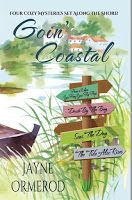
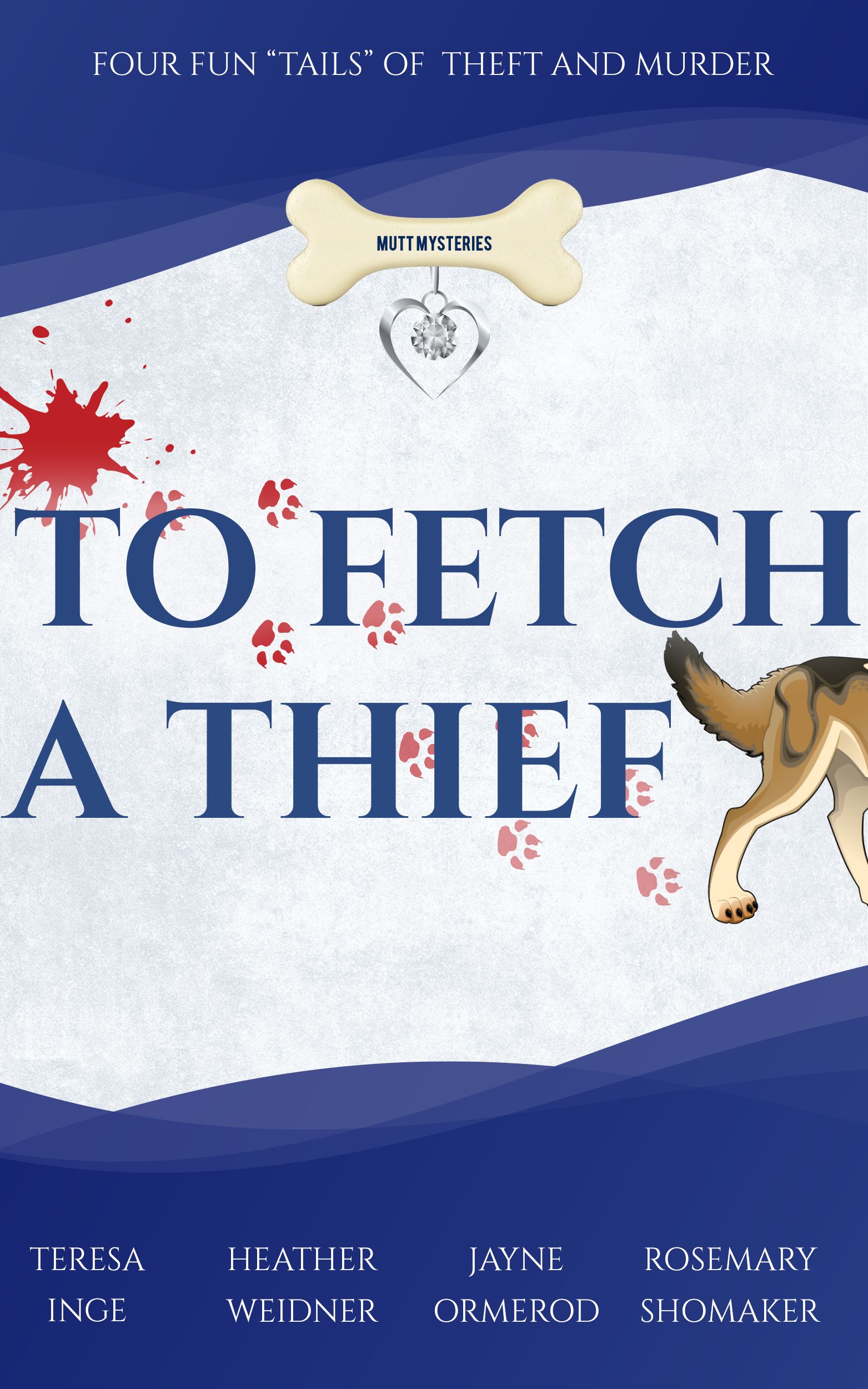
About Jayne: Jayne Ormerod grew up in a small Ohio town then went on to a small-town Ohio college. Upon earning her degree in accountancy, she became a CIA (that’s not a sexy spy thing, but a Certified Internal Auditor.) She married a naval officer and off they sailed to see the world. After nineteen moves, they, along with their two rescue dogs Tiller and Scout, have settled into a cozy cottage by the sea. Jayne is the author of the Blonds at the Beach Mysteries, The Blond Leading the Blond, and Blond Luck, as well as a dozen other short stories and novellas. Her most recent releases are Goin’ Coastal and "It's a Dog Gone Shame!" in To Fetch a Thief.

Let’s Be Social:

Website

Blog

Facebook

Feedback - Gift? or Something Else?

feedback.png

Through the years at work, we’ve done dozens of 360-degree evaluations and feedback surveys. When I taught, the college did professor reviews at the end of each semester. I used to get butterflies (or bats) in my stomach before I had to read them. (One student didn’t like my red shoes.)

One of our HR folks once said that feedback wasn’t something to dread — but a gift. I valued the comments more when I thought about them in those terms.

It’s hard as a writer to hand over your work. You know the one that you sweated over, nurtured, and loved for months or years. You created it, and it’s part of you. And someone is going to call your baby ugly or poke holes in your plot.

I think beta readers and critique groups are invaluable. You want to catch errors (preferably while you can still change them). You also want to catch story problems before an agent, editor, or publisher sees it and rejects your submission.

I tend to make boo boos when I’m making edits. I try to be super careful, but it’s always good to have another set of eyes go through your draft. I’m notorious for leaving off the second quotation mark.

My critique group reads fifty pages from each submitter a month, and sometimes, it’s hard for them to remember scenes, clues, or red herrings after several months pass. I always find a beta reader or two to read the entire draft like a reader. Family members are great, but they often don’t give you the nitty gritty feedback that you need.

It took me a while to get used to critique group. All of the feedback and suggestions were overwhelming at first. Sometimes, I’d get notes and suggestions from nine different people with nine sets of different ideas. I took notes while they talked about my submission, and then I’d wait a day or two to go through all of it. I print off a copy of the submission and make all the notes on that copy. It’s easier to see contradictions in the suggestions. And just because someone suggested something, doesn’t mean you have to change it.

When you look for a critique group or beta readers, make sure they are made up of people who are familiar with your genre or subgenre. They will know the conventions and preferences of the readers. You can get value from readers of other genres, but you have to be careful. Most of their feedback is centered around what they know, and conventions for a cozy mystery aren’t the same for a romance novel or a spy thriller.

A good critique or beta reader will point out typos, plot holes, confusing items, and inconsistencies like a name that didn’t get changed in all instances or the fact that your character ate lunch twice in one chapter.

I have certain phrases or words that I tend to overuse. I make a list, and I search for them when I’m editing. But readers are great for circling over-used words. Somethings are spotted better by others who aren’t as close to your manuscript.

Writing is hard work. You’re putting your creation out there, and you don’t know how readers will react. I love my early readers and value their comments and ideas. And they help me deliver a better book.

What Books Influenced You?

I acquired my first library card when I was four, and I knew that this was something. I had the power to choose books and take them home to read. My grandmother always said that books were your friends. I have a lot of friends. Just ask the movers. The majority of the boxes from the last move were filled with books. I was thinking about all the books that have influenced me as a person and a writer over the years, and I started making a list on one of my long commutes. Here’s what I’ve come up with so far…

Childhood

  • Bible Stories

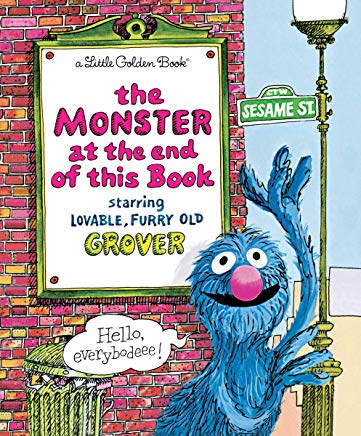
  • The Monster at the End of the Book (Grover is still my favorite Muppet.)

  • Green Eggs and Ham (I checked this out of the Woodstock Elementary Library as often as I could.)

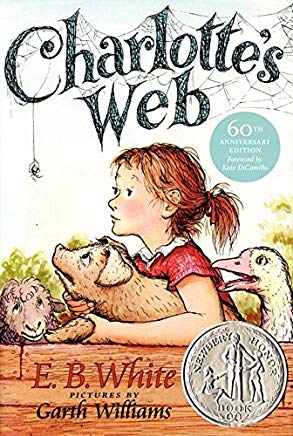
  • Charlotte’s Web

  • The Biography of Walt Disney

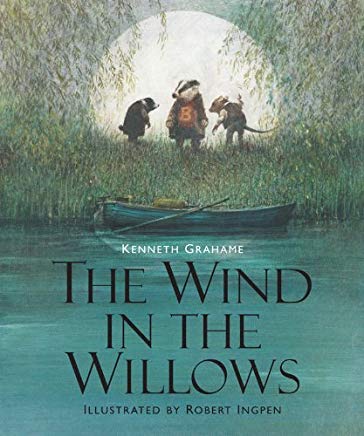
  • The Wind in the Willows

Elementary/Middle School

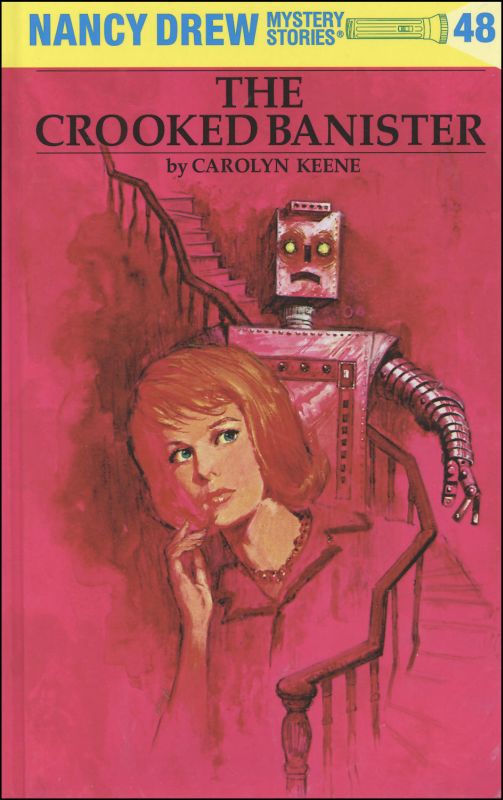
  • The Crooked Banister (and all the other Nancy Drew books)

  • The Hardy Boys series

  • Agatha Christie’s books

  • The One-Minute Mysteries (There’s definitely a pattern here.)

  • Stories by O’Henry

  • Alfred Hitchcock Mysteries

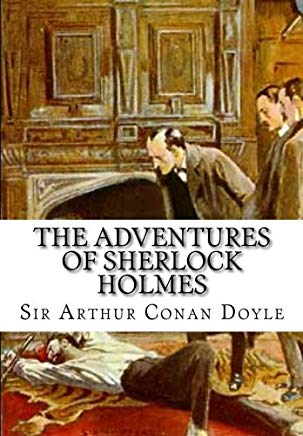
  • The Adventures of Sherlock Holmes

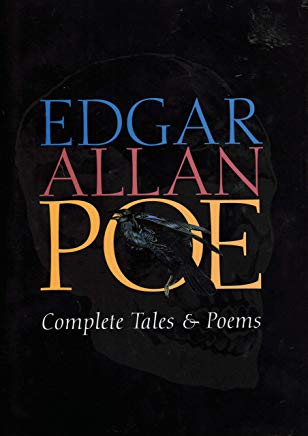
  • Anything by Edgar Allan Poe

I started reading scary or woo woo stories in middle school. I read Jaws one summer and avoided the beach. Then I checked out The Amityville Horror from the library and started it. I woke up in the middle of the night, and the cover was glowing. I threw it out in the hall and promptly returned it to the library. (I think the light was bouncing off the foiled cover, but I wasn’t taking any chances. I still don’t know how it ends.)

High School/College/Grad School

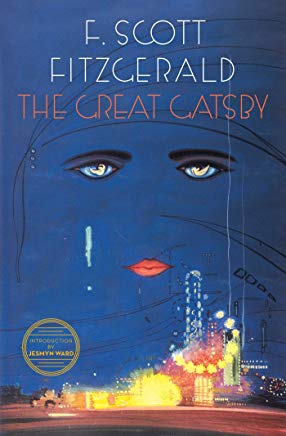
  • The Great Gatsby

  • The Sun Also Rises

  • To Kill a Mockingbird

  • Animal Farm

  • Hamlet

  • Gulliver’s Travels

  • The Great Gatsby

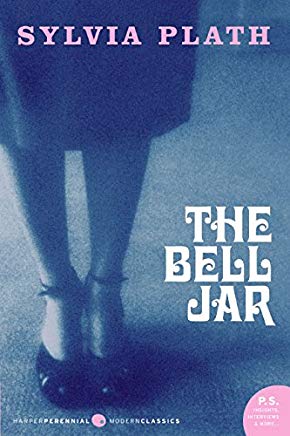
  • The Bell Jar

  • Pride and Prejudice

  • Jane Eyre

  • Wuthering Heights

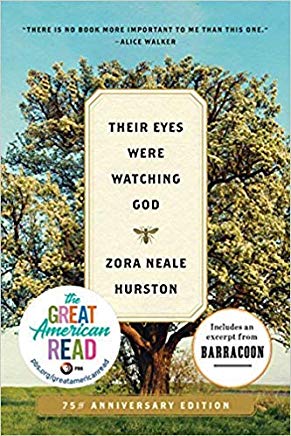
  • Their Eyes Were Watching God

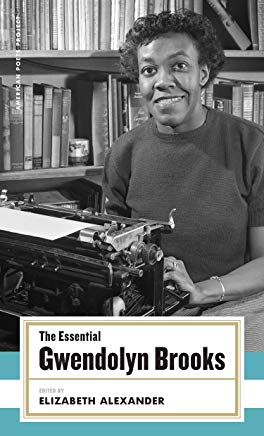
  • Poetry by Emily Dickinson, Robert Frost, and Gwendolyn Brooks

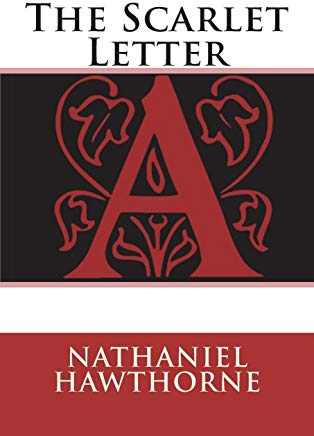
  • The Scarlet Letter

  • The Call of the Wild

  • Oliver Twist

  • Moby Dick

  • Harry Potter and the Sorcerer’s Stone

I have a BA and an MA in American literature. (I got to go to school to read books. The perfect setup.) The best class I ever took was Dr. Magnuson’s ā€œDetective Fiction.ā€ He introduced us to the literary conventions, the genre, and a variety of authors. And that’s where I fell in love with hard boiled, detective novels.

I also took children’s literature as an undergrad, and it was fun to see how things had changed since I was in that demographic. By then, Nancy Drew had undergone a makeover, and she now drove a Mustang and dated boys other than Ned Nickerson. YA was just starting to evolve then, and it has exploded over the years.

What’s your favorite genre? What’s on your list?

What I Learned about Navigating Writing (or Fan) Conferences

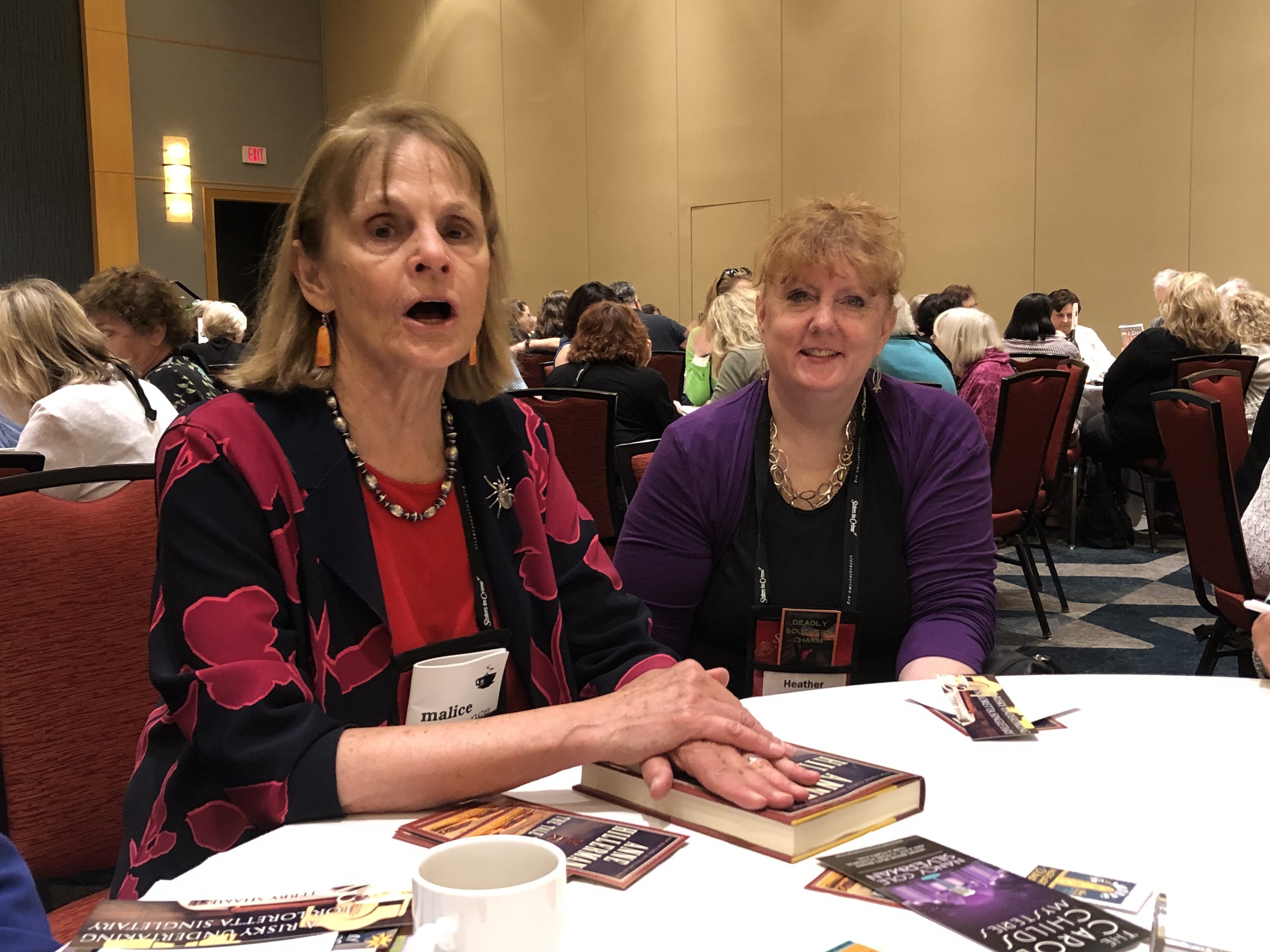
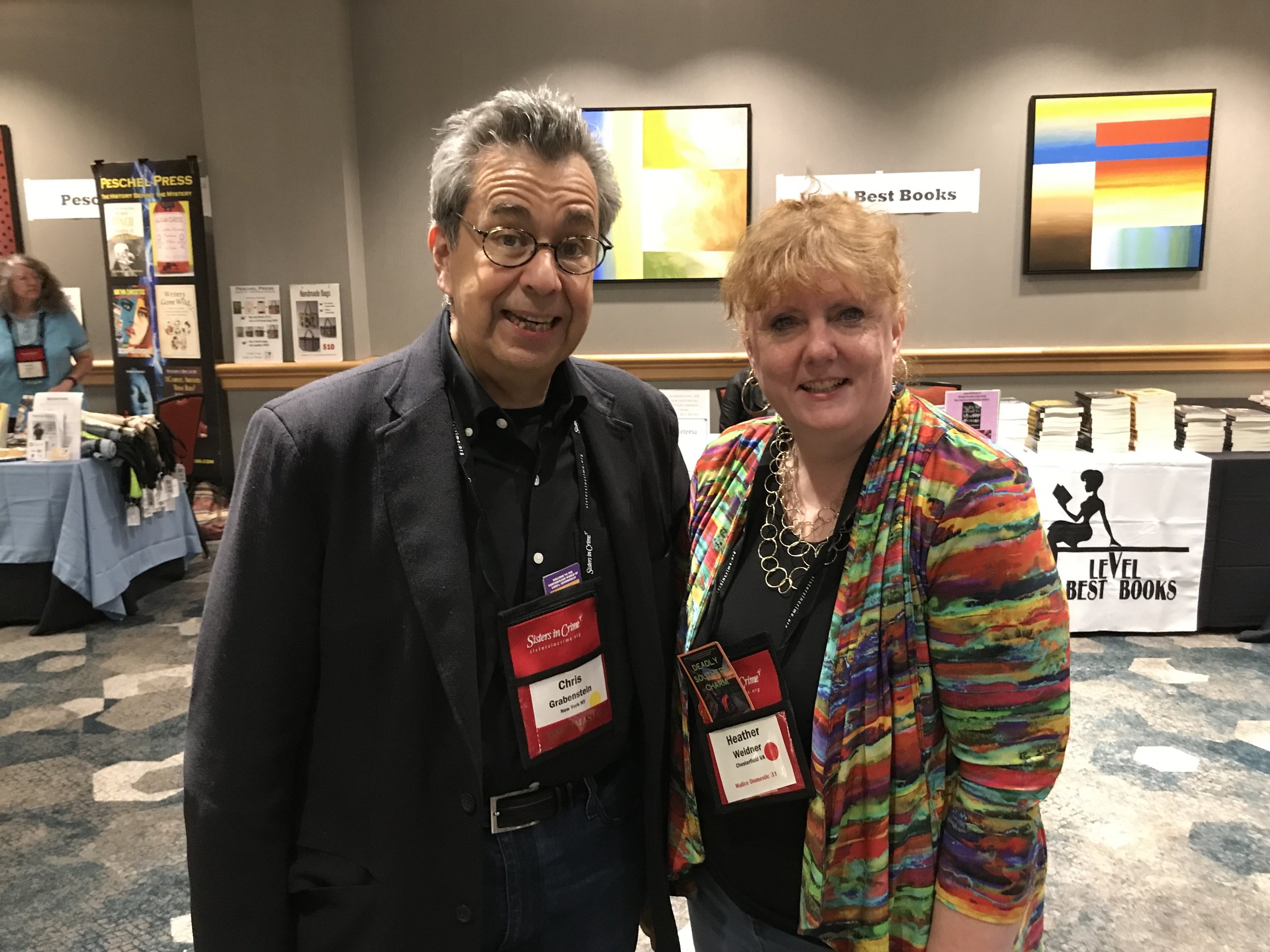
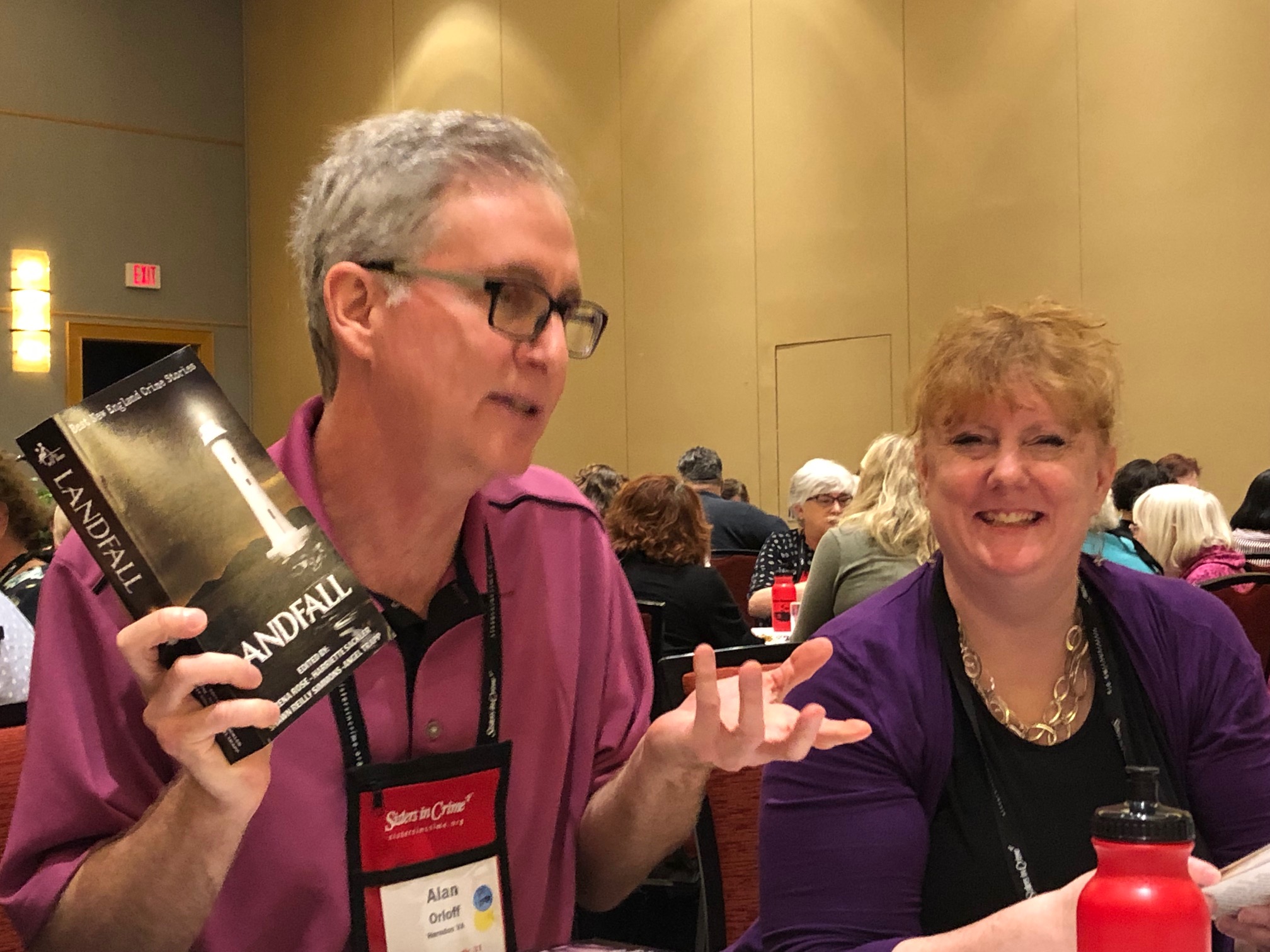
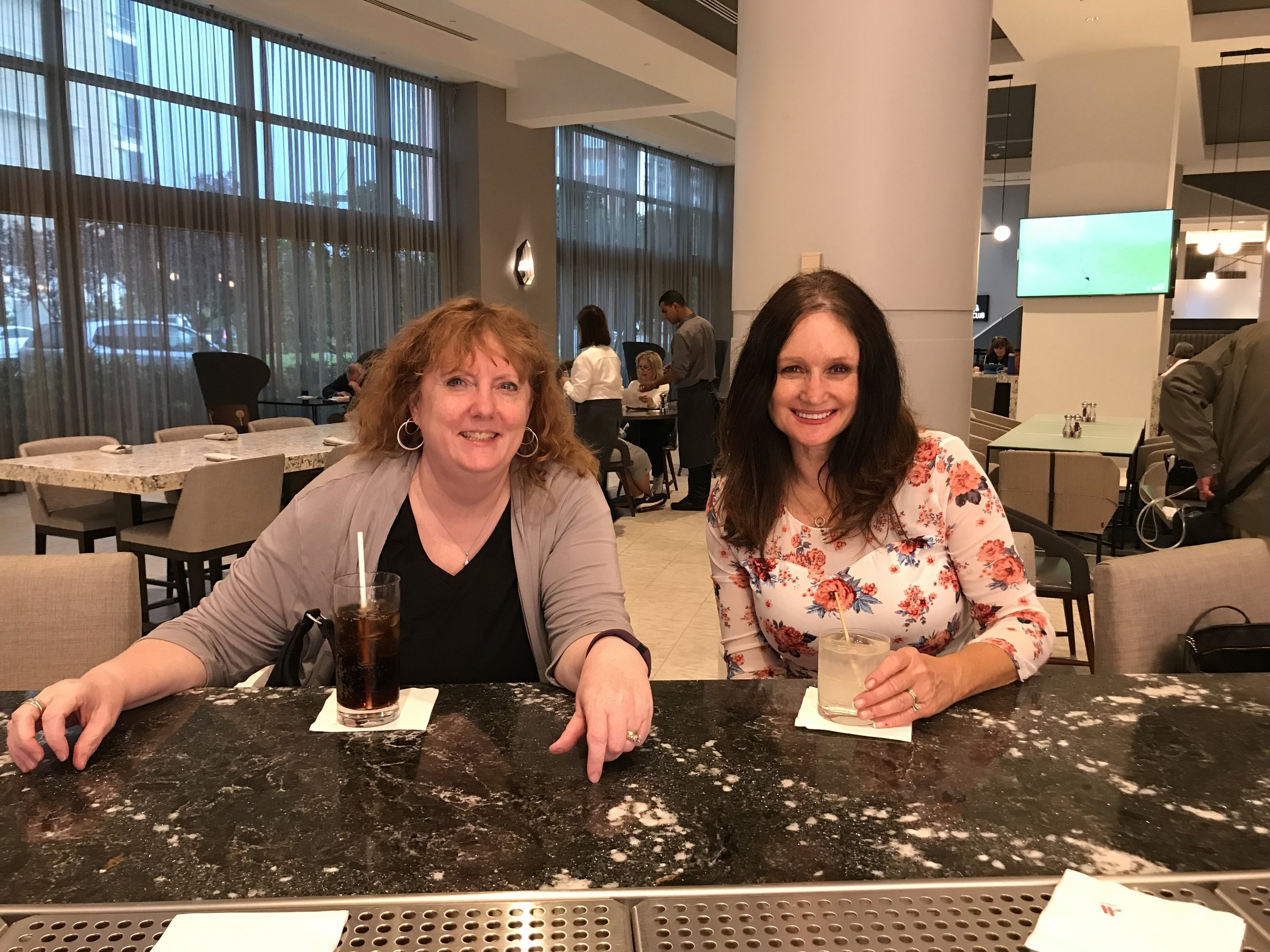
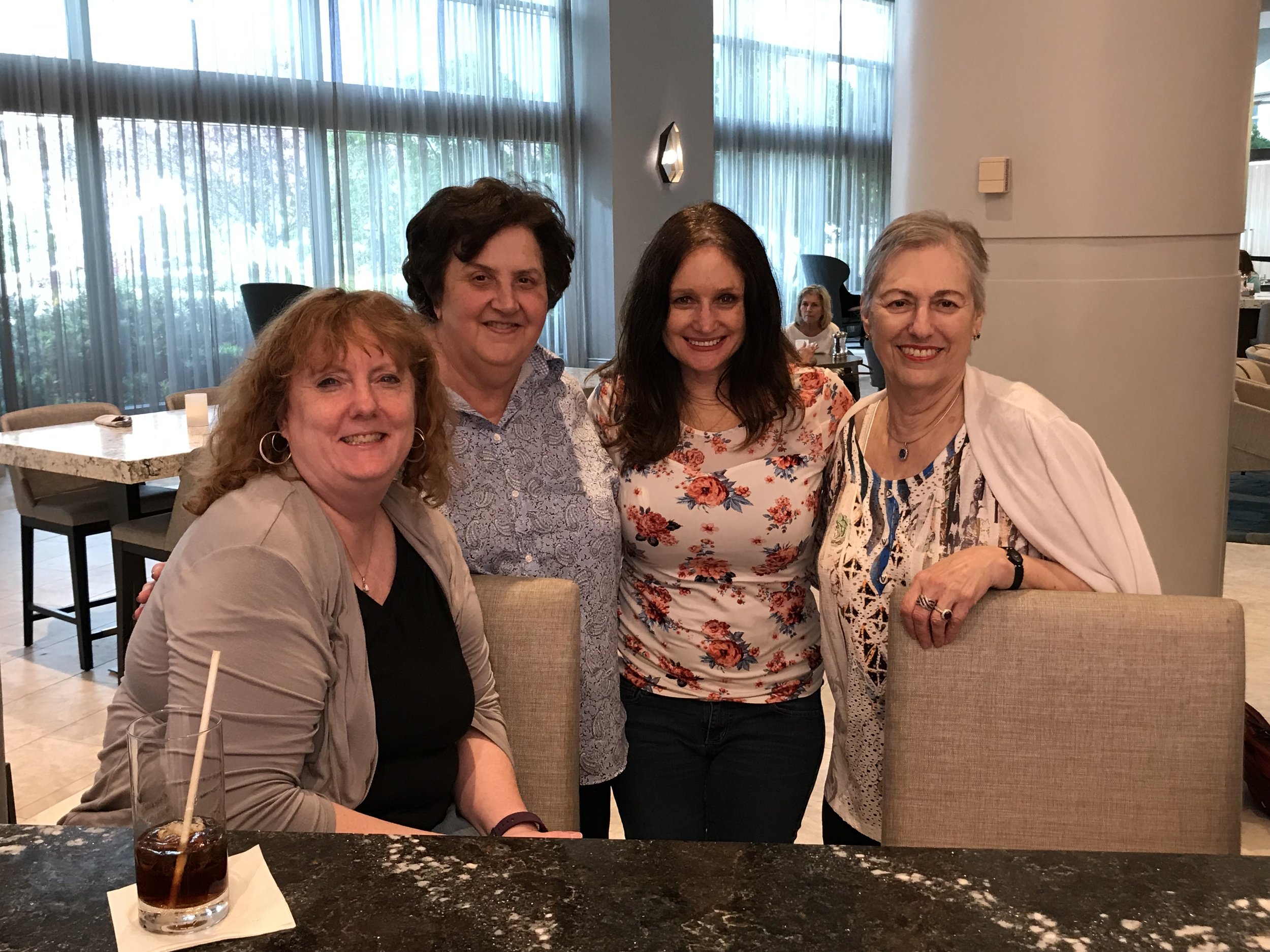
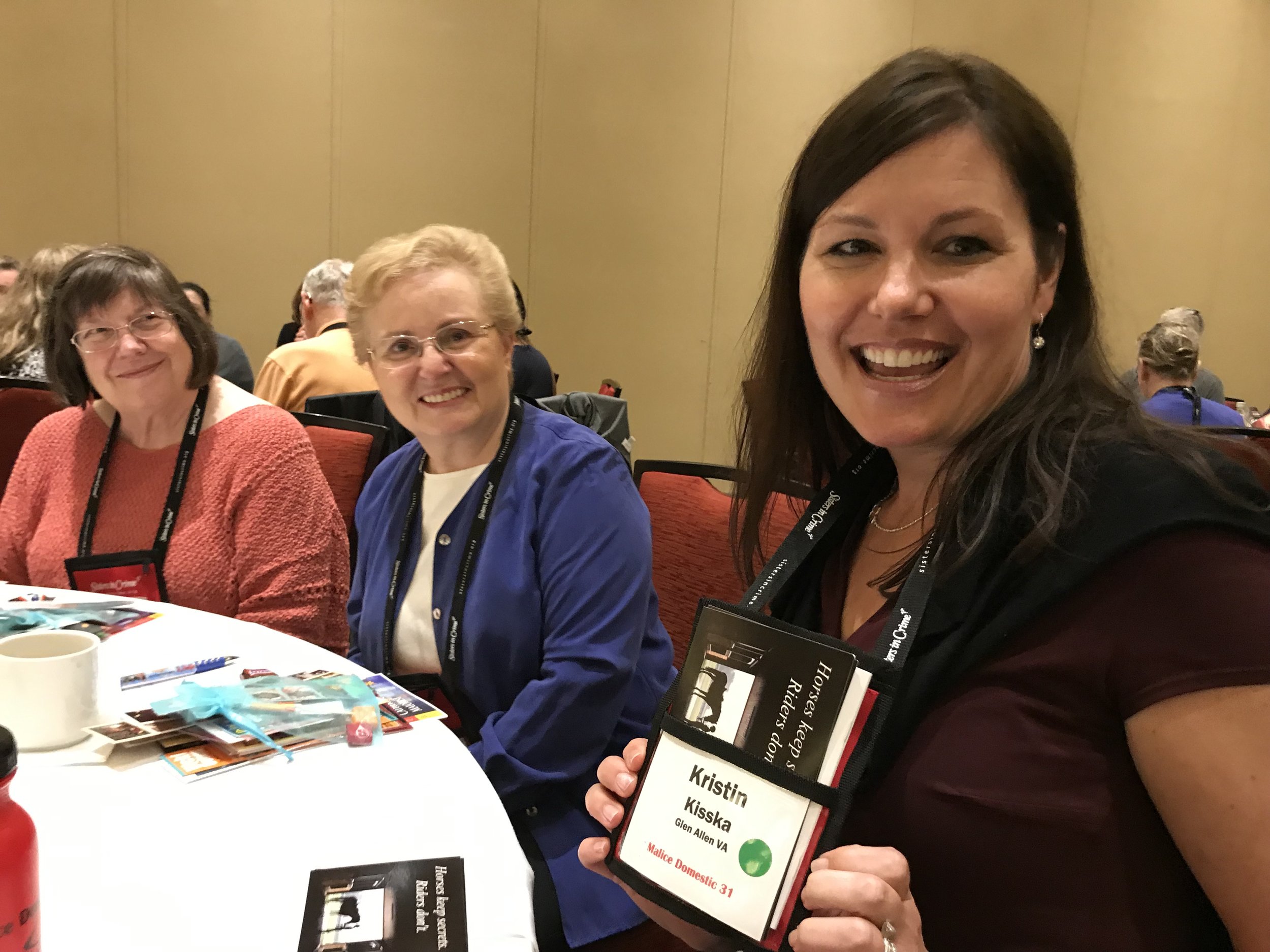
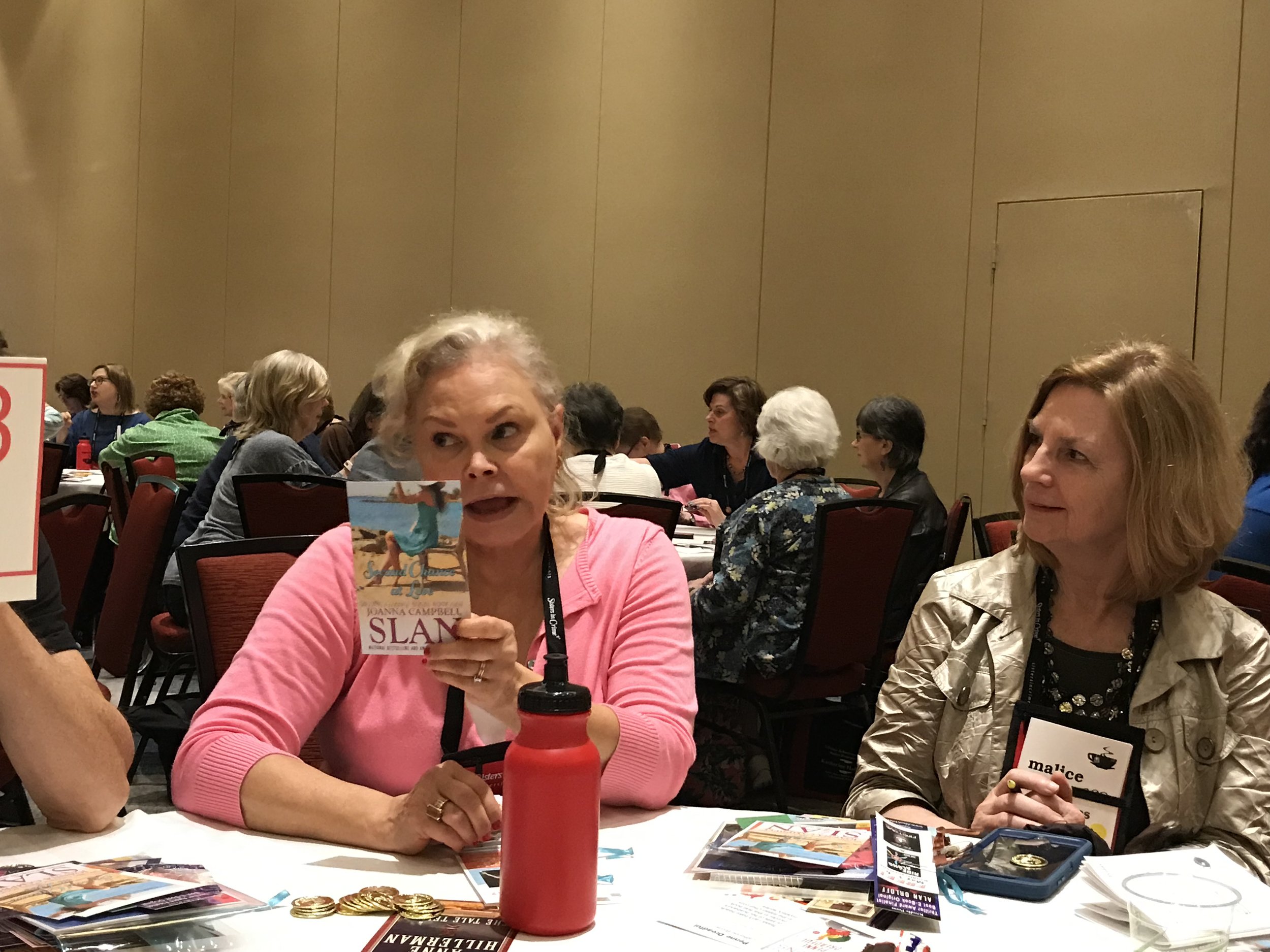
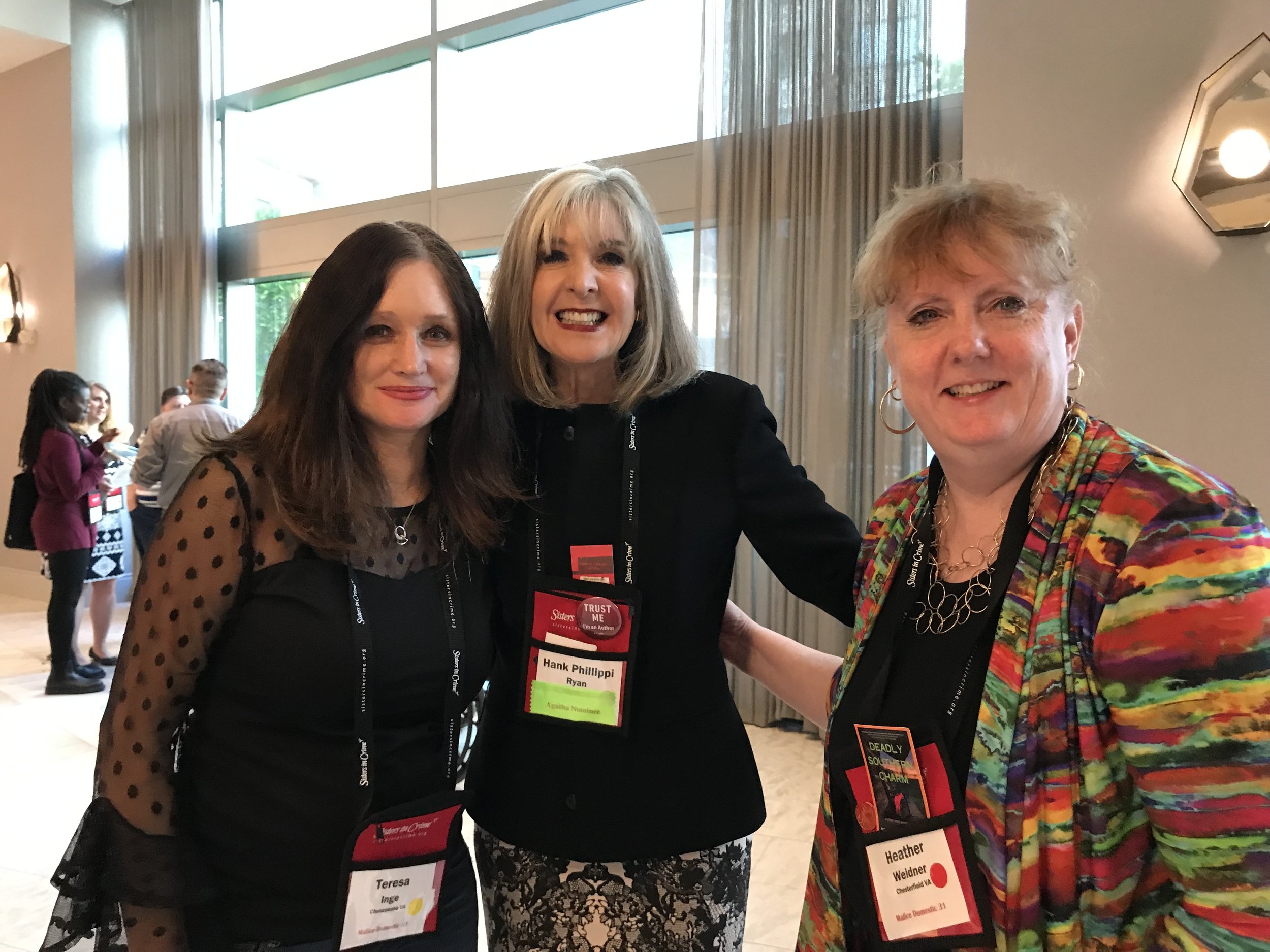
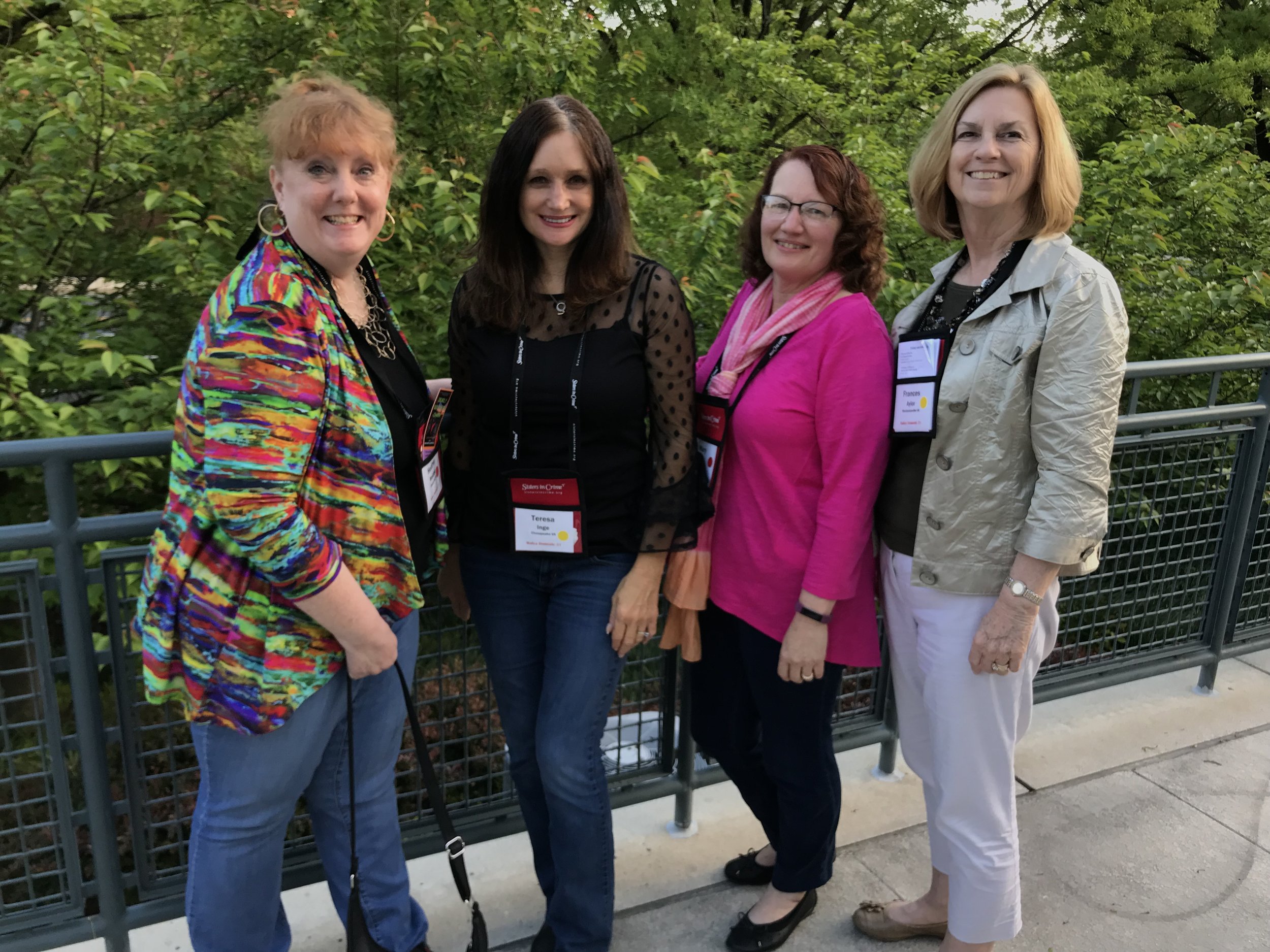
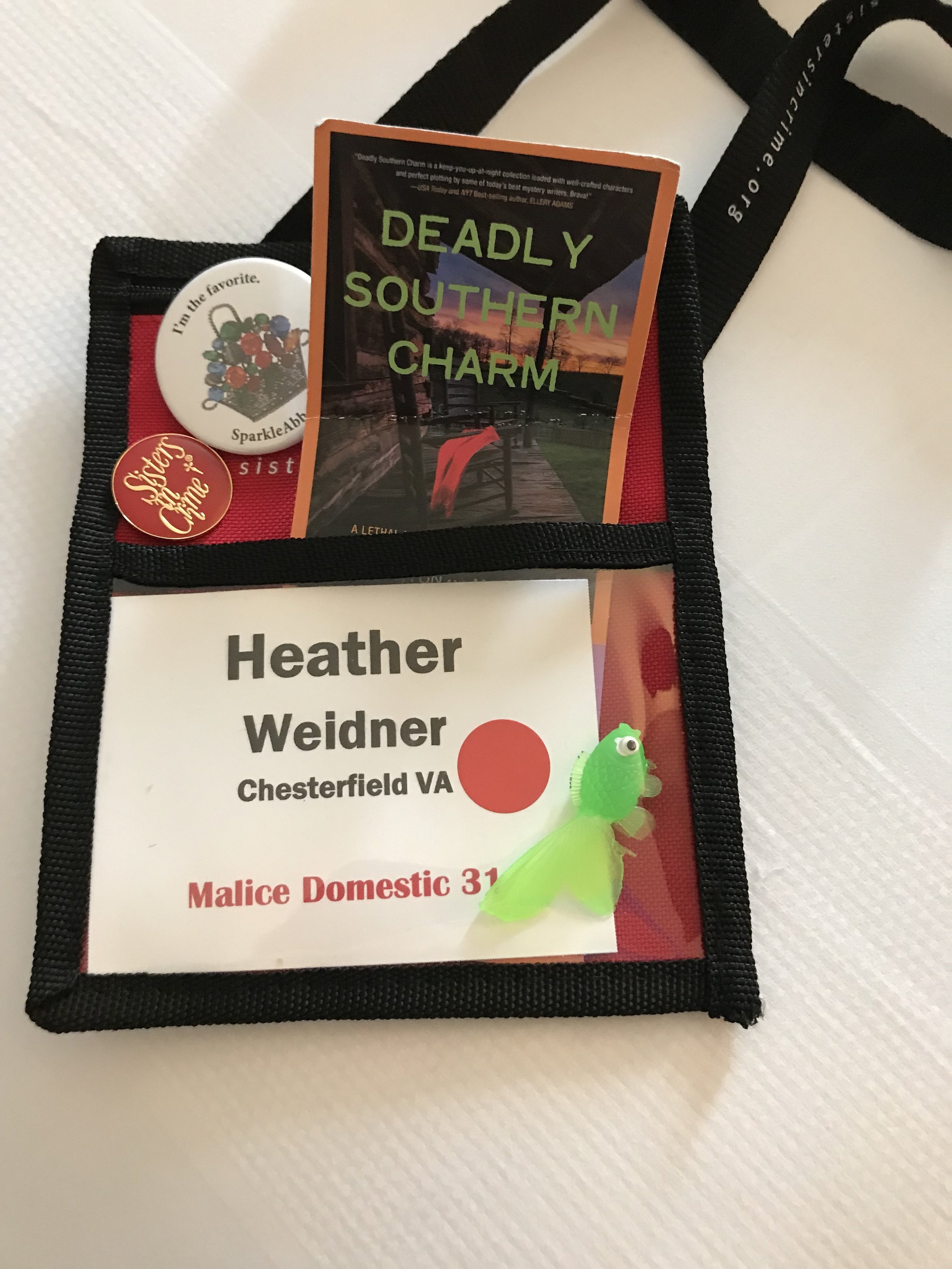
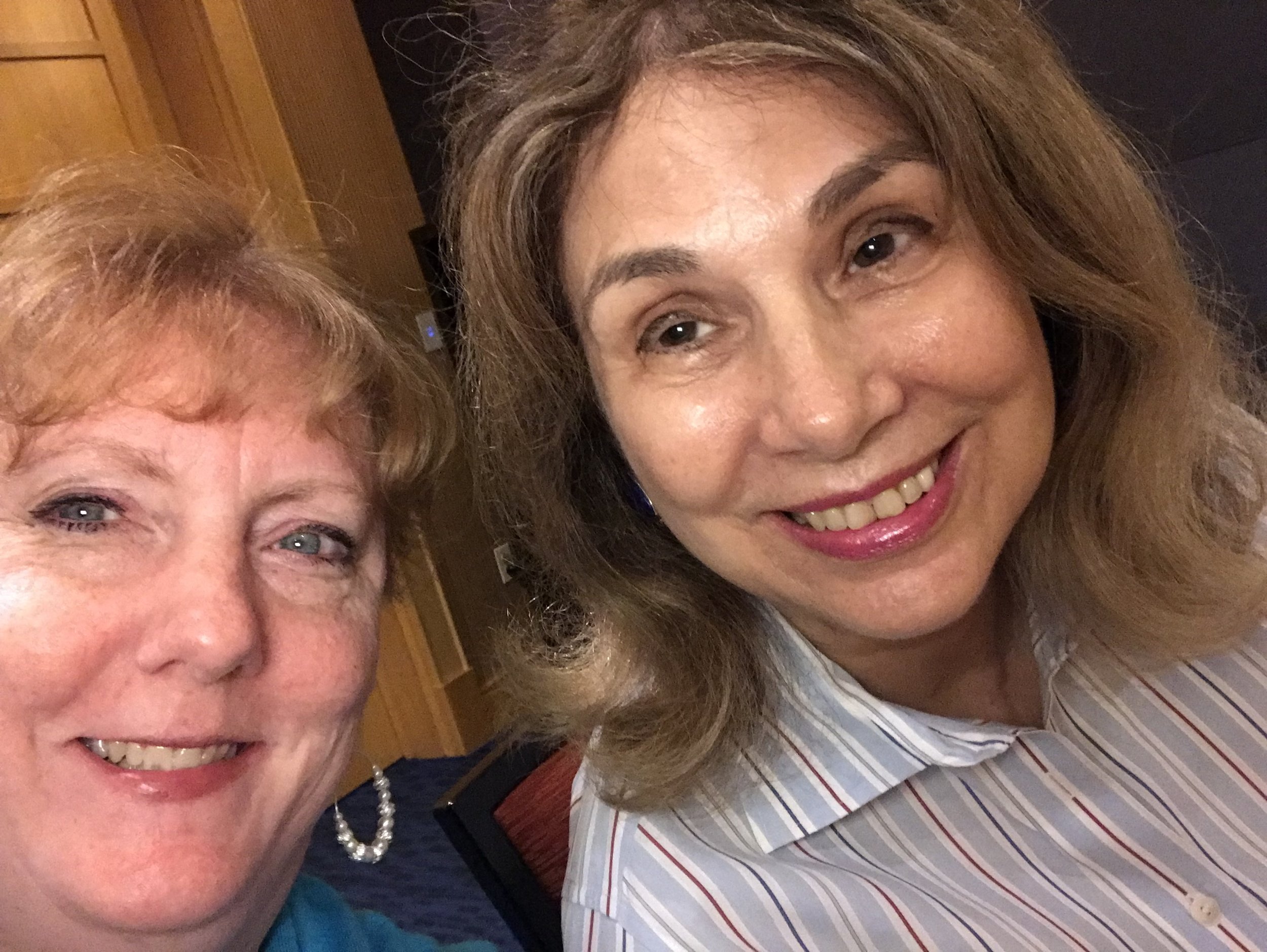
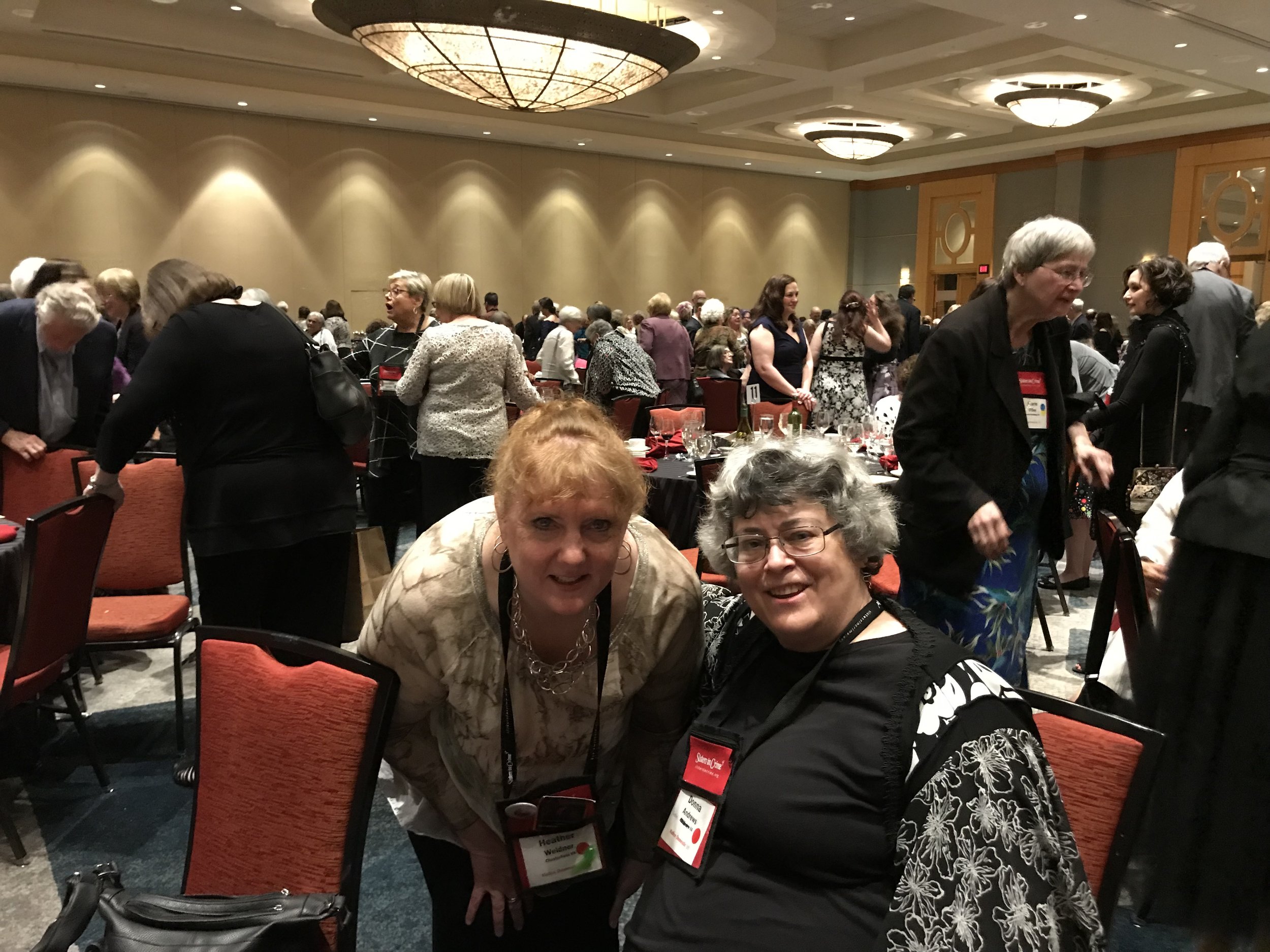
I returned from a fabulous weekend at Malice Domestic. I had so much fun networking, seeing friends, meeting readers, and being a fan girl. (I got to meet Anne Hillerman and Chris Grabenstein this year.)

Here are some things I’ve learned to help navigate these events — whether your a writer or a fan.

Comfort

  • You are going to do a lot of walking. Wear comfortable shoes.

  • Dress in layers. Conference rooms are notorious for being frigid.

Be Prepared

  • Make sure you have a bag for things you’ll need: bookmarks, business cards, promo materials, a notebook, and something to write (or sign books) with.

  • Have your elevator speech (1-2 sentences) ready about your book in case you’re asked.

  • Print a copy of all your registration confirmations and take them with you to make sure there’s no confusion.

  • Keep all of your receipts for meals/expenses for your taxes.

  • Read the conference agenda and plan what you want to attend. Some provide ā€œconference at a glanceā€ booklets to help you navigate, and others have an app for your phone.

IMG_4241.JPG

Swag

  • Bring an extra bag or leave room in your suitcase for all the swag and books that you’ll collect. I went to the Kensington Books give-away and signing. They were so generous. My TBR stack tripled.

  • Many conferences have shipping centers, so you can send it all home if you need to.

Etiquette

  • Be professional always! You never know who is sitting next to you.

  • Check out the conference’s website for past pictures to get an idea of the dress code for the events. Some are casual, and some dinners are black tie.

  • Don’t start every conversation about your book. Be genuine. Be part of conversations. They’ll be plenty of time to talk about your book.

Writing Advice from the DEADLY SOUTHERN CHARM Authors

Deadly Southern Charm Small.jpg

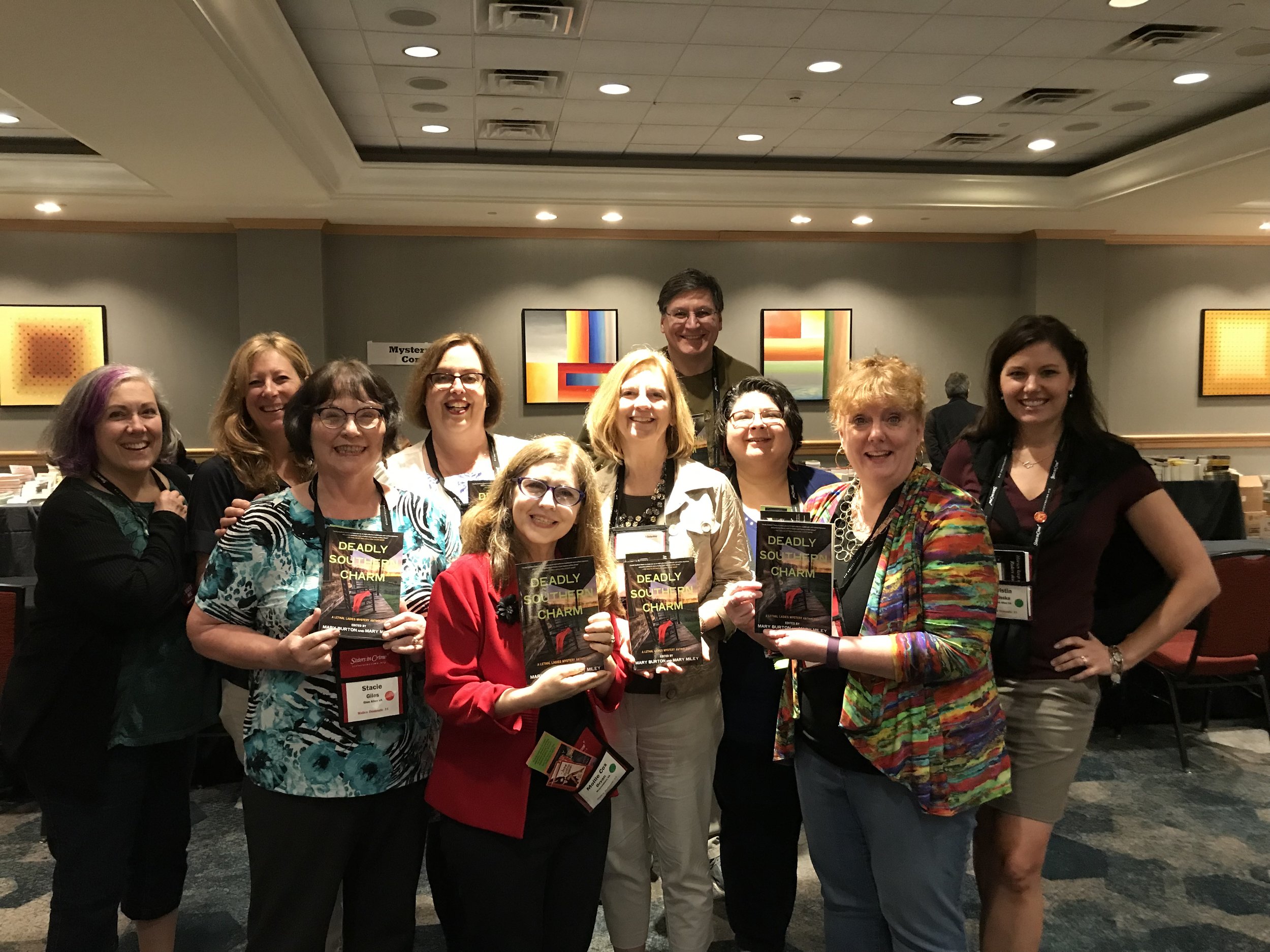
I’m very excited to be a part of DEADLY SOUTHERN CHARM anthology, and I’m thrilled to have my writer friends as guests on the blog to share their advice on writing and book marketing.

What is the one thing about the writing life that you didn’t know until you were published?

 Mollie: I didn’t realize that you don’t make much money. Of course, I didn’t start writing to make money. I absolutely LOVE what I do. And the further I get into my career, the more I see that loving it the ONLY reason to do it. If you don’t love the thrill of a perfect sentence, or the way a story moves you, you won’t find the business gratifying.

 Heather: I didn’t realize how much marketing was involved with the book business. It takes a great deal of time to promote your work. You need to balance your writing tasks with your promotional ones.

 Lynn:  I didn’t realize that the moment I turned it into my publisher it wasn’t MY book anymore. It was OUR book. People kept messing with my book. Now, they were all good things and comments, but I didn’t know how collaborative book publishing really is. Even for my self- published books. Best advice? Make sure you agree with and trust the people working with you.

 Kristin: Authors write their first draft for themselves, but revise-revise-revise for their readers.

 Maggie: There’s a lot to do in the way of marketing, promotion, etc. My advice is to know your personal goals for your work: is it money (good luck!), love of writing, posterity? Perhaps publishing a book is a bucket list item, and multi-publishing isn’t your goal. It’s great to share inspiration and support with fellow authors, but avoid the keeping up the Joneses syndrome.

 Genilee: How important it is to force yourself to set aside time every day to write and how hard marketing a book can be in today’s complicated world of publishing.

 J.A.: How much work is involved that doesn’t involve writing. Marketing is a big part of the job and can be very time consuming.

 How long did it take you to get your first work published (from creation to actual book)? What was your first published work?

 Mollie: For fiction, it was probably 6 months. I had already been a published nonfiction author for years and agent said if I wanted to write fiction, they’d love to see it. I’d been write fiction for years  and had an idea brewing, so I wrote the first draft of ā€œScrapbook of Secretsā€ during National Novel Writing Month and after several drafts, sent it on to my agent.

 Heather:  My first mystery was a short story, ā€œWashed upā€ in Virginia is for Mysteries, a Sister in Crime anthology. It took about six months to write and polish. The book process probably took another eight months or so. My first mystery novel, Secret Lives and Private Eyes took me about five years to write and rewrite (and rewrite). When it was finally accepted for publication, it took another seven months to become a book.

 Lynn:  My first published work was a couple of essays I wrote and got published during the year of cancer (2007). A few years after that I wrote for the Trues market – short emotional stories with a twist. (I fell in Love with a Carney was my first credit with them.) Then in 2012, I got back a book that had been rejected by a large romance publisher after two years of back and forth consideration. I sent it to a soon to open digital first imprint. It sold in a week. In total, the process took from creation to sale, about three years. My first mystery sold the next year in a three-book deal to Kensington.

 Kristin: I’d been writing fiction for about 6 years before I had anything published.  My first published work was a short historical mystery, ā€œThe Sevensā€ which was selected from a blind pool of submissions to be included in Bouchercon’s anthology, MURDER UNDER THE OAKS.  From the first moment I typed a word to the release date was ten months.

 Maggie: ā€œA Not So Genteel Murder,ā€ a short story featured in the Virginia is for Mysteries anthology, was my first published work (2014). Writing and polishing the story took about six months, and the publishing process another six to eight months. Later in 2014, I published my first novel, Murder at the Book Group. That took me forever to write—ten years!—and another 18 months from contract signing to release day.    

 Genilee: It took my mother four months to write the first book (Twist of Fate) in our five-book The Fate Series. It then took me six months to rewrite, edit and find a publisher. It took the publisher about four months to get it in print and formatted as an ebook.

 J.A.: My first published story was, Bikes, Books and Berries. It was part of the Virginia is for Mysteries Vol II mystery anthology. It took about six months to write and rewrite before submission.

 Plotter (one who plans or plots out every detail of the writing process) or Pantser (one who writes by the seat of his/her pants)?

 Mollie: Definitely a pantser—which I why the synopsis is so hard for me. I like the idea of a story unfolding organically and, in truth, it’s made some of the best stories in my career.

 Heather: I’m a combination of the two. I start out as a detailed plotter. I even bought a huge whiteboard for my writing room. And then I write. The story and the characters always go where they want to do.

 Lynn:  I’m definitely a pantser. I do an outline chart with all the chapters listed to keep my timelines straight. It also helps me keep my chapters about even. And I break out the story structure on that. Red Herring #1, Red Herring #2, Big Black Moment, Happy Ever After... It gives me something to write toward, but the story and character take over.

 Kristin: I’m a relaxed plotter.  I can’t start writing a story (novel or short) until I know the final scene or the twist.  I’ve stopped creating outlines, though.  Now I just jot down the major scene points and let my characters take the scenic route from stop to stop. I love when they surprise me!

 Maggie: Like Heather, I’m a plotser (combo of plotter and pantser). I have a general outline, but I ā€œlistenā€ to the characters as I write. They have their own ideas.

 Genilee: I think we’ve created a new term: plotser! I sit down to write with no particular direction in mind, but I’m outlining and redoing everything as I go to make it all make sense and flow.

 J.A.: Short stories I usually panster. Novels I’m a plotter. I like outlines, and I need them to make sure I don’t skip any necessary details.

 What is the easiest part of the writing process for you?

 Mollie: Coming with ideas is very easy. Making them work, not so easy.

 Heather: I love to write. I just tend to get bogged down in the editing and rewrites.

 Lynn:  There’s supposed to be an easy part? I worry that I’m taking too long to write. I worry that I’m too fast. I worry I didn’t do enough to launch the book... it goes on and on. The best part for me is the planning or scheduling. What am I writing this month, promotions, edits, releasing or travel, it all goes in a word document as well as on my on-line calendar. I love planning and can get lost in the process without writing if I’m not careful.

 Kristin: I love drafting.  I don’t let myself edit as I write my way through the first draft, so I feel like I’m merely transcribing a movie that’s scrolling in my mind. That said, all the magic happens in the revising stage.

 Maggie: Idea generation. I love the ideas I come up with on my daily walks. Developing them on the page? Not so easy.

 Genilee: Putting words together the right way. I do it for a living through different channels (magazines, newsletters and articles).

 J.A.:  I enjoy writing dialogue. If a scene is working the dialogue comes easy. When the dialogue is off, I know I need to rewrite.

 What advice do you have for a new writer?

 Mollie: Be patient with yourself. Learn the craft. Practice. Take classes. Write and rewrite. I don’t care how good your agent is or how much money you have to promote something—it’s your writing that will ultimately set you apart.

 Heather: Be persistent. If you want to be published, keep at it. Keep writing. Keep learning. Writing is a business.

 Lynn:  Writing is a business is a big one for me. Since I started with smaller publishers, I was around a lot of writers who were dabbling in the business without committing. You have to commit. You don’t have to write. It’s like giving yourself homework every night. But don’t tell me you WANT to be an author. Write or don’t, there is no try to paraphrase Yoda. And don’t get lost in the internet talk about the latest scandal (because there’s always a new one.) If it doesn’t affect your career, don’t let it steal your writing time.

 Kristin: There’s only one rule for writers: Keep your butt in the chair. Progress, even just a few paragraphs at a time, is still progress. 

 Maggie: Carve out time for writing every day (or most days), even if it’s just fifteen minutes. Use a notebook or recording method to keep track of ideas, to-do items, etc. Find systems that work for you. Read the best writers in your genre. Bottom line: write.

 Genilee: Don’t go into this field thinking you’ll be rich and famous. Do it because you love writing. It’s extremely rewarding to get published, but getting to point of making money is a constant process that takes many years (unless you are lucky of course!).

 J.A.: Social media is a time killer. You need an online presence if you want to be a commercial writer, but it’s easy to fall down the rabbit hole. A few minutes turns into several wasted hours that could have been spent writing. The same for research. Use both with restraint.

Many thanks to Mollie Cox Bryan, Lynn Cahoon, Kristin Kisska, Maggie King, Genilee Swope Parente, and JA Chalkley for the interview!

AUTHORS

Mollie Cox Bryan is the author of cookbooks, articles, essays, poetry, and fiction.  An Agatha Award nominee, she lives in Central Virginia.  www.molliecoxbryan.com

 Lynn Cahoon is the NYT and USA Today author of the best-selling Tourist Trap, Cat Latimer and Farm-to-Fork mystery series. www.lynncahoon.com

 J. A. Chalkley is a native Virginian. She is a writer, retired public safety communications officer, and a member of Sisters in Crime.

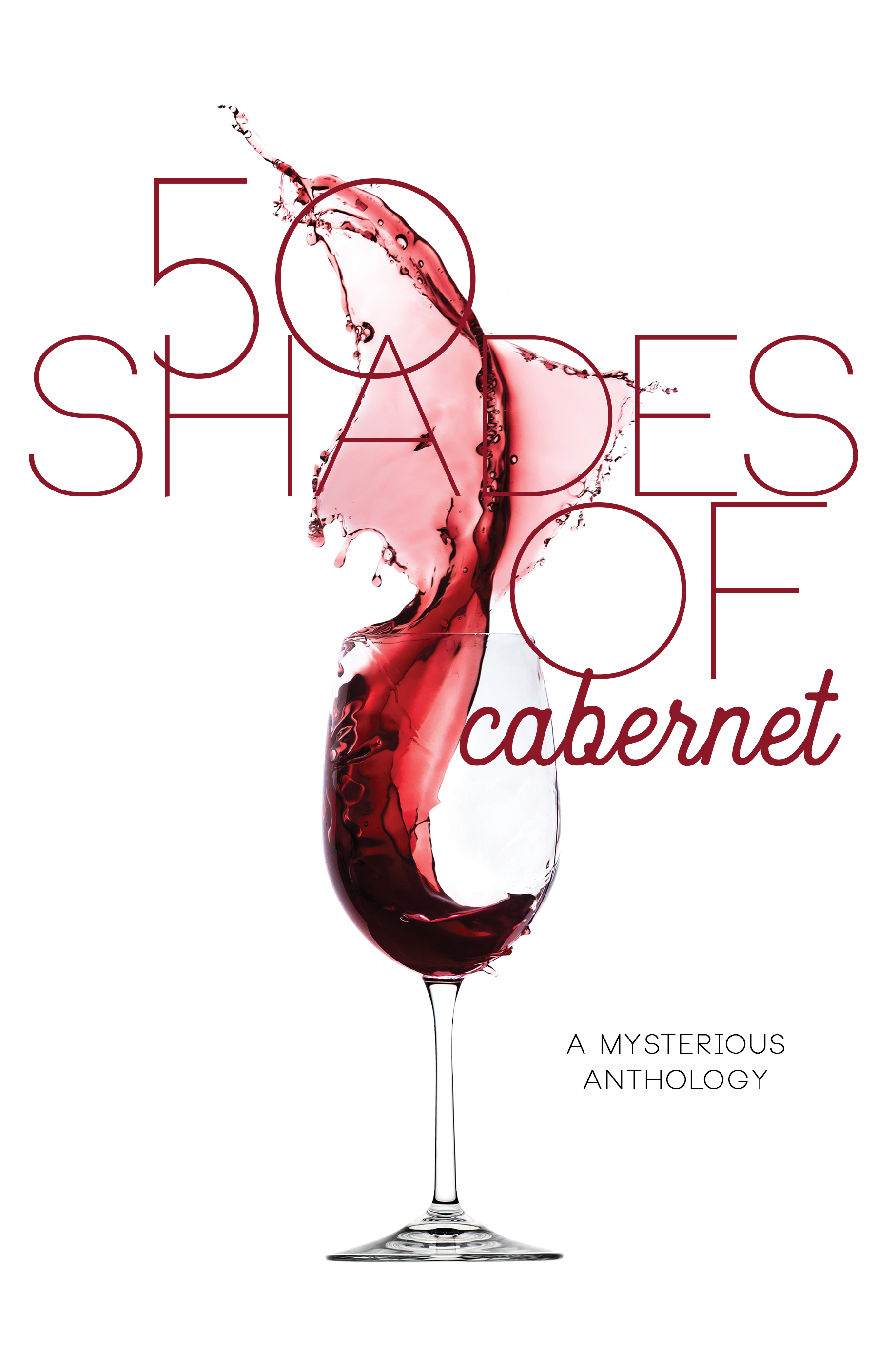
 Maggie King penned the Hazel Rose Book Group mysteries. Her short stories appear in the Virginia is for Mysteries and 50 Shades of Cabernet anthologies. www.maggieking.com

 Kristin Kisska is a member of International Thriller Writers and Sisters in Crime, and programs chair of the Sisters in Crime – Central Virginia chapter. www.kristinkisska.com

 Genilee Swope Parente has written the romantic mystery The Fate Series with her mother F. Sharon Swope. The two also have several collections of short stories. www.swopeparente.com

 Heather Weidner is the author of the Delanie Fitzgerald Mysteries.  She has short stories in the Virginia is for Mysteries series, 50 SHADES OF CABERNET and TO FETCH A THIEF.  She lives in Central Virginia with her husband and Jack Russell terriers.  www.heatherweidner.com

BOOK LINKS

Wildside

Wildside eBook

Amazon

How Do You Decide What Author Events to Attend?

Q.png

There are so many events and writer functions to choose from. It’s often a tough decision to make on whether to go or pass. I have several author friends who weigh their decision based on how many books they think they’ll sell.

Your writing is your business, and you do need to make sure that you have time to write and market your work. You, as a professional, also need opportunities to sell your books. And your time is valuable.

That being said, there are times when I’ll do a volunteer event or a workshop where I don’t have an expectation for book sales, but there are often benefits or surprises that go along with these.

Every event is an opportunity to talk to readers. Because I’ve attended an event, I have been invited to a radio interview, podcast interviews, marketing opportunities, book clubs, and other speaking engagements.

I love libraries and writing programs for new writers (especially kids), and I try to make time to do these kinds of events. I spoke to an English class recently about the mystery genre, and I was floored that multiple students had brought copies of my books for me to sign.

I did a group event at a wine festival once. It was hot. We were outside, and book sales were slow. But we did have an opportunity to talk to hundreds of people. I gave out bookmarks, pencils, and pens. I was also pleasantly surprised that my ebook numbers jumped the next week. People who were not ready to buy a book at the wine festival bought one later online.

Once, I did a book club presentation at a senior facility for a friend who was a program director. After a wonderful discussion, all the participants asked me to come back for a book signing.

So, yes, as an author you need to make sure that you divide your time. If you’re on the road constantly, you’re not writing your next book. But, if you don’t go out, you don’t have opportunities to talk to readers. I think it’s a balancing act.

Reading is Research

11111111.jpg

I have always loved books and reading. Yes, this is my first library card from 1972. It opened hundreds of worlds to me. I’m always sad when people say that they don’t like to read. Reading is entertainment, an escape, a journey to new places, a portal to new worlds, and research. Writers must read.

Stephen King said it best, ā€œIf you don’t have time to read, you don’t have the time (or the tools) to write.ā€ By reading other authors, you learn vocabulary, literary techniques, and genre conventions. Look at the way the words flow in a work that you like. The author creates the story and moves the plot along. It’s not a play-by-play of every detail that happened in someone’s ordinary day. Look at the dialogue. It’s not mundane chitchat. Good authors don’t tell their readers things. They show them. They are artists who paint a verbal picture.

Stephen King’s On Writing is one of the best ā€œhow toā€ books for writers. When I started writing, I read every book about writing that I could get my hands on. I spent more time reading those than I did writing. Over the years, I kept a few. On Writing is one of those. It’s good to learn new things about mechanics, but I think reading books in your genre teaches you more about the conventions (e.g. cozy mysteries don’t usually have graphic scenes or language; mysteries usually have a dead body in the first chapter). You learn how to use language, describe things, and which point of view to write from.

sk.png

I love receiving books as gifts. This year for Christmas, I received two books about books, and I can’t wait to read them. I still have gift cards left, so I’m not done with the book shopping.

1111111111111111111111.jpg

Are you on Goodreads? I like the annual book challenge. I need to think about my goal for 2019. I usually go with 26 (one for every two weeks of the year), but maybe this year, I’ll set a stretch goal. I like how the site keeps track of my totals for me and helps me to remember to leave a review. Plus, at the end of the year, I liked seeing all the year’s books.

What are you reading right now?

Getting it Together - Organizational Tips for Writers

aaa.png

How do you keep your writing projects organized? When you don't tame the details, chaos takes over (and I end up with way too many sticky notes stuck to my desk).

Writing/Book Details

1. I keep a Word table for each series I write. The first column contains all the characters and locations. Then the other columns represent books in the series. This helps me keep the details about each organized. I can also see if I overuse character names. And I can track which books characters appear in.

2. I create a Word document with blurb, synopsis, book links, and author biography for each book or anthology that I'm a part of. I make sure my website, press kit, and social media sites are updated with the new information. This document becomes my reference when someone wants the ISBN, number of pages, etc. 

3. I also keep a spreadsheet of ideas (e.g. character names, crimes, or cool locations). I can sort by the columns. And I know I have one place to go when I want to look up something. (Before, there were hundreds of sticky notes.)

Emails and Contacts

1. I create a subfolder in my email software for events, promotion, and business. I keep all critical emails in these folders for reference. I also make sure that receipts go immediately to the tax folder.

2. When I get someone's contact information, I write down when and where I met them. I try to transfer phone or business card contacts to my email contact list when I get them. 

3. Back up your email and phone contacts regularly. I'd be lost if I couldn't access them.

Social Media

1. My social media feeds are clogged with all kinds of posts, and I don't always see what I'm interested in. I make friend lists in Facebook and lists in Twitter. This help me to see a customized newsfeed of what I'm looking for.

Prizes and Book Swag

1. I have a section in my storage area for give-aways and swag. You never know when you need a prize or a gift. I can put together a nice swag bag in a matter of minutes.

2. I have notecards with my book covers on one side. I use these when I write thank you notes.

3. I keep a bag packed with pens, bookmarks, and books. It's all ready. I just need to grab it for the next event.

What else would you add to my list?