What I Learned from Dan Roam's Blah, Blah, Blah...

Dan Roam's Blah, Blah, Blah: What to Do When Words Don't Work is a great book on communication. He has wonderful suggestions for how to get your message across in communication, work sessions, and brainstorming events. 

This is my favorite quote from Roam, "Words are magnificent. When used well, words help us think, make us feel, let us remember, tell us the truth, show us the way, help us understand, unravel the complex, gather us together, and give our lives meaning" (p. 27). All writers need to remember that. What you put on paper can be powerful.

Here's what else I learned...

  • We either share too much information or not enough. Don't cause "Death by Detail." This is key for writers. Don't overdo the details.
  • We are often surrounded by words, especially in business communications, that contain no real meaning.
  • If pictures matter so much in children's stories, why do we stop including them when kids start reading. Pictures are important for communication and brainstorming.
  • Using words and using words well are two different things. Great advice!

Check out Roam's book. It's worth it.


Ways Writers Can Use Pinterest

I love Pinterest. It's my big electronic scrapbook for thousands of great pictures. I didn't get interested in the site until I ruptured my Achilles tendon, and I was stuck on the couch for months.

I have boards (the containers you create to group pictures) for crafts, DIY projects, funny memes, recipes, and places I've been or dreamt about.

Writers can use this social media platform to highlight their books.

1. Build a board for your book. Post pictures of what characters would look like, what actors you want to play them in the movie, locations where they visit, and things they like. I have a board for the anthology series that I'm a part of. It's Virginia is for Mysteries, and I have pictures of all the sites mentioned in the stories.

My author friend, Mary Miley, has a board for her 1920s mysteries with all the items from that era.

2. Build boards of your favorite books and authors.

3. Make boards for themes in your book (e.g. pets, historic sites, locales, fashion, foods, knitting, etc.) My writer friend, Mollie Cox Bryan, writes a scrapbooking-themed series. Her Pinterest boards are loaded with ideas and templates.

4. Create boards for your author events and upload photos of signings, panels, and workshops. Make sure to include links in the descriptions when you upload photos.

Let's connect on Pinterest. I can be found at: https://www.pinterest.com/crazyforwords13/


I Have News...

I have a signed contract for the publication of my debut mystery novel, Secret Lives and Private Eyes. It's slated to be published in May 2016. I'm also have a story, "Spring Cleaning," in Virginia is for Mysteries Volume II that comes out in February.

The novel has been years in the making. I stared this about three years ago after burying two other manuscripts in the bottom of my desk drawer.

And now the fun really begins...

Location, Location, Location...The Importance of Setting in Your Work

I attended two panels at Bouchercon 2015 on the importance of setting to your novel, especially your mystery. Donna Andrews moderated "Crime Beyond the White Picket Fence" with her panel, Tom Franklin (who tells the funniest stories about armadillos), Maya Corrigan, LynDee Walker, and Judy Penz Sheluck. Katrina N. Holm's moderated, "Danger and Death in Suburbia,' with Greg Hemen, Mary Sutton, and Lori Roy. Both groups emphasized the importance of where you locate your story. They also focused on smaller communities, rather than large urban areas.

Crime set in small towns are more personal than those committed in the bigger cities. And here's why...

1. In small towns, everyone knows everyone else.

2. Small towns are surrounded by swamps, forests, and farms, all great places to hide a body.

3. Small police forces often don't have quick turn-arounds on forensic investigations. The body often has to be sent to a larger city, and that gives the amateur sleuth some time to figure out the crime before the expert.

4. Murder in a small community is more frightening. Crime destroys the trust of a close-knit group.

5. Suburbia used to be the ultimate goal of the American dream. This changed with the economic downturn, and it's led to the rise of crime outside of the urban areas.

6. The suburbs are often the femme fatal that lure people with the promise of the perfect life.

7. Small towns and suburbs are where the families and the secrets live.

And secrets are always key to a good mystery.

My Fan Girl Moment...And What I Learned about Writing from Dashiell Hammett's Granddaughter and Biographer

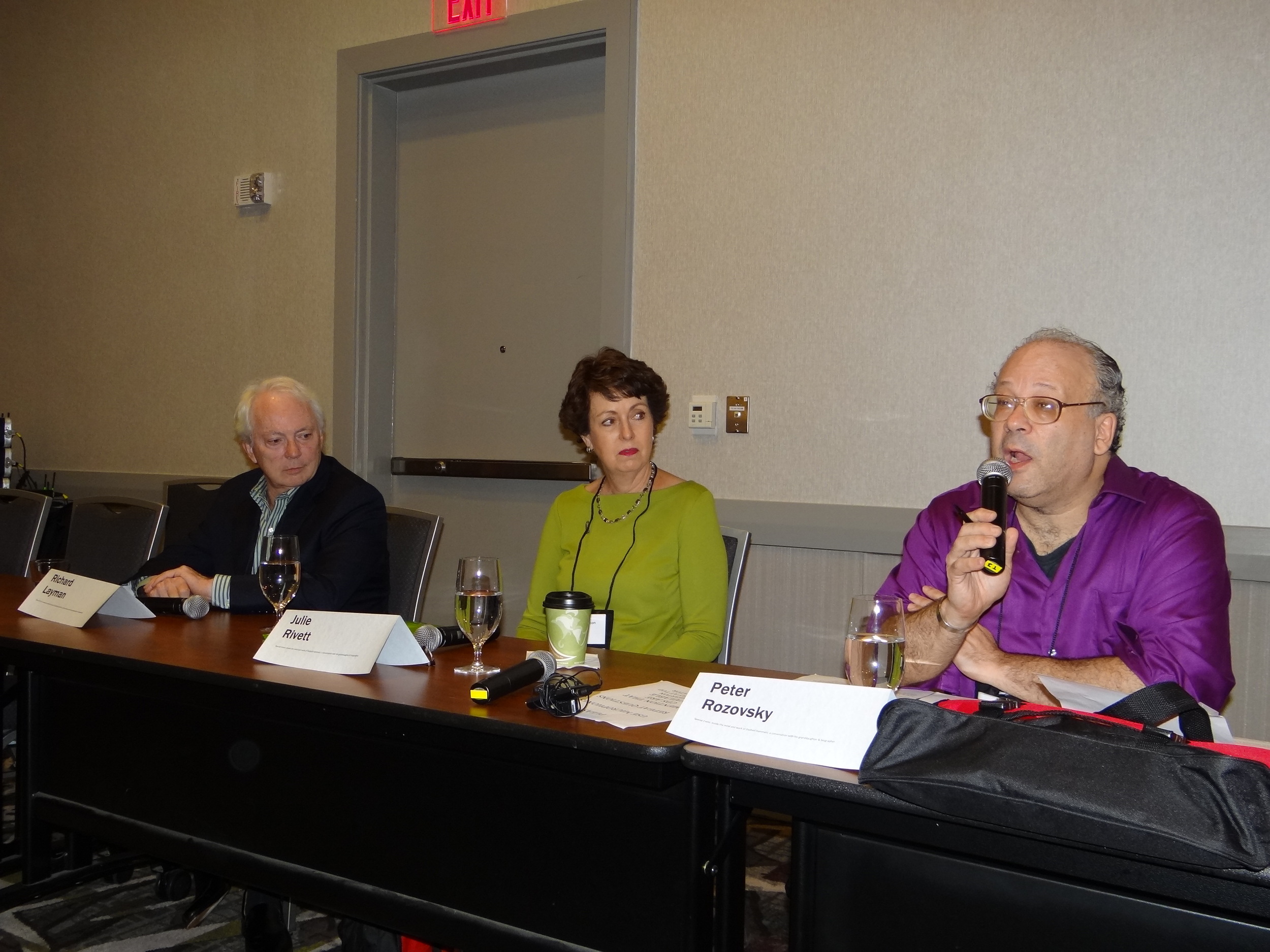
I had the great pleasure of meeting Julie Rivett (Dashiell Hammett's granddaughter) and Richard Layman (a Hammett biographer) recently at Bouchercon. Their talk of on one of my favorite mystery authors was a dream come true for mystery fans. I loved getting the business/historical perspective of his life juxtaposed to the family memories and stories.

Here are some tidbits of interest from their presentation...

1. Dashiell Hammett was a master of dialogue and his novels were cinematically structured. This made an easy transition for him when started writing for the movies.

2. Rivett and Layman have a new electronic book coming out in 2016 of Hammett's short stories. They appear in order of original publication. One story even has the original author's character and plot notes included.

3. Hammett also wrote many stories that weren't in the detective genre.

4. Hammett's writing style was compact and concise, and that influenced the style and genre for novels that came after his.

5. Hammett's philosophy was to get out of the way of the story. He believed that the characters told the story. Good advice for writers.

6. The family donated Hammett's papers and documents to the University of South Carolina. This is a huge opportunity for literary research. And it preserves the legacy of Dashiell Hammett for years to come.


What I Learned from Publicist, Joan Schulhafer

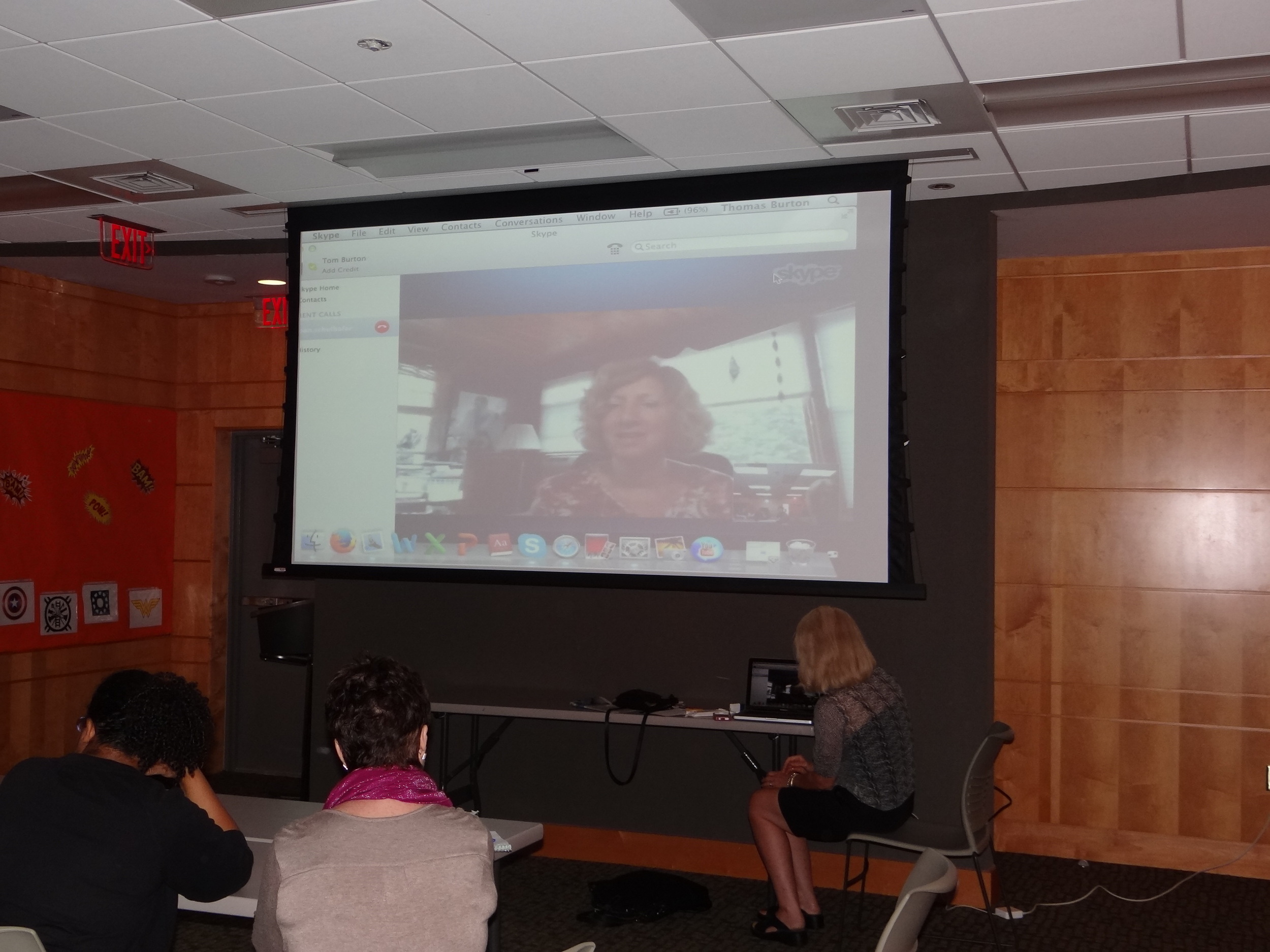
Joan Schulhafer skyped with our Sisters in Crime - Central Virginia chapter recently and provided great information about publicizing yourself as a writer and your book. Here are nine things I learned from her presentation:

1. Authors need to balance their online and in-person presences. You need a mix of both.

2. You can't do everything, but get out and get involved.

3. Attend conferences and network with everyone.

4. Build your email list. It's valuable for authors.

5. Blogging is important. It's a way to keep your website fresh. Blog posts do not have to be deep, witty, or perfect.

6. Pictures are important. Take lots of pictures. Post pictures with your content.

7. Make sure that your biographies and other information are current on all the social media sites where you have accounts.

8. Authors needs to be on Facebook, Twitter, YouTube, Google+, Instagram, and Pinterest. If your readers are younger, you need to be on Snap Chat.

9. Be polite on social media. Don't forget to thank those who help you.


Murder at the Library - October 30

I've had so much fun this summer working with Maggie King, Fiona Quinn, Margaret Howard, Thaddeus Huff, and Ginger Gutting on the planning and plotting for the "Murder at the Library" on October 30. It's a fundraiser for the Clover Hill Friends of the Library. We wrote the murder mystery for the Friends. There will also be a silent auction, a panel discussion about publishing mysteries, and book signings. Join us for some fun on Halloween weekend!

Sisters in Crime authors Fiona Quinn, Mary Miley, Rosemary Shomaker, Vivian Lawry, Mary Burton, Tina Glasneck, Kristin Kisska, LynDee Walker, and I will be there. Come and see us!

The Edits Came Today...

The edits for Virginia is for More Mysteries arrived today. We are getting closer to having book two in print.

We also had a wonderful day yesterday at the Suffolk Mystery Authors Festival. The group signed lots of books and presented two workshops to standing room only crowds.

l-r: Heather Weidner, Jayne Ormerod, Maria Hudgins, Teresa Inge, and Vivian Lawry

l-r: Heather Weidner, Jayne Ormerod, Maria Hudgins, Teresa Inge, and Vivian Lawry