When You Are Asked to Blurb Someone's Book - Tips for Authors

Authors (and publishers) like to have blurbs (endorsements) from other authors. Here are some tips to help you when someone asks you for one.

  • Make sure you know all the requirements like the deadline.

  • Look at the request and make sure it fits your brand. I don’t read some genres, and I wouldn’t be a good person to endorse something I don’t like or read regularly. I write humorous cozy mysteries. I wouldn’t blub a book with graphic violence or gore.

  • I try to help other authors, but sometimes, the requests come at a bad time or there is very little time to create a good quote (or even read the book). I try my best, but there are some requests I have to decline because of other commitments.

  • If I have the time, I try to provide two or three options. I also let the author know that I’m fine with whatever he/she chooses (and that he/she can use any of them in the other book promotions).

  • Keep the quote short. Publishers often put these on the front or back covers. Don’t write a book report.

  • Don’t include spoilers.

  • If you receive an ARC (Advance Reader Copy) just know that it hasn’t been through all the rounds of editing.

  • Proofread before submitting. (That sounds like a no-brainer, but you’d be surprised at the ones you’ll receive with a typo or grammar issue.)

  • If you need to decline, be as polite as possible. It’s an honor to be asked, and for some writers, it’s really hard to reach out and make a request. Be kind.

Asking for Blurbs - Tips for Writers

Authors (and publishers) like to have blurbs (recommendation quotes) from other authors. Sometimes, your publisher/publicist will help you acquire them. If they don’t, here are some tips to help you request them.

  • Start with writers in your genre. It’s always good to have others in the industry blurb your book. It also helps if they read/write the type of book you do. They understand the conventions and the readers. (I wouldn’t ask a fantasy author to blurb a cozy mystery.)

  • Seek out your published writer friends. My writing and critique group friends have been very generous with their time. You may find folks who share an agent or publisher with you who would be willing to trade blurbs.

  • Don’t ask the same people to blurb each of the books in your series.

  • Look at the book bloggers in your genre. They may be willing to give you a blurb if it’s the type of book that they recommend and read.

  • Give those you are requesting to help you as much lead time as possible. Everyone is busy.

  • Make it easy for the person. After they agree to send you a quote, send them an ARC (Advance Reader Copy). Also provide a short summary or synopsis of the book.

  • Don’t be disappointed if you get a “no” or “not right now.” Again, everyone is busy.

  • Think outside of the box. If there is an expert in a field related to your story, he or she may be a good option for an endorsement.

  • After your book is published, collect the reviews in a document. Many publishers will ask for “praise for” quotes. These are often included inside of the other books in the series. You can also make graphics of the great ones to use on your social media sites.

  • Always thank the person who takes the time to read your work and send you a quote.

Write Books and Cash Checks - Not Quite

When I was younger, I thought a writer was one who created books and cashed checks (and occasionally did a book signing). When the first contracts arrived, I realized, writing is a business, and you need to treat yours that way.

Guard Your Writing Time - Life gets in the way, and you have so many obligations. You need to schedule time for your writing and call it work. If it’s a hobby or entertainment, it’s not valued for what it is. When people ask what you’re doing, the answer is working.

Schedule Your Writing Time - Make sure you schedule some time (every day if possible) to write and to do research or marketing tasks. When it’s on the calendar and reserved, I tend to treat it like a scheduled, important event.

Brand Yourself - You are a writer. Make sure you have the tools to network. You need business cards and a website. Your tools should all have the same look and feel as your social media sites. Make sure your headshot is professional and is current.

Build Your Email List - Your email list is your list of contacts. Make sure you take a sign-up sheet to all of your events and put a registration form on your website. If your social media platforms go under or you get banned, you will have no way to contact all of those followers. Spend time cultivating your contact list.

Network - Writing is the solitary part, but you need contacts and the support of others. Join writers’ groups in your genre. Many have networking opportunities, classes, and opportunities to share information with other writers. Build your contacts. You never know when you’ll need an editor, cover designer, publicist, etc. Plus, other writers are awesome sources of advice.

Keep up with the Adminy Tasks - Writing is a business. (I’ve said that before.) Make sure you keep up with the details like filing receipts, tracking mileage and expenditures, and paying taxes.

Know That Your Time is Valuable - You can’t do it all. Figure out what tasks you can afford to hire others to help you to do. And this is a tough one, but you have to learn how to say no to things you just can’t do.

This is a tough business and a tough job, but it’s also so rewarding.

My Book's Going to Be Published - Now What?

If you thought it took a long for agents and publishers to respond to your query, wait until you get your publication date. It seems like it’s so far in the future. Here are some things you can do that will help prepare you for your book launch.

  • Work on building your email list. This is the one thing you own. If your social media sites are removed, you have no way of contacting those readers. Find ways to advertise your newsletter and build a following. Do social media posts, partner with other authors, or host a contest. Make sure to take your sign-up list to all of your events. Make sure NOT to add anyone to your list who didn’t sign up for it.

  • Build your following on your key social media sites. Follow readers and writers in your genre. Follow book reviewers and librarians. Be active with your audience. Make sure to comment and share others’ posts. You don’t want to be the author who only posts about her books.

  • Join Facebook groups for book lovers. Many of these will let you advertise your book or host a take-over day where you can find new readers.

  • When you do a Facebook take-over, make sure to include a link in each post for your email signup for those who what to keep in touch. When I started doing this, I’ve noticed a jump in newsletter subscribers after each event.

  • Work on a promotional plan for your book launch. Even if your publisher is assisting with the publicity, you’ll still need to schedule blogs, blog tours, Facebook ads, and events. Make a list of all the things you will need to update and a list of all those you will need to contact. Remember, bloggers and book tour folks usually book 3-4 months in advance.

  • Learn a new skill or software that will help you create graphics or videos. There are a lot of free and paid tools out there that make it easy to create images for your social media posts.

  • Use your time and write your next book.

The Emergency Bag - Why Authors Need One

You never know when you’re going to need something. Over the years, I’ve learned to pack a supply or an emergency bag for the just in case. Here are some things I’ve learned to have handy:

  • A bottle (or two) of water and a snack (I have been to some venues where there were no snacks or drinks.)

  • Tissues

  • A box of books in the trunk of my car (You never know if the order was delayed. Or what happens if you sell out!)

  • Extra pens (At my very first book signing, I didn’t want to carry my purse inside. I grabbed my keys and pen. The pen died, and I had to borrow one from my mom.)

  • Paperclips, scissors, and a marker

  • An extra tent card with my name (Sometimes, they’re not provided.)

  • A roll of painters’ tape (You never know when you’ll need to hang something, and this kind of tape doesn’t stick to the walls.)

  • My name tag (in case one isn’t provided)

  • A tablecloth

  • A small candy dish for candy or give-aways

  • Bandages or a small first aid kit (You never know.)

  • A phone charger

  • Extra business cards (You never know when you’ll make a contact.)

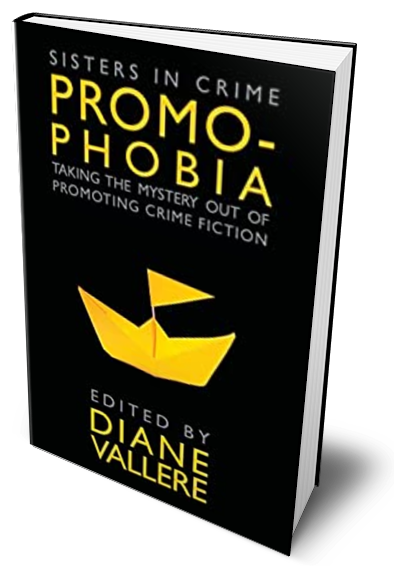
I wrote about some of my oopsies at events over the years in an article for the Sisters in Crime anthology, Promophobia. This is a great collection of over sixty articles on book marketing. Check it out. And many thanks to Diane Vallere for organizing and editing the project.

8 Online Tools Writers Need to Know About

Here are some online tools that writers need to know about. Some are free and others have paid subscription plans. Check them out and let me know what you would add to the list.

  • Social Security Baby Name List - This site shows you the most popular baby names. If you scroll down further, there is a search feature to see popular baby names from past years.

  • Google Maps - This is a great way to find locations for your stories. Put on the terrain or street views to see the surrounding areas of a place.

  • WorldAnvil - You can create a free account to build your fictitious world and design interactive maps.

  • Canva - This is a great tool for creating graphics for almost any type of promotion. There is a free and a paid version.

  • Bitly - This is one of the free sites that will let you shorten a long URL for your social media posts. If you want to customize your URL, there is a paid version of the software.\

  • Fake Name Generator - This site helps you come up with interesting character names.

  • BrownieLocks - This site has a calendar of holidays (real and silly) for each day and month. You can use these to help with your book marketing tie-ins.

  • BookBrush - They have free and paid subscriptions. This tool helps you create book graphics for all kinds of advertising and book trailers. Their training sessions and customer support are awesome.

How Authors Can Help Independent Bookstores

November 26 is Small Business Saturday. Here’s one way authors can help independent bookstores.

Bookshop.org is a website that connects readers with small bookstores nationwide. For more information on the site, check out their mission.

Here’s What You Can Do:

  • As a reader, create an account and select a bookstore that will receive a portion of your purchase. When you purchase books on this site, you help your designated store.

  • As a writer, create your own online shop and share the link on your website and socials when you promote your books.

How to Create a Shop:

  • Create an account on Bookshop.,org. Create a profile with your biography, photo, and links.

  • Then create a book list for all of the books in each of your series. You’ll need to create a title (usually the series name) and then add each book. You’ll need the ISBN-13. When you paste the number in the field, make sure to remove the hyphen, or it won’t work. Add each book in the series.

  • Then you can add as many book lists as you want to your shop.

  • Share the link to your shop on your website and socials.

  • Don’t forget to update it when you publish new books.

  • This is my shop link.

Many thanks to Kelly Justice as Fountain Bookstore for introducing me to Bookshop.org.

Warming up Your Cold Calling - Tips for Authors

As writers, we often have to make cold calls to contacts to find out about events, signings, and other marketing opportunities. Here are some suggestions that may help build relationships, so it’s not always a cold call. It’s much easier to talk to people you know and who know you.

  1. Build Relationships with other writers in your area to share information about signings and events. It’s much more fun to do a group event than to sit alone in a bookstore.

  2. Make a calendar of annual events and festivals with contacts and dates. This way you’ll know what’s coming and when registration is due. Make sure you add to it as you uncover new events.

  3. Build relationships with booksellers in your area. Your first visit to their store shouldn’t be when you’re inquiring about doing an event. Frequent their stores and attend their events.

  4. Know your local librarians. Many contact authors or writers’ groups when they are looking for speakers or they are hosting special events. My writers’ group has provided keynote speakers to Friends of the Library events, conducted writing workshops, supplied author panels, and wrote three scripts for “Murder at the Library.”

  5. Volunteer to teach a course. This helps you make contacts. I often teach technology or social media classes at senior centers or for other chapters of my organization. And if I give out my slides or handouts, they’re branded with my logo and website.

  6. Develop a collection of panel presentation ideas in case you need to create a proposal for an event. It’s good to have a wide selection that you can easily put together. I keep a short description and requirements (e.g. microphone, projector, etc.), along with a bank of questions that I can use for panel discussions. That way, I don’t have to create everything from scratch each time.

  7. Think out of the box. Are there nonfiction hooks in your work that would be of interest to groups or businesses? Think about settings, hobbies, and your sleuth’s job. There are a lot of specialty groups on Facebook, and many have newsletters.

  8. Book signings don’t have to be in bookstores. Think about themed gift shops, museums, and restaurants that may be possibilities. “Noir at the Bar” events happen in bars and restaurants.

  9. Talk to everyone you know (just don’t make it the first statement when you introduce yourself) that you are a writer. I’ve done presentations at libraries, schools, bookstores, book clubs, and women’s groups because someone knew me.